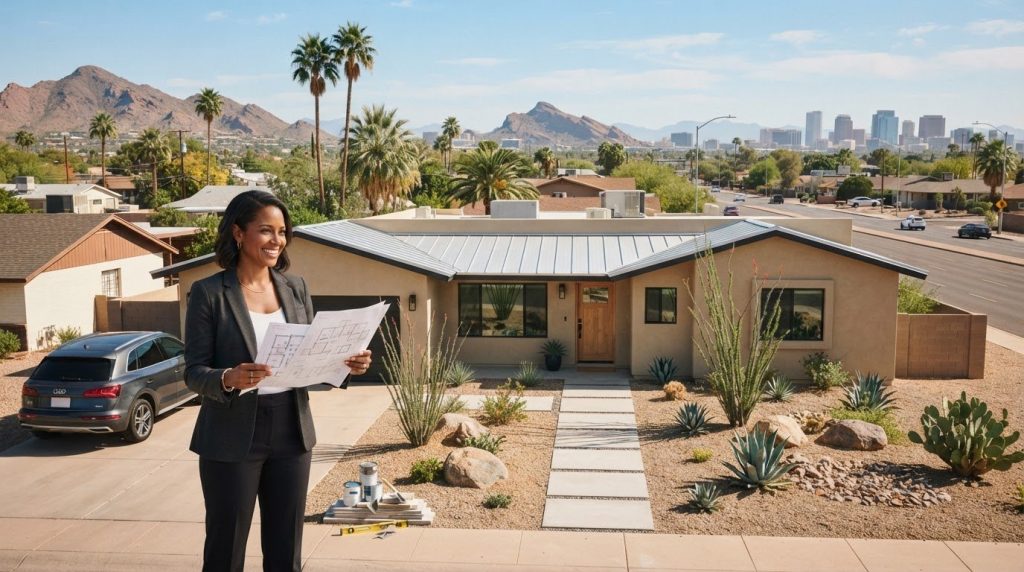


Best Neighborhoods in Phoenix for Flipping Houses in 2026
September 24, 2026How Hard Money Lenders Evaluate a Property Before Approving Your Loan
If you want to find a hard money lender who will actually approve your deal, stop pitching credit and start thinking like an underwriter. This article walks through the exact property-level checks lenders run – ARV math with a numeric example, comp selection, title and environmental red flags, repair scopes and draw expectations – so you can present a package that clears underwriting hurdles. You will also get a lender-facing document checklist and the practical questions to ask so you can shorten approval time and improve your chances of fast funding in Phoenix and the Southwest.
1. How Lenders Prioritize Property Collateral and Exit Over Borrower Credit
Bottom line: hard money lenders underwrite the property and the exit first, then the borrower. Lenders view these loans as short-term, asset-backed bets – if the property will reliably convert to cash or permanent financing on the timetable you present, the borrower credit score becomes a secondary pricing factor rather than a gatekeeper.
What creditors look for when they say they care about the asset
- Marketability: recent closed comps within the submarket and realistic sale timeframes – lenders want evidence the property will sell or refinance within the stated exit period
- Clear title and legal ability to sell: no unresolved tax liens, unreleased mortgages, or probate clouds that would delay liquidation
- Predictable repairs and scope: line-item contractor bids with a sensible timeline and contingency – surprises shrink lender exposure immediately
- Defined exit: signed listing agreement, bridge to a specific permanent lender, or convincing refinance assumptions that show repayment path
Practical tradeoff: good credit reduces rate and can nudge LTV higher, but it will not overcome a bad property or an unclear exit. Conversely, a borderline credit profile can still get funded if the collateral is clean and the exit is documented – expect higher hard money rates and required borrower equity when credit is weak.
Concrete Example: A Phoenix SFR with a purchase price of 150000, rehab budget 50000, and projected ARV 240000 can secure a 70 percent ARV hard money loan capped at 168000. If the borrower has a 580 score but provides contractor bids, a 90 day flip timeline, and a clear title, a private lender like Level 4 Funding will underwrite to the property math and fund quickly – the borrower supplies the gap equity and accepts a higher rate. That arrangement fails if title reveals liens or if contractor bids look unrealistic.
Important limitation: lenders underwrite conservatively for speed – many use BPOs or desktop valuations and will apply haircuts to comps that seem optimistic or distant. If your comps are weak or your repair estimates are optimistic, expect lower approved proceeds and requests for larger borrower equity cushions.
Lenders lend on the exit you can prove, not the exit you plan to execute later.

2. Value Calculation: After Repair Value, Comps, and How Lenders Use Them
Key point: Hard money lenders underwrite against the property as it will be after repairs, not the purchase price. That means the After Repair Value – ARV – is the anchor for maximum lender exposure, and lenders translate that ARV into a practical loan figure using a percent of ARV and a reality check on repair estimates.
- Concrete example: Purchase price 150000, estimated rehab 50000, projected ARV 240000.
- Step calculation: 70 percent of ARV equals 168000 maximum loan using a 70% ARV cap.
- Gap math: Total project cost is 150000 purchase plus 50000 rehab equals 200000. With a 168000 loan the borrower must provide 32000 cash or gap funding.
- What changes if terms tighten: If the lender uses 65 percent ARV the loan drops to 156000 and borrower gap increases to 44000.
Practical insight: Percent of ARV and loan to cost – LTC – move in opposite directions. Lenders headline LTV on ARV because it measures collateral safety. But LTC matters to you because it determines how much up front capital you must bring. In the example above a 168000 loan creates an 84 percent LTC, which many lenders will only accept from repeat borrowers or where contractor draws and tight oversight reduce runoff risk.
Where comps come from and what lenders trust
Sources lenders use: Local MLS sales, county recorder data, broker price opinions – BPOs, desktop valuations, and commercial databases such as ATTOM Data Solutions. For technical guidance on appraisal methods see the Appraisal Institute.
How lenders pick comps in practice: Expect a lender to limit comps to 2 to 4 sold properties, within roughly a half mile and six months when possible, and to prefer closed sales over pending listings. If the subject needs heavy rehab lenders will choose comps in similar condition or apply a conservative adjustment rather than rely on cosmetically superior comparables.
- Adjustment practice: Lenders will adjust comps for square footage, lot size, number of beds and baths, and significant features like pools or garages. They apply a conservative haircut when market velocity is slow or if comps required material adjustments.
- BPO versus appraisal: Fast hard money deals typically use a BPO or desktop check. A full appraisal is required when loan sizes are high, property is commercial, or when the lender needs stronger evidence of value.
How to make your comps defensible to a lender
- Provide sold comps with closed dates: Include the MLS sheet or county deed proving sale date and final sale price.
- Show line by line adjustments: For each comp list why you adjusted price – sq ft, condition, lot, major amenities – and use conservative numbers.
- Include recent photos: If you claim your subject will match a comp after rehab, show pre and post photos for the comp when available or note that the comp was an as repaired sale.
Judgment call lenders make: In thin or shifting markets ARV is an opinion with meaningful variance. Expect private lenders to take the lower reasonable ARV if there is any ambiguity. That reduces your loan amount or forces you to cover more of the cost. If you want to find a hard money lender quickly, present a conservative ARV with clear justifications instead of an optimistic projection that will get shaved down.
Takeaway: Build a defensible ARV by using 3 sold comps with conservative adjustments, attach the MLS or county sale evidence, and show a clear line item rehab budget so lenders can translate ARV into an actual loan figure without recreating your work.
3. Condition, Scope of Work, and How Repair Estimates Influence Approval
Direct point: the physical condition and the quality of your scope of work are the single most actionable items a hard money underwriter will use to change loan size, pricing, and draw structure. Lenders treat condition as operational risk — not a paperwork checkbox — and they price and hold back against the things that actually stop a sale or extend a project.
What lenders expect in a scope package
Minimal acceptable package: an itemized contractor bid with unit pricing, before photos tied to line items, a realistic timeline with milestones, a permit list (what needs pulling and what is already permitted), and a contractor license and insurance snapshot. If work touches structure, foundation, or roof, expect a signed structural addendum or engineer note.
- Itemized contractor bid: line items and quantities, labor vs materials
- Before photos: show the exact defects the bid addresses
- Permitting plan: who pulls permits, expected lead times
- Contingency: lender typically wants 10 to 20 percent depending on risk
- Contractor credentials: license, insurance, portfolio of similar projects
Red flags that shrink or kill approvals: active leaks, visible foundation settlement, major roof failure, long-term water intrusion or mold, additions built without permits, and mixed zoning issues. These trigger conservative treatment: lower LTV, larger contingency, or an outright declination until fixed.
Practical trade-off: pushing to maximize proceeds with a lean scope saves cash now but transfers execution risk to the borrower. Lenders will respond by tightening advances and increasing reserves. In practice, a slightly higher, itemized budget with licensed contractors gets approved more often than an optimistic, soft-bid lowball.
Concrete example: assume ARV is 240000 and the lender will advance 70 percent of ARV (maximum loan 168000). If purchase is 150000 and rehab estimate is 50000, total project cost is 200000 and the borrower needs 32000 of gap. If the realistic rehab is actually 80000, total cost becomes 230000 and the borrower now needs 62000 of gap. That doubling of out-of-pocket exposure is why lenders insist on credible, line-item bids up front — it directly changes whether you can close without bringing big reserves.
Draw schedules and inspection reality: more complex repairs mean more draws and more inspections. Lenders reduce advance rates on undisputed high-risk work (foundations, structural) and sometimes hold larger percentage until final CO. That slows cash flow and adds inspection fees. If you need fast cash, plan scopes to front-load allowable work and avoid multi-stage structural claims unless you budget the time and money.
Lender judgment most borrowers miss: underwriters distrust verbatim contractor quotes without supporting details. Two identical totals look very different when one is a spreadsheet with unit pricing and the other is a single-line 50000 figure. The former gets treated like real risk management; the latter gets treated like uncertainty and is discounted accordingly.
For more on valuation methods that interact with scope risk, see the Appraisal Institute resources on appraisal approaches and how appraisers treat extensive rehab. Appraisal Institute
4. Location and Market Risk Assessments Lenders Run
Direct point: Lenders underwrite the neighborhood almost as hard as the house. For hard money financing the property is collateral first, so any sign the local market will make liquidation slow or costly immediately reduces the loan size and raises pricing.
Neighborhood metrics that move underwriting
- Sale velocity: how many comparable homes sold in the last 90 days; slow velocity forces a haircut to LTV.
- Days on market: rising DOM signals weaker demand and longer holding costs for a flip lender.
- Vacancy and rental demand: for buy and hold loans lenders want low vacancy and predictable rents.
- Price trend and appreciation: falling or flat comps lower ARV confidence and increase required borrower equity.
- Concentration risks: proximity to problem properties, commercial corridors, or single-owner absentee blocks that depress comps.
- Regulatory or title risk: recent zoning changes, active code enforcement, or unresolved legal encumbrances that could delay a sale.
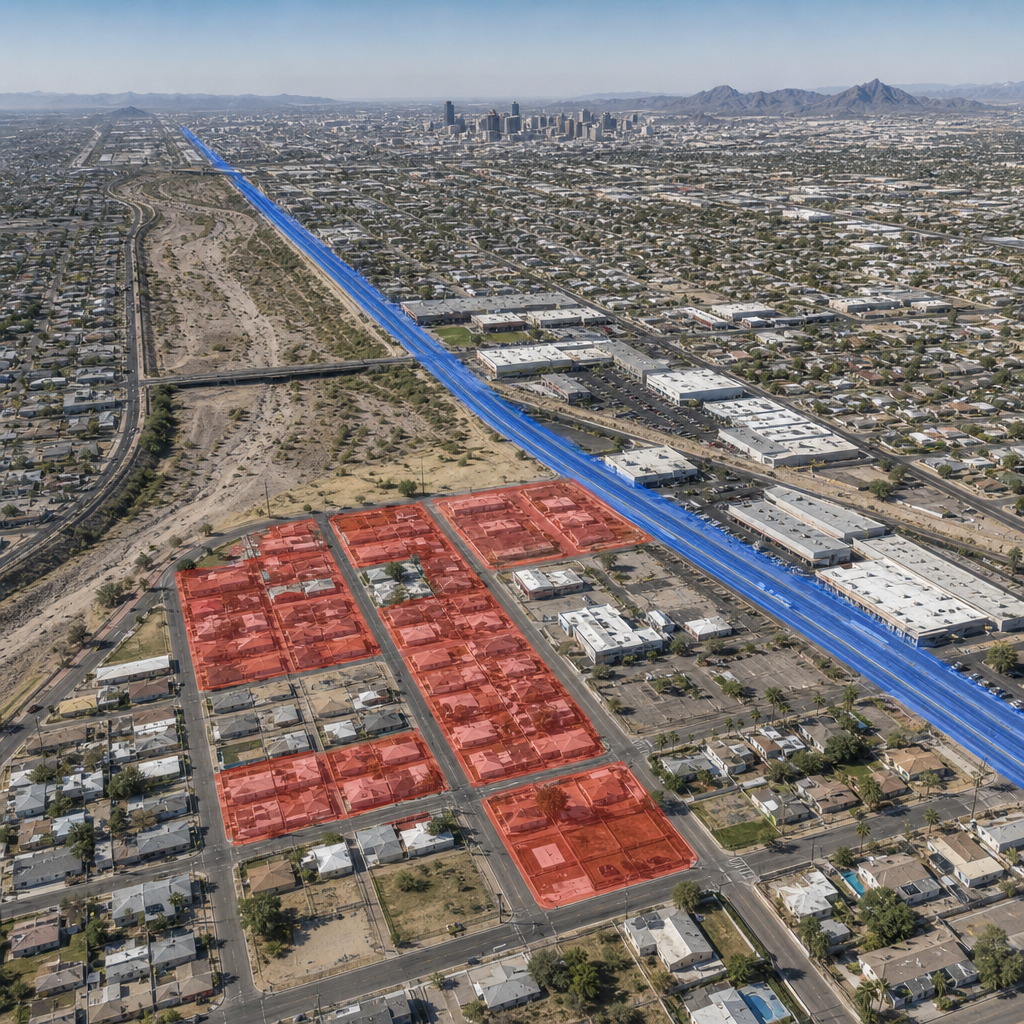
- Localized hazards: flood zones in Phoenix valleys, wildfire exposure, or environmental history that can require insurance or Phase I reports.
Practical insight: Lenders do not treat all comps equally. They run a quick heat check using MLS or data vendors and then apply a confidence discount. High confidence neighborhoods get close to advertised LTV caps; borderline or volatile pockets get reduced LTV, higher rates, and bigger reserve requirements.
Tradeoff to expect: Speed versus certainty. If you want funding inside 24 to 72 hours a lender will rely on BPOs and data feeds like ATTOM Data Solutions or MLS snapshots. That speeds approval but increases the chance the lender will apply conservative pricing to cover data blind spots. If you agree to a full appraisal the lender may restore LTV but add days to the timeline.
Concrete example: A Phoenix single family property with projected ARV of 240000 would normally qualify for a 70 percent LTV loan of 168000. If the lender sees days on market rising above 90 and neighborhood vacancy at 12 percent they may cut allowable LTV to 60 percent, dropping loan proceeds to 144000. That 24000 gap typically becomes borrower cash at close or a smaller rehab scope.
- What to prepare for the lender: local comps (2 to 4 within six months), recent sale velocity screenshot from MLS or ATTOM, current rent listings if relevant, and any neighborhood permit or enforcement notices.
- How to position risky pockets: document exits beyond resale such as strong rent comparables, a staged sale plan, or a proven local realtor committing to an aggressive marketing budget.
- When lenders will insist on extra protections: flood zone or environmental red flags usually trigger requirements for insurance, warranty endorsements, or a Phase I report depending on severity.
5. Exit Strategy, Loan Type, and Borrower Track Record
Direct point: lenders underwrite the deal to the exit, not to your optimism. The exit determines acceptable loan size, required reserves, draw structure, pricing, and whether the lender treats the loan as a flip, construction, rental, or true bridge.
How exit plans change what a lender will approve
Flip vs rental vs bridge: a documented quick-sale exit lets lenders push toward higher LTV on ARV and lean on a short term; a rental exit forces underwriters to test cash flow, require seasoning or higher equity; a bridge for refinance requires proof the permanent lender will refinance or deeper borrower liquidity. These are not semantic distinctions — they move numbers and conditions materially.
- Fix-and-flip: lenders usually underwrite to ARV with draw schedules, expect sale within 3–12 months, and cap exposure around 60–70% ARV.
- Rental/hold: expect lower LTV (often 60–65% ARV), proof of reserves or DSCR testing, and requirement for longer terms or staged conversion conditions.
- Bridge to permanent: lenders want evidence of the refinance path — pre-approval, lender term sheet, or operating history; otherwise they drop LTV or tighten covenants.
Practical trade-off: if you need speed, accept higher points and an interest-only short-term loan. If you want lower cost, be prepared to accept slower underwriting and deliver refinance documentation or longer borrower seasoning.
Borrower track record — what matters in practice
Proof beats promises: lenders reward verifiable exits. Useful documentation includes HUD/settlement statements, before-and-after photos tied to sale dates, signed contractor invoices, and bank statements showing proceeds. Anecdotal claims of experience rarely move the needle.
- What speeds approval: three recent completed projects with P&Ls or HUDs, consistent contractor relationships, and clear sources for gap funding.
- What increases pricing or reduces LTV: first-time flippers, LLC-only ownership without a personal guarantee, or spotty proof of funds — lenders demand higher reserves and bigger holdbacks.
- Entity and recourse: registering the deal in an LLC is common, but expect personal guarantees; some private lenders reduce LTV or add fees when loans are non-recourse.
Judgment: seasoned borrowers routinely get better economics — higher LTV, fewer holdbacks, faster draws, and lower points. Trying to present a single successful flip as equivalent to a repeat operator is a common misread; lenders look for a pattern, not an outlier.
| Scenario | Typical lender metric | Max loan (same property ARV 240000) | Gap to cover (purchase+rehab 200000) |
|---|---|---|---|
| Short-term flip (hard money) | Up to 70% ARV, draws | 168000 | 32000 |
| Rental buy-and-hold (portfolio or rehab-to-rent) | About 65% ARV, reserves required | 156000 | 44000 |
| Bridge to permanent (refinance intent) | Often 60% ARV if refinance not proven | 144000 | 56000 |
Concrete example: an investor buying a Phoenix SFR for 150000 with 50000 rehab and ARV 240000 will usually see the highest immediate funding as a flip: a 70% ARV loan covers 168000. If that same borrower wants to hold as a rental without a track record, expect the lender to offer closer to 65% ARV or require six months of reserves — meaning materially more out-of-pocket cash.
Next consideration: before you call lenders, assemble your exit evidence: signed purchase and sale, contractor bids with timelines, recent completed deal HUDs or P&Ls, and bank statements showing gap funds. That package determines whether you get quick funding or a cautious counteroffer.
6. Title, Legal, and Environmental Due Diligence
Straight to the point: a clean, insurable title and a manageable environmental profile are nonnegotiable. Lenders price or decline deals based on what they find in the title chain and on-site history; small, fixable legal issues behave very differently from latent environmental liabilities.
Title and legal checks lenders perform
Primary checks: underwriters want a current title commitment or preliminary title report that shows ownership, mortgages, tax status, judgments, liens, easements, and recorded covenants. Any exception that affects marketability matters because it reduces recoverable collateral if the borrower defaults.
- Tax and municipal liens: unpaid property taxes and municipal code violations can block funding or require payoffs from closing proceeds
- Unreleased mortgages or liens: these often require payoffs or a title company escrow; unresolved items kill 24-hour closes
- Probate and ownership chains: multi-decedent estates or split ownership require opinions of counsel or court documentation before funding
- Easements and covenants: utility easements, access restrictions, and restrictive covenants can reduce comp value and are priced into LTV
- HOA issues: unpaid dues, pending assessments, and noncompliant structures frequently require HOA estoppel letters before funding
Practical trade-off: some title defects are curable quickly with a payoff or simple document; others require legal action. Lenders will either require cure, accept a reduced exposure, or place funds in escrow until the issue is resolved. Expect faster funding only when you bring a clean title or a clear cure plan.
Environmental and insurability checks
What triggers environmental escalation: prior industrial or commercial use, proximity to dry cleaners or gas stations, documented spills, or indications of underground storage tanks. Floodplain designation and uninsurable hazards are treated as environmental factors for underwriting purposes.
- Site history review: lenders often run a records search and use data providers like ATTOM Data Solutions to flag red flags
- Phase I requirement: typically ordered for commercial deals or any property with identified red flags; a Phase II may follow and materially change the lender position
- Insurance tests: proof of hazard and, if applicable, flood insurance is required; if insurance cannot be obtained at normal rates, expect reduced LTV or decline
- Meth lab or contamination disclosures: lenders will not ignore these and will require remediation documentation and clearances
Judgment call lenders make: for SFR flips in typical Phoenix neighborhoods, lenders will accept a desktop environmental screen and insurers will underwrite standard hazard/flood coverage. For former gas stations or industrial lots, the likely outcome is either refusal or conditional funding that demands a Phase I/Phase II and a remediation escrow.
Concrete Example: a Phoenix single-family purchase turned up an unreleased second mortgage and a small tax delinquency. Level 4 Funding funded the deal only after the borrower provided a payoff statement and the title company held a portion of proceeds in escrow to clear the tax lien at recording. By contrast, a separate rehab candidate on a lot with prior auto repair use required a Phase I and was declined until a clean environmental report was supplied.
7. How to Find a Hard Money Lender and Prepare the Property Package
Start with the package, not the rate. The single fastest way to find a hard money lender and close quickly is to hand them a complete, lender-ready file the first time. In practice that shortens calls, avoids follow up requests, and moves conditional approvals into funding within 24 to 72 hours for local lenders who underwrite quickly.
Where to look and why each source matters
- Local investor referrals: fastest route to credible local lenders who understand Phoenix and the Southwest market and will verify track record quickly.
- Broker and wholesaler networks: useful for specialized bridge and rehab deals where lenders already know the typical exit paths.
- Industry directories and guides: use Scotsman Guide and BiggerPockets to screen lenders by product and geography.
- Online lender portals: good for initial pricing and document uploads but verify local experience before signing terms.
- County records and LinkedIn: verify claims of funded deals by checking recorded deeds and borrower testimonials.
Practical tradeoff: faster funding usually costs more. Online or out of state lenders can be quick on paper, but they often lack local comp sense and will price for uncertainty. Local private lenders will often accept tighter ARV comps or construction schedules in exchange for better spreads and more flexible draw terms.
Lender facing property package checklist
- Cover sheet: property address, loan request amount, loan type, anticipated exit and target close date.
- Purchase contract: fully executed contract with dates, contingencies, and assigned earnest money documentation.
- Itemized rehab budget: line item contractor bid, scope of work, timeline, and a realistic contingency (10 to 20 percent is typical).
- Comps and ARV justification: 3 to 5 comps with dates, photos, and a short note explaining adjustments; include ATTOM or MLS links if available.
- Proof of funds for gap: bank statement or proof of equity source so lenders know you can cover shortfalls and overruns.
- Current title report or recent preliminary title print: speeds title checks and exposes encumbrances early.
- Borrower resume: brief project history, recent exits, and references for repeat borrowers.
- **Single PDF: Assemble as PropertyPackage_ADDRESS.pdf with a clear page order to avoid reviewer delays.
Five direct questions to ask every prospective lender
- How do you calculate ARV and what comp window do you accept?
- What is your maximum LTV or LTC by loan type for this market?
- What is your typical funding timeline once you have a full package?
- What reserves, draw schedule, and inspection milestones do you require?
- What are all fees, points, and prepayment terms I should expect?
Red flags include nontransparent fee schedules, pressure to wire before document review, and lenders who refuse to cite recent regional examples of funded deals.
Concrete Example: An investor in Phoenix prepared a single PDF with a signed contract (purchase 160000), contractor bid (rehab 40000), and three comps showing a realistic ARV of 280000. Level 4 Funding reviewed the file, confirmed 70 percent ARV lending, and committed 196000 leaving a 4000 gap that the borrower covered with proof of funds, enabling funding inside 24 hours. That small proof of funds was the deal maker, not a lower quoted rate from a distant lender.
Judgment that matters: do not chase the nominal lowest hard money rate. Prioritize lenders who understand your exit, will commit to a transparent draw schedule, and who you can actually reach during a week with permitting or contractor delays. Those operational compatibilities save more money than a slightly lower interest rate on paper.