

Bridge Loans in Gilbert: Which Financing Fits Your Property
November 4, 2026
How to Use Hard Money Loans for Real Estate Investing: A Step-by-Step Guide
November 5, 2026
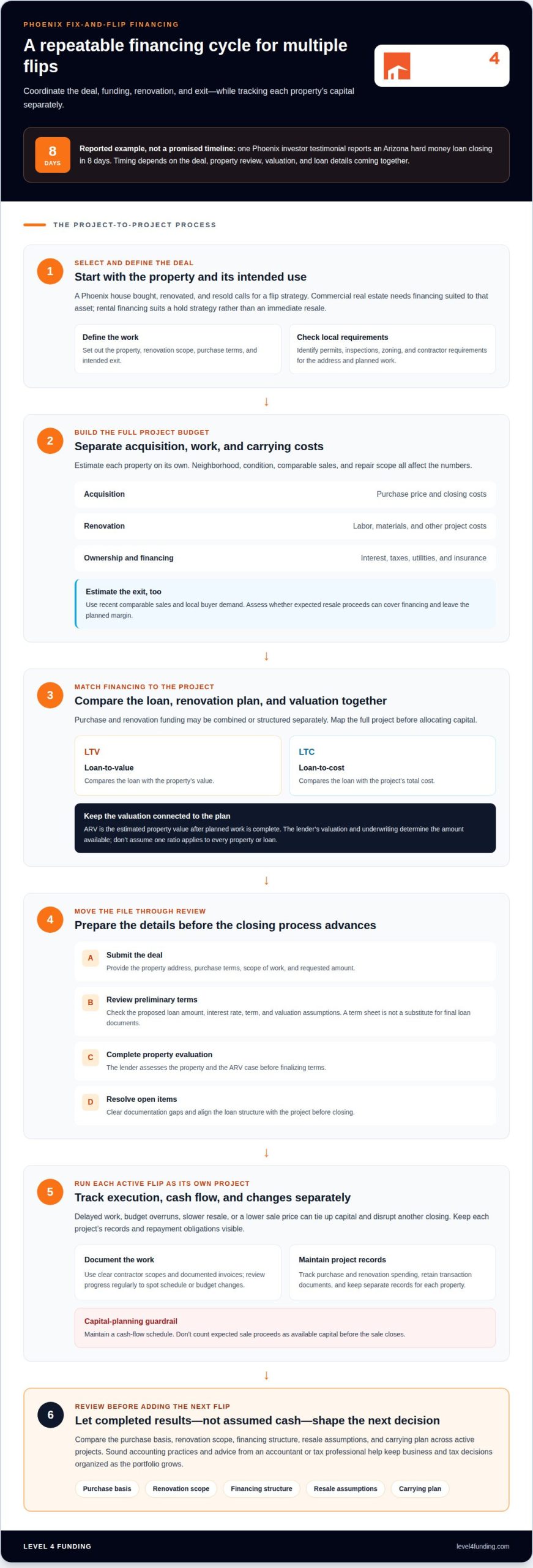
One Phoenix investor testimonial reports an Arizona hard money loan closing in 8 days. Learning how to scale a flipping business with hard money in Phoenix starts with treating that as a reported example, not a guaranteed timeline. Your closing pace depends on how quickly the deal, property, valuation, and loan details come together.
Fast funding matters when a promising Phoenix property won’t wait, but speed alone doesn’t make a flipping business scalable. A repeatable financing plan accounts for purchase leverage, renovation funding, valuation, and the cash tied up in each project. Miss one piece and the next flip can stall while the first is still underway.
This guide explains how to finance multiple flips, compare loan terms, and account for property value and renovation costs. You’ll see how fix-and-flip financing can support a repeatable strategy in Phoenix, with clearer numbers for each deal and fewer surprises as you grow.
Key Takeaways
- Assess a deal using the loan amount, interest rate, and after-repair value together, not as isolated figures.
- Plan multiple flips around how much capital each project ties up and when funds can move to the next deal.
- Compare renovation funding structure with the project’s scope so your financing plan accounts for work as well as acquisition.
- Understand how appraisal findings affect the property’s valuation and the loan terms available for the deal.
- Compare lenders on leverage, renovation funding, appraisal approach, and closing process before choosing a financing partner.
How fast can a hard money loan close in Arizona?
A Phoenix investor testimonial reports an Arizona hard money loan closed in 8 days. That example shows how quickly a deal can move when the application, property review, valuation, and loan terms are ready to advance together. Investors should treat closing speed as a result of a prepared file and clear decisions, not as a fixed timeline for every purchase.
Start with the deal’s numbers. The lender reviews the requested loan amount against the purchase price, renovation plan, and projected after-repair value, or ARV. ARV is the estimated property value after the planned work is complete. A well-supported estimate helps show whether the finished property can support the proposed financing. Include interest in the project budget, along with renovation costs and resale assumptions, because it affects carrying costs.
Arizona loan limits are often described using loan-to-value and loan-to-cost. LTV compares the loan with the property’s value; LTC compares it with the project’s total cost. These measures answer different questions: a deal has a purchase price, a renovation budget, and a projected ARV. Ask how each measure applies to the proposed loan, since the lender’s valuation and underwriting determine the amount available. Don’t assume one ratio applies to every property or loan.
The application process moves through practical checkpoints:
- Submit the deal: Provide the property address, purchase terms, scope of work, and requested amount.
- Review preliminary terms: Read the proposed loan amount, interest rate, term, and relevant valuation assumptions. A term sheet frames the offer; it is not a substitute for reviewing final loan documents.
- Complete property evaluation: The lender assesses the property and the ARV case before finalizing terms.
- Resolve open items: Clear documentation gaps and align the loan structure with the project before closing.
Loan type matters, too. Residential flips focus on a house or other residential property, while commercial property loans address commercial real estate projects. The property, intended use, renovation scope, and repayment plan shape which structure fits. A traditional financing process may involve different underwriting steps; hard money financing centers strongly on the property and deal structure, while the investor’s ability to execute still matters.
To scale in Phoenix, build sound accounting practices alongside deal flow. Keep separate project records, track purchase and renovation spending, retain transaction documents, and work with an accountant or tax professional on business and tax decisions. These habits make results easier to assess and records easier to manage as you take on multiple flips.
Using hard money loans to finance multiple flips
Scaling several Phoenix projects takes coordinated financing, not just a series of approvals. A clear operating plan helps you scale a flipping business with hard money in Phoenix while keeping each property’s budget and exit strategy distinct.
Property Eligibility and Financing Options
Property type and intended use shape the financing structure. A Phoenix house bought, renovated, and resold calls for a flip strategy; commercial real estate needs financing suited to that asset. Bridge loans can support a short-term purchase or transition, while rental financing suits a hold strategy rather than an immediate resale. Purchase and renovation funding may be combined or structured separately, so map the full project before allocating capital.
Phoenix renovation permits, inspections, zoning, and contractor requirements depend on the property and planned work. Identify the requirements that apply to the address and scope before setting the construction schedule. Approvals and inspections can affect the sequence, so include them in the project plan rather than assuming work can start immediately.
Purchase and Renovation Cost Factors
No single purchase price or renovation cost represents every Phoenix fixer-upper. Neighborhood, condition, comparable sales, and repair scope all affect the budget. Build a property-specific estimate that separates acquisition expenses from labor, materials, and other project costs. Then assess whether expected resale proceeds can cover the financing and leave the planned margin.
Flipping conditions and resale prices vary by Phoenix neighborhood and property condition. Use recent comparable sales and local buyer demand to estimate an exit rather than relying on one citywide figure. Property taxes, closing costs, utilities, and insurance affect profit during ownership and at sale. Include them in the cash-flow plan alongside financing and renovation expenses.
Scaling Risks and Risk Management
Hard money loans can help investors pursue multiple purchases, but each active project brings repayment obligations and execution demands. Delayed work, budget overruns, a slower resale, or a lower sale price can tie up capital and disrupt another closing. Track each property separately, maintain a cash-flow schedule, and don’t count expected sale proceeds as available capital before the sale closes.
Before adding another flip, review its purchase basis, renovation scope, financing structure, resale assumptions, and carrying plan. Compare these details across active projects to spot pressure early. Clear contractor scopes, documented invoices, and regular progress reviews can reveal schedule or budget changes. For investors scaling a flipping business with hard money in Phoenix, disciplined tracking connects borrowing decisions to the work and exit plan.
Fix-and-flip loan leverage and renovation funding
Leverage can stretch an investor’s available capital, but the loan structure must fit the project. Compare the loan amount, renovation funding, and repayment terms with the property’s exit plan.
Loan Amounts and Terms
A fix-and-flip loan amount reflects the purchase, planned improvements, property value, and lender’s leverage limits. Loan-to-cost measures financing against project costs; loan-to-value measures it against property value. Neither measure alone tells you whether the deal works. Calculate the cash you must contribute, then account for interest, carrying costs, and expenses due before renovation funds are released.
A financing example shows the leverage effect: an investor borrows $100,000 and then has $150,000 to spend in the market. That illustration is not a quoted loan offer or a guaranteed outcome. For each Phoenix property, compare the proposed amount with its acquisition cost, repair scope, and expected after-repair value. Review the loan term and repayment structure alongside the budget, not after signing.
Loan Program Options
Fix-and-flip programs can differ in how they handle acquisition funds, renovation costs, draw timing, and repayment. Match those features to the work plan. A project with staged repairs needs a funding schedule aligned with contractor milestones; a property needing limited work may suit a simpler budget structure.
Credit and real estate experience can inform a lender’s review, while property value and project economics remain central to the financing case. Ask how renovation funding works and what documentation supports each draw. Clear terms help you plan cash needs without relying on funds before they are available.
For a competitive purchase, calculate leverage before making an offer. Separate the purchase price from repair costs, then list expected holding expenses and the planned exit. This shows how much capital may remain for the next project and whether the loan’s repayment schedule fits the renovation and sale plan.
- Acquisition: Confirm which purchase costs the financing covers.
- Renovation: Map work items to the funding and draw process.
- Repayment: Align the loan term with the expected project timeline.
- Next deal: Estimate how much cash remains tied up until repayment.
Financing isn’t just about maximizing the amount borrowed. More leverage can preserve capital for other projects, but it can also increase repayment obligations. Compare the interest rate, any fees in the offer, loan term, and funding process as one package. Borrowing less may leave more room for overruns; a larger loan may demand stronger project economics.
Use the same worksheet for each Phoenix fix and flip. Record the purchase, renovation budget, loan amount, funding schedule, and expected resale proceeds. A consistent view helps you compare projects and choose financing based on fit, not headline leverage alone.
Closing speed and appraisal requirements
A Phoenix purchase can move quickly when the transaction’s key pieces stay aligned. The application, property valuation, purchase contract, renovation plan, and final loan documents each affect the path to closing. Treat appraisal work as part of underwriting, not a last-minute formality. A clear file helps the lending partner assess the property and proposed financing without avoidable gaps.
Start with the purchase contract and a complete property package. Include the property address, agreed purchase terms, renovation scope, and comparable sales supporting the projected after-repair value. Valuation helps assess the property as it stands and, where relevant, its projected value after the work. If the scope describes a full kitchen renovation but the supporting documents show only cosmetic updates, the mismatch can raise questions and slow review.
An appraisal or other valuation is more than a resale-price prediction. It provides evidence of the property’s value for the loan analysis. The appraiser or valuation process may consider the home’s condition, features, location, and comparable properties. For a Phoenix property with planned repairs, distinguish its current condition from improvements yet to be completed. Photos, contractor estimates, and a clear scope can help explain the project.
- Before submission: Assemble the contract, property details, renovation scope, and supporting value information.
- During review: Respond promptly to document requests and explain any gap between current condition and projected value.
- Before closing: Compare final loan documents with the agreed terms and confirm the purchase details align.
Appraisal timing can affect the transaction even when other tasks are ready. Access arrangements, missing property information, or a revised renovation scope can add review steps. For example, if an inspection reveals damage missing from the original scope, the project budget and valuation assumptions may need review. Keep the purchase details, repair plan, and financing figures consistent as the file progresses.
A bridge loan can support a time-sensitive purchase or a transition between financing stages, but its term and repayment plan must fit the exit. Before relying on bridge financing, map the steps from acquisition through renovation and resale or refinance. A delay at any stage can extend the time before repayment, affecting project cash flow and the capital available for the next purchase.
Closing readiness is a sequence, not a single lender decision. Organize records, return requested items, resolve title or property questions through the transaction process, and review final documents before signing. Investors pursuing multiple Phoenix opportunities can use the same file checklist for each property while keeping each appraisal, scope, and purchase contract distinct. This discipline helps the lending partner assess each deal on its own facts and keeps financing decisions tied to the property.
Comparing hard money lenders
For real estate investors, the best comparison goes beyond the interest rate. A hard money lender’s leverage, renovation funding, appraisal approach, and closing process all affect a flip’s cash flow. Compare the full written terms against the same Phoenix property and project plan. Otherwise, a lower rate can distract from a smaller loan amount or a funding schedule that strains the renovation budget.
Start with the proposed financing structure. Compare the loan amount, interest calculation, term, repayment conditions, and any stated fees. Then check how each lender calculates loan-to-value and loan-to-cost. One offer may lean more on the property’s current value; another may weigh projected value or project cost differently. That distinction affects cash needed at closing and the capital left for the next purchase.
Compare renovation funding separately. Review whether funds are advanced at closing or released as work progresses, what documents support each draw, and how the schedule aligns with contractor milestones. A kitchen and roof project, for example, may need separate phases. If the funding process doesn’t match the work sequence, you may need to cover expenses while waiting for a draw.
- Leverage: Compare loan amount against purchase cost, project cost, and property value.
- Interest and term: Read how interest accrues and when repayment is due.
- Renovation draws: Match release conditions to the repair schedule.
- Valuation: Understand how current condition and after-repair value factor into underwriting.
- Closing process: Compare required documents and unresolved steps in the transaction.
Match the loan to the exit plan. A fix-and-flip project needs financing suited to renovation and resale. A rental strategy has a different timeline and repayment approach. Bridge loans can support a short-term purchase or transition, but the planned exit must fit the loan term. Don’t compare a rental-focused structure with a flip loan as if they serve the same purpose.
For repeat projects, consistency matters. Use the same deal worksheet to compare each offer, including acquisition, renovation, carrying costs, and expected repayment. Then test the terms against a slower sale or revised work scope. This shows whether the financing leaves room to adapt or depends on every project milestone landing exactly on schedule.
Choose the structure that fits the actual property, not simply the most attractive headline. If you’re evaluating financing for a Phoenix flip, explore hard money loan options that align with the project’s purchase, renovation, and exit plan.
Level 4 Funding: Fix and Flip Loans
Level 4 Funding offers Fix and Flip Loans for real estate investors planning to purchase, renovate, and resell properties. This is a natural financing option when the project depends on funding for a defined flip strategy, rather than a long-term rental plan. Bring the deal’s purchase details, renovation scope, and expected exit into the financing conversation so the loan structure can be considered alongside the project’s actual needs.
For projects centered on new building work or commercial property, Construction Loans and Commercial Property Loans may be relevant alternatives. Cash Out Refinance may fit a different stage, when an investor is assessing financing against property they already own. The right fit depends on the project type and financing goal. If you’re planning a Phoenix flip, contact Level 4 Funding to discuss your project and Fix and Flip Loan needs.
Build Your Next Move Around a Repeatable Plan
A stronger flipping business grows through disciplined decisions, not deal volume alone. Before pursuing another Phoenix property, define how each project fits your team’s capacity, available capital, and operating plan. That framework turns lessons from one flip into a more consistent process for the next. A clear plan for scaling a flipping business with hard money in Phoenix connects financing decisions to the work your business can deliver.
Level 4 Funding offers Fix and Flip Loans, Construction Loans, and Commercial Property Loans for real estate investors pursuing different project types. The right financing conversation starts with the property and your intended plan, not a one-size-fits-all assumption. Share the project you’re considering and the financing goal you’re working toward.
Contact Level 4 Funding to discuss your next real estate project. Take the next step with a plan built around the opportunity in front of you.
Frequently Asked Questions
What loan amounts are available?
The right amount for a Phoenix flip depends on the purchase, property valuation, renovation plan, and financing structure. Separate acquisition funding from renovation needs, then account for holding costs and cash reserved for another project. A broad loan range doesn’t mean every amount fits every property or borrower.
Why Arizona and Why Now?
As of August 2024, Arizona had approximately 36,992 homes available for purchase, 26.0% more than the previous year. That inventory gives Phoenix investors more properties to screen, while making careful deal selection essential. Compare neighborhood-level sales, renovation scope, and buyer demand before estimating resale potential. A wider search pool only helps when the purchase basis supports a realistic exit and leaves room for project expenses.
Which hard money lenders serve Phoenix house flippers, and what are their rates and fees?
Level 4 Funding serves Phoenix investors as a private hard-money mortgage broker, presenting loan criteria to a network of 200+ professional lenders. Advertised fixed rates start at 5.99% APR*, while other rates apply to specific terms and funding structures. Compare APR, repayment term, leverage, draw rules, and charges stated in the written offer. The financing structure depends on the property and project plan.
How do hard money loan terms, draw schedules, and extension fees work for fix-and-flip projects?
Fix-and-flip loan terms range from 3 to 60 months. A draw schedule sets how renovation funds are released during the project, so examine the required documentation, approval steps, and timing against contractor milestones. Extension terms and any related charges depend on the written loan agreement. Review those provisions before closing, including eligibility, notice requirements, and how an extension affects repayment and the project’s cash flow.
How can a Phoenix flipper estimate ARV, renovation budget, holding costs, and maximum purchase price?
Estimate after-repair value by comparing nearby sales of similar properties in comparable condition, then adjust for planned improvements. Build a line-item renovation budget from the actual scope, including materials and labor. Add financing, taxes, utilities, insurance, and transaction expenses to holding costs. Set a maximum purchase price by subtracting projected expenses and the required profit from estimated resale proceeds, then test the deal against a slower sale.
What are current Phoenix home-flipping market trends and typical resale prices?
Phoenix flipping conditions and resale prices vary by neighborhood and property condition. Use recent comparable sales and local buyer demand to estimate resale value rather than applying a citywide figure.

About the author
Matt has a bachelor's degree in political science from Northern Arizona University and works at Level 4 Funding, a private lending company that offers hard money and rental home loans to real estate investors in 35 states.
With Matt's leadership, the firm has financed almost $300 million in loans for investment properties. He often helps real estate investors with rental property purchases, foreclosures, refinancing, and fix-and-flip projects. Matt has extensive experience in fix-and-flip, buy-and-hold, rental properties, and real estate sales. He has lived in Arizona for 43 years and is married with three children. Matt is licensed as a mortgage broker and loan originator in Arizona, with NMLS 2062278 and NMLS 1118493.
Equal Housing Opportunity. This is not a Good Faith Estimate, and it is not a Guarantee to lend; it should not be considered as such. Costs, rates, estimates, and terms can only be determined after a full application is completed. To the extent this message includes any tax or legal advice, this message is not intended or written by the sender to be used, and cannot be used, for legal or tax purposes or advice. This is an advertisement. Copyright © 2026. All rights reserved.