

Hard Money Lenders in Nevada: Rates, Requirements, and How to Fund Your Next Deal Fast
November 10, 2026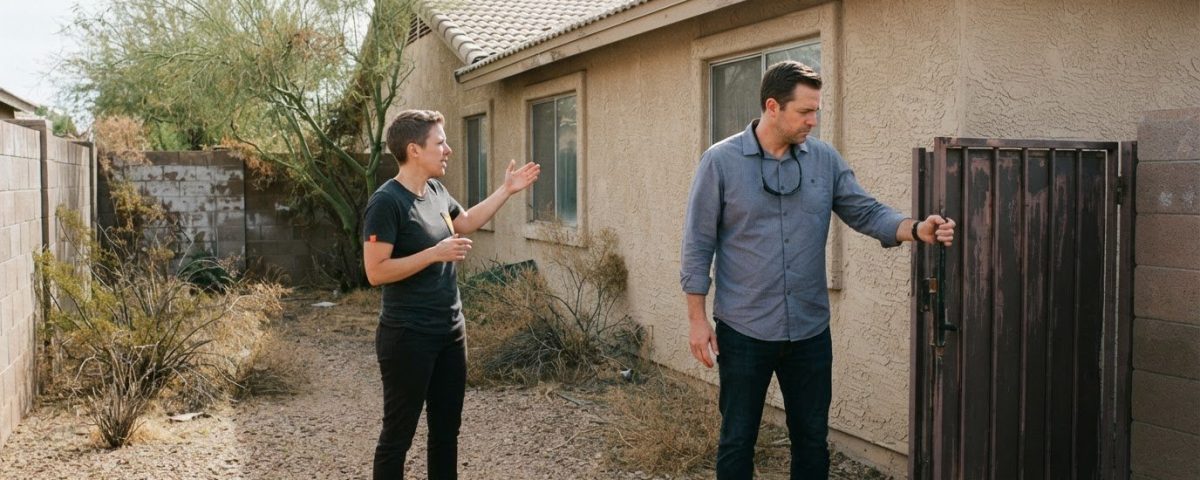
The best flip lead may be the one other buyers overlook. Where you find homes to flip in Phoenix and Scottsdale can matter as much as what you buy. Look beyond polished listings to investor networks, vacant properties, for-sale-by-owner and expired listings, auctions, and homes that need work.
If you’ve searched listing after listing and found little room for a workable deal, you’re not alone. Opportunities can come from several sources, and each calls for a different approach. A vacant home may show signs of neglect, an expired listing may open a fresh conversation, and an auction can offer another route to a purchase.
This guide explains where to look, how to spot promising leads, and what to consider when comparing Phoenix and Scottsdale locations. You’ll also learn how to assess a potential flip before moving forward, so you can focus on properties whose condition, resale potential, and renovation needs fit your investment plan.
Key Takeaways
- Build relationships with wholesalers and local investor groups to hear about potential deals before they gain wider attention.
- Compare neighborhood resale potential with your purchase and renovation budget, then assess the property’s condition before pursuing it.
- Search for vacant homes, FSBO properties, and expired listings using signs of deferred maintenance and listing language that suggests room to negotiate.
- Approach auctions and off-market leads with a clear evaluation process so you can weigh property condition, resale prospects, and acquisition terms.
- Once you identify a viable project, explore whether a Fix and Flip Loan fits the purchase and renovation plan.
1. Networking with wholesalers and real estate investor groups
In Phoenix and Scottsdale, a steady deal flow often starts with people who see properties before they reach a broad pool of buyers. Join local real estate investor groups, attend meetups, and introduce yourself to active investors. Be specific: describe the neighborhoods you target, the property condition you can handle, and how quickly you can assess a lead. A clear buying profile helps people remember which opportunities fit your plan.
Build relationships with contractors, inspectors, and other local professionals. A contractor familiar with older homes may spot renovation potential a casual buyer misses. Ask about common repair issues in your target neighborhoods and use those insights to shape your criteria. After meetings, follow up with a short summary of your preferred areas and property types. Reliability matters: investors and agents are more likely to share leads with someone who responds clearly and follows through.
Search MLS listings and real estate websites alongside networking. Try terms such as “fixer-upper,” “as is,” and “estate sale,” then compare each candidate with nearby homes in better condition. Save separate searches for Phoenix and Scottsdale neighborhoods to make new listings easier to review. An investment-focused real estate agent can help interpret comparable sales, flag listings that may need work, and sometimes share pocket listings not visible on the MLS. Explain your renovation scope and resale goals instead of asking generally for a “good deal.”
Wholesalers offer another route. A wholesaler contracts to buy a property, then assigns the contract to another investor at a higher price, keeping the difference as profit. Before assessing a lead, ask for the property’s location, condition, contract terms, and available access. Run your own numbers for repairs and likely resale value. A lead isn’t automatically a successful flip just because it came through an investor network.
What permits, disclosures, and legal rules apply when buying a home to flip? Requirements depend on the property and planned work, so identify applicable local permits and transaction disclosures before finalizing the renovation plan. For FHA financing, the U.S. Department of Housing and Urban Development says the FHA generally will not insure a loan for a property resold within 90 days of the seller’s acquisition.
How can wholesalers and real estate agents help find flip deals? Wholesalers can bring contract opportunities, while investment-focused agents can identify relevant listings and provide market context. Use both channels to broaden your search, then assess each property independently before making an offer.
2. Where are the best locations for flipping houses?
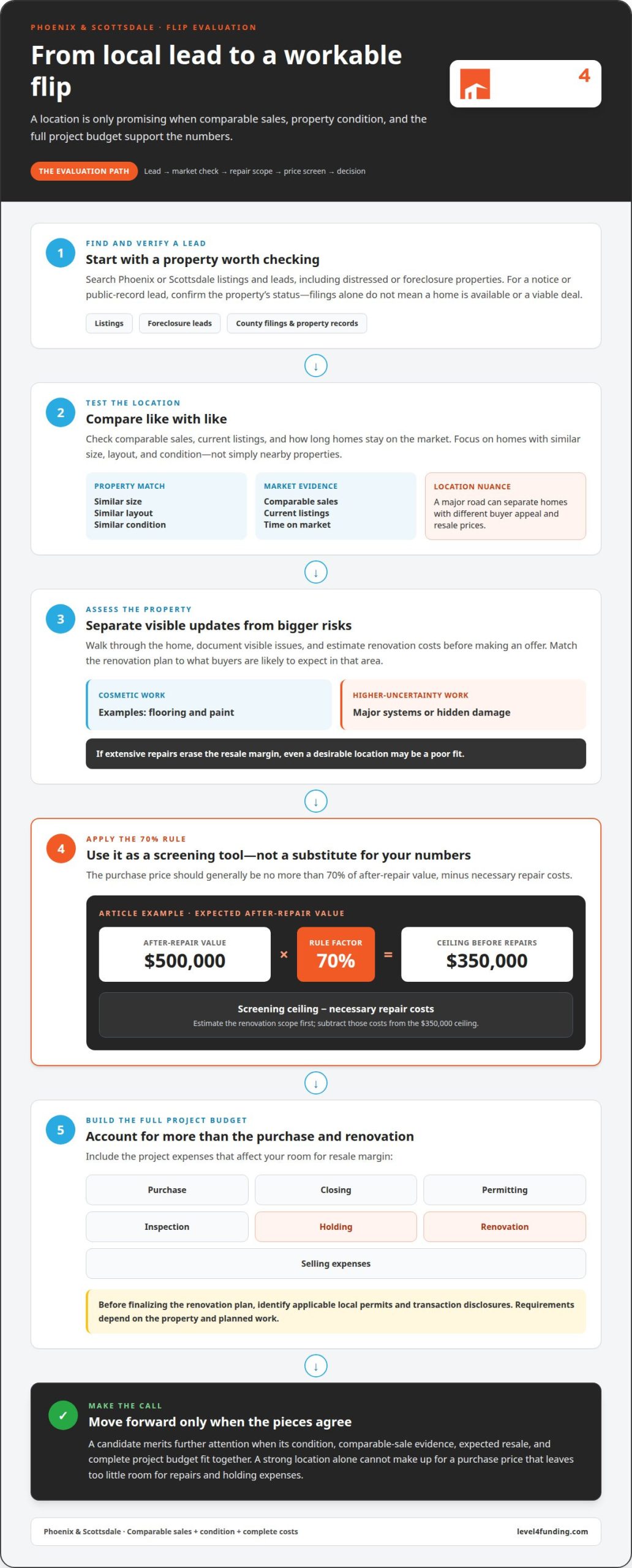
Where do you find homes to flip in Phoenix and Scottsdale? Start with neighborhoods where comparable sales support your expected resale price. Compare homes with similar size, layout, and condition, not just properties nearby. A renovated home across a major road may attract different buyers or sell for a different price. Review comparable sales, current listings, and how long homes stay on the market. A strong location can’t make up for a purchase price that leaves too little room for repairs and holding expenses.
Use the 70% rule as a screening tool: the purchase price should generally be no more than 70% of a property’s after-repair value, minus necessary repair costs. For example, if the expected after-repair value is $500,000, 70% is $350,000 before repair costs are deducted. Estimate the renovation scope first, then subtract those costs from the $350,000 ceiling. Include purchase, closing, permitting, inspection, holding, renovation, and selling expenses in your budget. The rule is a starting point, not a substitute for property-specific numbers.
Condition can change the numbers quickly. Separate cosmetic work, such as flooring and paint, from repairs involving major systems or hidden damage. Walk through the property, document visible issues, and estimate costs before making an offer. Compare the renovation plan with likely buyer expectations in that Phoenix or Scottsdale area. Extensive repairs may make a home a poor fit, even in a desirable location, if costs erase the resale margin.
Foreclosure listings can include bank-owned and distressed homes offered for a quick sale. A Notice of Default or lis pendens may appear in county records when a homeowner falls behind on mortgage payments. Foreclosure and auction sales can lead to distressed properties, but the purchase process and property condition may differ from those of standard listings. Review the sale terms and include inspection, repair, and resale assumptions in your offer analysis.
To locate pre-foreclosure leads, monitor county filings and public property records for relevant notices. Homeowners facing foreclosure may be subject to state-specific rules on investor contact, so keep outreach respectful and follow applicable requirements. A filing alone doesn’t prove that a home is available or that a deal is viable. Confirm the property’s status and compare its likely resale value with the full project budget.
Out-of-state owners can also be a source of leads. Property tax databases may provide an owner’s name and address as public record. Match records to properties that appear vacant or need work, then use a professional, respectful approach to start a conversation. If you’re asking, “Where do you find homes to flip?” use location, condition, comparable sales, and renovation costs to decide which Phoenix or Scottsdale leads deserve further attention.
3. Finding vacant homes, FSBO listings, and expired listings
A vacant house may stand out on a Phoenix block, but vacancy alone doesn’t make it a flip. Look for visible clues such as overgrown landscaping, boarded windows, uncollected mail, government notices, or obvious exterior disrepair. These signs can point to a property worth researching, but they don’t prove it’s abandoned or available. Record the address, observe from public areas, and compare the home with occupied properties in the same neighborhood. Nearby buyers and recent sales can help show whether its location supports your investment plan.
Use the property address to research ownership and listing history before pursuing a lead. If the home appears vacant, public property records can help identify its owner. Don’t enter the property or treat uncollected mail as permission to access it. A respectful first contact should explain why you’re reaching out and invite the owner to respond if interested. Keep the conversation focused on the property’s condition, possible sale timeline, and whether the owner is open to discussing a purchase. If there’s no answer, stop rather than applying pressure.
For-sale-by-owner listings let you contact a seller directly, without an agent handling the initial listing. Search Phoenix and Scottsdale real estate websites for FSBO homes, then use the listing details to prepare focused questions. Ask about known repairs, updates, occupancy, and the seller’s preferred timing. During a walkthrough, note visible renovation needs and compare them with local resale listings. Direct communication may clarify the seller’s priorities, but it doesn’t replace a careful property review or a realistic renovation estimate.
Expired listings are homes that did not sell during their initial listing period. Search listing histories for expired properties, then look for relevant details in the previous description or photographs. A house that has been listed for 60 days or longer may have a seller more open to negotiating price or terms. That possibility isn’t proof of motivation: the seller may have paused the sale or changed plans. If you make contact, keep the message brief and specific to the property rather than sending a generic pitch.
Use targeted search terms to catch listings standard filters may miss. Try “fixer-upper,” “TLC,” “handyman special,” “as is,” and “estate sale” across real estate platforms. Save separate searches for Phoenix and Scottsdale, then compare new matches with nearby homes and comparable resale properties. For each candidate, note the asking price, apparent condition, and likely renovation scope. A simple record helps you sort leads by investment fit instead of chasing every distressed-looking property.
HUD maintains a database of real-estate-owned properties that it and other federal agencies sell to investors. Include these listings in your search and examine each property’s details and sale terms. Whether a lead comes from a vacant home, FSBO post, expired listing, or federal database, the next step is the same: establish the property’s status and assess its condition before deciding whether it merits an offer.
4. Attending auctions
Auction listings can expose Phoenix and Scottsdale investors to houses that rarely appear as standard retail listings. Start by identifying the auction source and reviewing the sale notice for each property. Note the address, sale date, bidding process, deposit terms, and any stated limits on access. Auction conditions vary, so don’t assume one property’s terms apply to another. Keep a written record of each candidate, including its source and decision deadlines.
Before bidding, compare the property with local listings and recent sales for similar homes. Estimate its likely resale value after renovation, then account for purchase, repair, holding, and selling expenses. The purchase price is only one part of the deal. A low opening bid doesn’t guarantee a profit if substantial repairs or a weaker resale market narrow the margin. Set a firm maximum bid using your project numbers, and stop when bidding passes it.
Property access may be limited before an auction, making condition assessment more difficult. Use any inspection opportunity described in the sale information and review available property details before committing. Look for visible damage in photographs or accessible areas, but don’t treat those observations as a complete inspection. If you can’t determine the repair scope, account for that uncertainty in your offer analysis rather than assuming the work is cosmetic. Agents familiar with local real estate can help interpret comparable sales and neighborhood demand.
Foreclosure and bank-owned auction listings may involve distressed houses offered for a quick sale. Read the sale terms carefully and identify the steps required to bid. Confirm the payment requirements and timing stated for that specific sale, then make sure your acquisition plan can meet them. Don’t bid based on the auction description alone. The home’s condition, resale potential, and likely renovation costs must still fit your project plan.
What are the risks of buying homes at auction or off market? Limited access can make hidden repair needs harder to assess, while bidding competition can push the purchase price beyond a workable level. Review the property information and sale terms, then set your maximum bid before bidding begins.
After the auction, keep the purchase documents and sale details with your renovation budget. Revisit the numbers before arranging contractor work or planning resale. If the final price changes your repair budget or expected profit margin, adjust the project plan instead of treating the win as a successful flip by default. A disciplined limit helps protect your budget. The next opportunity is better than an overpriced house.
5. How to find off-market homes to flip
Finding off-market leads takes more than scrolling listings. Build a focused search around Phoenix and Scottsdale neighborhoods where you understand buyer demand and resale comparables. Ask local contractors, property managers, and real estate professionals to keep your buying criteria in mind. A useful profile names your target areas, the property condition you can take on, and the renovation scope that fits your plan. Specific criteria help contacts spot a possible match instead of sending every distressed property your way.
Consider hiring a birddog to identify potential properties. Agree on what counts as a qualified lead before the search starts, such as a specific Phoenix neighborhood, visible deferred maintenance, or an owner open to selling. Track each address and its lead source. Then compare potential resale value with purchase, repair, holding, and selling expenses before deciding whether to pursue the property.
Public property records can support targeted prospecting. Use county property and tax records to find properties in your target area, then organize leads by address and observed condition. Neglected landscaping, for example, may warrant research, but it doesn’t establish vacancy, an owner’s intention, or willingness to sell. Keep outreach professional and brief. Identify yourself, explain your interest in the property, and give the owner room to decline or respond later.
Referrals can surface homes before an owner considers a public listing. Tell contractors and property managers what types of projects fit your criteria, then follow up when they flag a property. A contractor might hear that an owner is weighing repairs against selling; that conversation can become a lead, not a commitment. Contact the owner respectfully and ask whether they want to explore a sale. A referral doesn’t give you permission to enter, inspect, or negotiate on someone else’s behalf.
Use a simple lead log to keep your process disciplined. Record the property address, source, contact status, visible condition, and next follow-up step. As the lead develops, add comparable Phoenix or Scottsdale resale properties and a preliminary renovation estimate. If access becomes available, inspect the home and refine the repair scope before making an offer. Advance a lead only when its likely resale value, condition, and acquisition terms fit your investment plan.
Off-market doesn’t mean low-risk or automatically below market. Confirm the owner’s interest, understand the proposed transaction terms, and assess the property before committing. If a potential flip fits your acquisition criteria, explore financing options for your project as part of planning the purchase and renovation.
Level 4 Funding: Fix and Flip Loans
Level 4 Funding offers Fix and Flip Loans for real estate investors who have identified a property and are planning its purchase and renovation. Once your numbers account for acquisition, repairs, holding expenses, and expected resale, financing becomes part of the project plan. A Fix and Flip Loan may fit when you need private financing for a flip. For a project involving new construction, Construction Loans may be relevant; Commercial Property Loans and Cash Out Refinance serve different investment needs.
Bring the property details and your renovation plan into the financing conversation. The clearer your project scope, purchase plan, and intended exit, the easier it is to discuss which loan type aligns with the investment. Contact Level 4 Funding to discuss financing for your real estate project.
Turn Your Next Lead Into a Clear Project Plan
Knowing where to find homes to flip is only part of making your next move. Before pursuing a property, decide what would make you walk away: an unclear repair scope, a purchase that squeezes your margin, or a resale plan based on unsupported assumptions. Put those limits in writing. They’ll help you act with purpose when a promising lead appears, without letting pressure to secure a deal override your judgment.
Financing belongs in that plan early, alongside your purchase and renovation approach. Level 4 Funding offers Fix and Flip Loans, Construction Loans, and Commercial Property Loans for real estate investment projects. The right fit depends on the project you’re pursuing and the financing need you bring to the conversation.
Have a property or project in mind? Contact Level 4 Funding today to discuss your next step. Keep your criteria clear, your plan grounded, and your next opportunity in reach.
Frequently Asked Questions
What is the best way to find houses to flip?
The best approach is to build a repeatable search and evaluate every lead against the same buying criteria. In Phoenix and Scottsdale, choose target areas, define the property condition and renovation scope you can manage, then track leads and follow-ups in one place. Combine online searches with conversations and local referrals. This keeps your pipeline active while helping you focus on properties that fit your investment plan.
Where do house flippers find properties for sale?
House flippers find properties through public listings, agent relationships, investor contacts, auctions, and direct owner outreach. Each source offers a different path: an online listing may include photos and property details, while a conversation with an owner can reveal their preferred timing. For Phoenix-area deals, record where each lead came from and what information is still needed. This makes it easier to follow up and compare opportunities consistently.
What neighborhoods and property types are best for flipping?
The best fit depends on the gap between acquisition cost and likely resale value, the property’s condition, and buyer demand in that specific area. In Phoenix or Scottsdale, compare similar nearby sales and consider whether the planned renovation suits local buyer expectations. Homes needing cosmetic updates, such as flooring, paint, or modest kitchen and bathroom improvements, may suit a flip in a desirable neighborhood. Evaluate each property’s repair scope before choosing a target area.

About the author
Matt has a bachelor's degree in political science from Northern Arizona University and works at Level 4 Funding, a private lending company that offers hard money and rental home loans to real estate investors in 35 states.
With Matt's leadership, the firm has financed almost $300 million in loans for investment properties. He often helps real estate investors with rental property purchases, foreclosures, refinancing, and fix-and-flip projects. Matt has extensive experience in fix-and-flip, buy-and-hold, rental properties, and real estate sales. He has lived in Arizona for 43 years and is married with three children. Matt is licensed as a mortgage broker and loan originator in Arizona, with NMLS 2062278 and NMLS 1118493.
Equal Housing Opportunity. This is not a Good Faith Estimate, and it is not a Guarantee to lend; it should not be considered as such. Costs, rates, estimates, and terms can only be determined after a full application is completed. To the extent this message includes any tax or legal advice, this message is not intended or written by the sender to be used, and cannot be used, for legal or tax purposes or advice. This is an advertisement. Copyright © 2026. All rights reserved.