


Land-Only Financing: Your Best Options When Banks Won’t Touch Raw Land
October 11, 2026
What if a promising Phoenix commercial deal isn’t the problem, but the mismatch between the property’s condition, your timeline, and conventional financing? Commercial hard money lending may offer an asset-focused path when a project needs a different kind of financing. Flexibility alone, however, doesn’t make a deal fundable.
If you’re weighing private capital, you need clear answers: What will a lender evaluate? How does the project plan affect the decision? What risks come with the financing? The property matters, but so does your plan to repay the loan. A strong request connects the two.
This article explains how commercial property and project details can shape a financing review, when private capital may fit an Arizona investment, and what to prepare before making a funding request. You’ll also see how Level 4 Funding’s commercial property loans fit into the conversation, with Phoenix and other Arizona markets in view.
Key Takeaways
- Commercial hard money lending may suit projects where property condition, deal context, or timing calls for a private financing approach.
- Understand how property type, location, condition, intended use, and potential loan-to-value measures can shape a financing discussion.
- Compare financing options by property fit, documentation, timeline, and repayment plan. Flexibility doesn’t eliminate the need to understand terms and exit risk.
- Strengthen your request by organizing the transaction details, purchase information, project scope, budget, financial records, and repayment strategy.
- Level 4 Funding’s commercial property loans offer Arizona investors a private financing option to consider alongside a clear property snapshot and exit plan.
Commercial hard money lending: what it can solve for property investors
A commercial property can be a strong investment and still create a financing challenge. The building may need work before it suits your plan, or the purchase schedule may not align with a conventional lender’s process. Commercial hard money lending is private financing for commercial real estate projects. The property and deal details can help frame the funding discussion alongside borrower information.
A property-focused review can matter during an acquisition, a time-sensitive opportunity, or a repositioning project. The key questions go beyond, “What’s the building worth?” Consider what you’re buying, what needs to happen next, and how you plan to repay the financing. Private financing isn’t an automatic shortcut. A clear project plan still matters.
Which commercial property situations may prompt investors to explore private financing?
Imagine pursuing a commercial building in Phoenix when the purchase schedule leaves little room for a conventional financing process. Or consider a Scottsdale property that needs improvements before it can support its intended use. In either case, the current condition and planned work can shape the financing discussion. These are examples, not claims about current market conditions or a particular property’s eligibility.
Before exploring options, define the transaction and project. Are you acquiring, renovating, changing the property’s use, or preparing it for a future sale or refinance? Explain the asset and the next steps clearly so you can assess whether a private, property-focused approach fits the deal.
What commercial hard money lending is, and what it is not
Private financing differs from bank lending in how a lender may approach a specific deal. A commercial hard money lender may focus substantial attention on the property’s value and project context, while borrower information can also matter. The balance varies by lender and transaction. Review the loan structure, documentation, terms, and repayment expectations carefully. Private capital is another route to consider, but it doesn’t erase financing risk or guarantee approval.
The Hard money loan overview provides a general foundation for the term. This article focuses on commercial property decisions, not every use of hard money. If you need the broader basics first, start with the existing hard money loan guide. Then return to the commercial question: do the property, project plan, and repayment strategy make sense together?
That’s the practical filter. A Phoenix acquisition, a Scottsdale repositioning, or another Arizona commercial project calls for more than a fast answer. It calls for a grounded look at the asset, the work ahead, and the route to repayment.
How commercial hard money lenders assess the property and the deal
A financing request needs to show more than a property address and a target loan amount. Give the lender a clear picture of the asset, its current condition, the work you plan to complete, and how the project is expected to repay the financing. These details help frame a commercial hard money lending request, though each lender evaluates them according to its own process.
How property value, condition, and use inform a financing request
Property type, location, condition, and intended use establish the deal’s context. A vacant building planned for renovation presents a different project from an occupied property being acquired for continued use. Describe what exists today separately from planned improvements and projected results. Future outcomes are part of your plan, not established property value.
Valuation may inform the discussion, but don’t assume a particular appraisal method or that projected value will be treated like current value. Phoenix, Tucson, and other Arizona locations can each bring different property and project circumstances. Describe the specific asset rather than relying on broad claims about a city or market.
Use loan-to-value as a concept, not a promise
Loan-to-value, or LTV, compares a proposed loan amount with a property’s value. It’s one way to consider how much financing is being requested relative to the asset. The value used, how it’s determined, and whether LTV applies to a specific request can vary by lender and deal. Don’t treat a general LTV figure as an offer or approval threshold.
Make your request easier to assess by organizing the property details, purchase information, project budget, and expected milestones. If the work involves improvements, show how the budget connects to the scope. A commercial real estate finance resource such as the CRE Finance Council can provide broader industry context, but it won’t establish terms for an individual transaction.
Why the repayment exit belongs in the plan from day one
Every project needs a credible route to repayment. Depending on the deal, that may involve selling the property or refinancing after planned work is complete. Neither outcome is automatic. Document the intended path, what needs to happen first, and which assumptions the plan depends on. “The property will be worth more” isn’t a repayment strategy by itself.
For bridge-financing context, the commercial real estate bridge loan guide can help explain how that financing concept relates to a project’s timing and exit. Keep your own plan grounded in the property and milestones at hand.
At a glance: Lenders may review property type, location, current condition, intended use, value, requested financing, project budget, milestones, and repayment exit. These factors matter together, and a lender’s specific evaluation can vary.
Bring those details into one concise property snapshot before discussing a deal. To explore private financing for a commercial property, see Level 4 Funding’s commercial property loans.
When commercial hard money lending fits, and when to compare alternatives
A financing route should fit the deal, not just the deadline. Commercial hard money lending may be worth exploring when a purchase is time-sensitive, a property needs repositioning, or construction planning complicates the financing picture. Private capital won’t always move faster or suit every project. Review the property, proposed terms, and repayment plan for the specific deal.
Which project signals may support exploring private commercial capital?
A seller’s timeline may not align with a conventional financing process. A building that needs substantial work may also prompt a different discussion from a property ready for its intended use. Private financing is one option to examine in these situations, but it doesn’t promise speed, funding, or approval. Assess the asset, the work involved, and whether the project has a workable exit strategy.
Compare financing paths by asking what each one requires for your particular deal:
| Decision factor | Private commercial financing | Bank financing |
|---|---|---|
| Timeline | May be considered when deal timing is a concern; timing depends on the transaction and lender. | May involve a process and schedule that differ by lender and transaction. |
| Property fit | Property condition and project context may shape the discussion. | Property and intended use are considered under the lender’s process. |
| Documentation | Be ready to explain the asset, project scope, budget, and repayment plan. | Documentation needs depend on the lender and financing request. |
| Repayment plan | Assess how the project will repay the financing and what could disrupt that plan. | Understand the repayment obligations and how they align with the investment. |
What trade-offs should investors weigh before moving forward?
Flexibility doesn’t remove obligations. Read proposed terms closely, including repayment timing and what happens if the project takes longer than planned. Consider contingencies: What if improvements run behind schedule? What if a sale takes longer, or a refinance isn’t available on the expected terms? A plan that depends on one perfect outcome is fragile.
Compare the full financing structure, not just the initial fit. A separate commercial mortgage interest rates guide can help frame a broader cost-of-capital discussion, but a general comparison can’t determine the right terms for your deal. Don’t assume a future refinance will work. Consider what would need to be true for that exit to happen.
Before committing, line up the purchase schedule, project milestones, contingency plan, repayment timeline, and exit assumptions. If those pieces don’t connect, pause and reassess. The right financing path is one your project can realistically carry, not simply the one that appears to solve the immediate deadline.
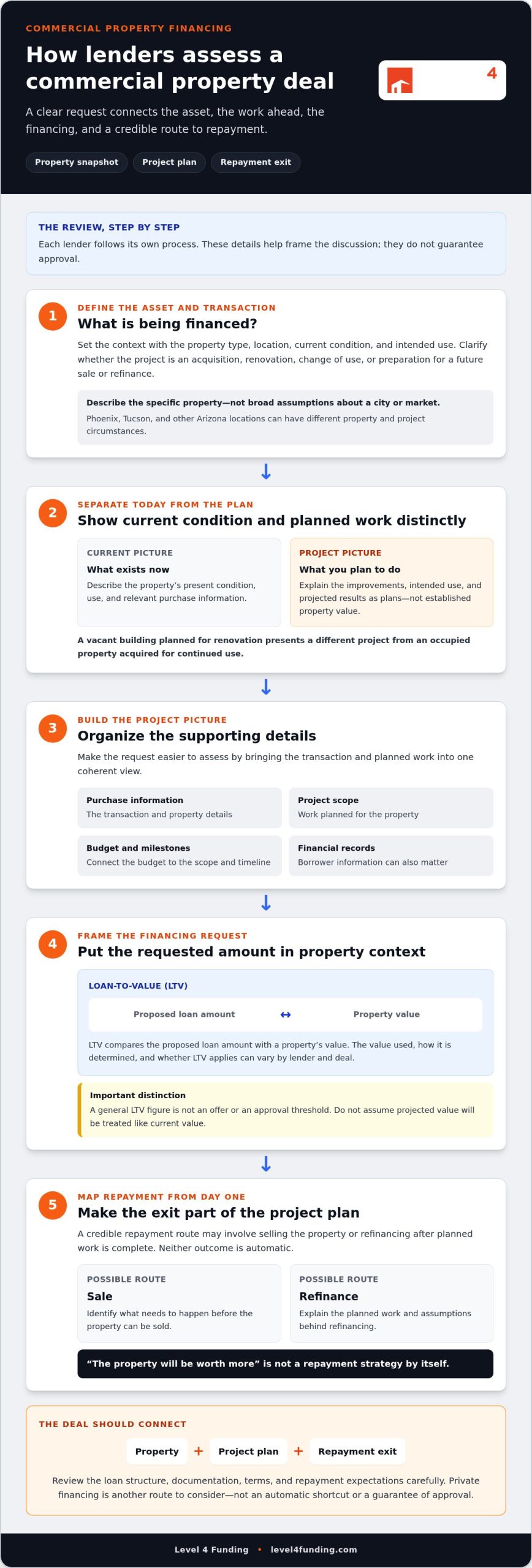
Prepare an Arizona commercial property financing request in five steps
A focused request makes it easier to understand the property, the project, and the financing you’re seeking. For commercial hard money lending, preparation isn’t about guessing what a lender requires. Present a clear, consistent picture of the deal and separate what you know from what you still need to confirm.
Build a concise property and project snapshot
Start with the asset and the plan. A property in Phoenix, Mesa, or Flagstaff needs its own factual description, not a broad claim about the city. Note the current condition and intended commercial use, then explain the transaction and planned work. Keep estimates visibly separate from confirmed figures so you don’t present projections as facts.
- Define the transaction. State whether you’re seeking financing for an acquisition, repositioning, construction, or another commercial property project. Include the purchase status and the role the financing would play in the plan.
- Describe the property. Record its type, location, current condition, and intended use. Include relevant property information you have, and distinguish current facts from assumptions about future value or performance.
- Map the project scope and budget. Summarize planned improvements, estimated costs, and key milestones. Organize available estimates or project documents, and flag areas where costs or timing may change. This is a useful overview, not a universal lender checklist.
- Gather supporting records. Put purchase information, ownership details, available valuation materials, project documents, and relevant financial records in one organized place. Label files clearly, and make sure dates and figures agree across documents.
- Document the repayment exit. Explain whether the intended plan is a sale, refinancing, or another route tied to the project. Show the assumptions behind it, the milestones it depends on, and what you might do if the project runs behind or the expected exit changes.
Make the repayment plan and supporting documents easy to follow
A lender should be able to trace the logic from acquisition through project completion to repayment. Keep the summary direct: what you’re buying, what you plan to do, how the budget supports that work, and how you expect to repay the financing. Don’t present a hoped-for sale or refinance as a guaranteed outcome. Explain what would need to happen for that exit to remain workable.
Before sharing the request, check for gaps and inconsistencies. Do the purchase figures match across your records? Are project costs estimates or confirmed amounts? Are milestones realistic, with room for contingencies? Broader commercial hard money loan guidance can help orient you to the financing category, while this property snapshot puts your particular deal in focus.
Once your property details, project outline, and exit plan are organized, explore commercial property financing with Level 4 Funding as a private financing option for Arizona real estate investors.
Explore commercial hard money lending with Level 4 Funding
A well-prepared property snapshot gives a financing discussion something solid to work with. Level 4 Funding offers commercial property loans as private financing for real estate investors. If you’re considering commercial hard money lending, bring the asset, project, and repayment plan into the same conversation. The goal is a focused look at the deal, not a promise of approval or particular terms.
What to bring into a financing conversation
Make the basics easy to follow. A concise overview keeps the discussion centered on the property and your plan rather than scattered details. Organize the information you have, and clearly label estimates, open questions, and assumptions.
- Property: Share its Arizona location, type, current condition, and intended commercial use.
- Transaction: Explain whether you’re acquiring a property, planning improvements, or pursuing another commercial project goal.
- Project: Summarize the proposed work, budget, available supporting materials, and key milestones.
- Repayment: Describe your intended exit, such as a sale or refinance when it suits the project, and the assumptions it depends on.
- Uncertainties: Identify potential delays, cost changes, or other contingencies that could affect the project timeline or exit plan.
Keep the figures grounded. Separate confirmed purchase information from estimates, and distinguish the property’s current condition from expected results after improvements. If an assumption is still being tested, say so plainly. This keeps the request clear and the conversation tied to what’s known about the deal.
Take the next step on an Arizona commercial property deal
Level 4 Funding works with real estate investors exploring commercial property financing in Arizona, including Phoenix, Scottsdale, Tucson, Tempe, and Mesa. Location is one part of the picture. Your intended use, project details, supporting materials, and repayment plan help frame a practical financing discussion.
Investors focused on the Phoenix and Scottsdale area can also use the existing Phoenix and Scottsdale commercial hard money lender guide for added local context. Bring your property snapshot and project plan to a discussion with Level 4 Funding about its commercial property loans. Be ready to explain the deal, the milestones, and how you intend to meet repayment obligations. Then assess proposed financing against your project’s realistic timeline and exit.
Put your next commercial property move in motion
The next move isn’t to chase capital at any cost. Decide what a workable financing structure needs to support and what repayment obligations your project can realistically carry. Keep that standard in view as you consider commercial hard money lending. A clear plan helps you evaluate the opportunity on its own merits.
Level 4 Funding offers commercial property loans and works with investors in Phoenix and other Arizona cities. To discuss your property and project goals, explore commercial property financing with Level 4 Funding. Bring your deal details, key assumptions, and intended repayment path, then weigh any proposed terms against your project’s timeline and capacity to repay.
Move forward with purpose, not pressure. A thoughtful financing decision can help you pursue your next investment with greater clarity.
Frequently Asked Questions
What is commercial hard money lending?
Commercial hard money lending is private financing for commercial real estate, with the property and proposed transaction playing an important role in the financing discussion. It centers on a commercial property investment, such as an acquisition or improvement project, rather than a general-purpose loan. The term doesn’t promise quick approval or remove repayment obligations. Review the specific terms and understand how the financing fits your project.
How does commercial hard money lending work?
It usually begins with a discussion of the property, transaction, and funding goal, followed by a lender’s review of the deal and any proposed terms. If the parties move forward, further documentation and property review may be involved. The exact process depends on the lender and transaction. Before accepting financing, understand the repayment schedule, conditions, and what happens if the project or planned exit takes longer than expected.
Is commercial hard money lending only for real estate investors?
Level 4 Funding’s private financing is designed for real estate investors. The request should relate to a property investment and have a clear purpose, such as acquiring or improving commercial real estate. A business owner seeking funds for unrelated operating expenses has a different financing need. If you’re investing through a company or partnership, be ready to explain the entity’s role in owning or managing the property.
Can commercial hard money loans be used for different property types?
Commercial real estate includes varied assets, such as retail, office, industrial, and mixed-use properties, but that doesn’t mean every loan fits every property. Intended use, current occupancy, condition, and project plan can change the financing discussion. For example, an investor acquiring an industrial building for continued use has a different project from one planning a major renovation. Property type alone can’t establish eligibility or terms.
What documents should I prepare for a commercial hard money loan?
Organize materials that explain the purchase, property, project, and borrower or ownership structure. Depending on the deal, useful records may include a purchase agreement or letter of intent, entity and ownership documents, existing leases or rent information, contractor estimates, a project budget, and relevant financial records. These are practical examples, not a universal checklist. Keep the latest versions together and mark estimates clearly so they aren’t mistaken for confirmed figures.
How do I compare commercial hard money financing with a bank loan?
Compare actual proposals, not assumptions about either financing route. Review the process and timeline, property fit, documentation, repayment schedule, conditions, and all stated costs. Ask how each option handles your specific project and what risks remain if the property plan changes. A lower quoted cost may not resolve a mismatch with the transaction, while flexibility doesn’t make obligations less important. Base your choice on documented terms and a realistic repayment plan.
Can Arizona investors explore commercial hard money lending outside Phoenix?
Yes. Level 4 Funding works with investors in Phoenix and other Arizona cities, including Scottsdale, Tucson, Glendale, Sedona, Flagstaff, Tempe, Mesa, and Buckeye. For a property outside Phoenix, prepare the same clear description of its location, intended use, transaction, and project plan. Geographic coverage alone doesn’t establish eligibility or terms for a particular asset, so keep the financing discussion focused on the specific property and repayment strategy.
Ready to discuss an Arizona commercial property project? Explore commercial property financing with Level 4 Funding and bring your property details, project plan, and intended repayment path.

About the author
Matt has a bachelor's degree in political science from Northern Arizona University and works at Level 4 Funding, a private lending company that offers hard money and rental home loans to real estate investors in 35 states.
With Matt's leadership, the firm has financed almost $300 million in loans for investment properties. He often helps real estate investors with rental property purchases, foreclosures, refinancing, and fix-and-flip projects. Matt has extensive experience in fix-and-flip, buy-and-hold, rental properties, and real estate sales. He has lived in Arizona for 43 years and is married with three children. Matt is licensed as a mortgage broker and loan originator in Arizona, with NMLS 2062278 and NMLS 1118493.
Equal Housing Opportunity. This is not a Good Faith Estimate, and it is not a Guarantee to lend; it should not be considered as such. Costs, rates, estimates, and terms can only be determined after a full application is completed. To the extent this message includes any tax or legal advice, this message is not intended or written by the sender to be used, and cannot be used, for legal or tax purposes or advice. This is an advertisement. Copyright © 2026. All rights reserved.