

Hard Money for Phoenix Retail Space: 2026 Investor Guide
October 19, 2026
Duplex Construction Loans: How to Finance a Two-Unit Build With Hard Money or Private Capital
Building a duplex is different from a typical flip, and when conventional construction lenders are too slow or rigid, a duplex construction loan from hard money or private capital is often the practical path to get a two-unit project moving. This guide shows when private capital makes sense, how lenders set up draws, holdbacks and contingency math, walks a concrete Phoenix example with plug-and-play numbers, and gives a lender-ready checklist and timeline — including what Level 4 Funding will typically require — so you can structure, close, and exit without surprises.
1. When Hard Money or Private Capital Makes Sense for a Duplex Build
Clear choice for speed and nonstandard deals. Use private capital when timing, collateral type, or deal complexity makes a conventional construction lender impractical — not because you like paying points and higher interest. Private lenders buy flexibility: they will fund land-plus-build packages, close fast on a purchase contract, and underwrite to a defensible ARV rather than insist on perfect seasoning or a long developer track record.
When to pick private capital: you need a fast close to lock a lot or option, the project has nonstandard collateral (vacant land, subdivision lot, or a conversion to two units), you lack the two-to-three project history typical banks want, or you are running a speculative build-to-sell with a tight timeline. Private lenders also fill short-term gap financing when entitlement or permit timelines are unpredictable.
Tradeoffs that matter
Cost versus speed. Private capital costs more and has shorter terms; that erodes profit if you treat it like cheap bridge debt. You get fast approval and flexible underwriting, but you also get an interest-heavy carrying cost and strict draw inspections that can slow cash flow if your GC is disorganized.
Underwrite to ARV, not cost. Most private lenders size loans off projected finished value. If your comps are aggressive, the lender will push back or cut loan size — meaning you must bring more equity or reduce scope. This is where conservative comps and a fixed-price GC contract win deals; lenders do not like open-ended cost-plus arrangements.
- Good fit: land purchase + ground-up build, speculative duplex for sale, or buy-and-remodel to convert a single to duplex where speed matters
- Poor fit: you have time to get a construction-to-permanent loan, your project qualifies for FHA/VA/USDA construction programs and you want lower long-term cost, or you expect frequent cost overruns without contingency
- Common lender requirements: fixed-price GC, schedule of values, conservative ARV comps, 10-20 percent contingency, and documented exit plan (refi or sale)
Practical limitation. Private lenders will usually not cover 100 percent of soft cost overruns or unrealistic change orders. Expect to fund change order reserves out of pocket or take a second short-term draw solution; assuming your lender will absorb scope creep is a mistake that kills timelines and margins.
Concrete example: An investor in Phoenix finds a corner lot asking 140,000 and needs to close in 7 days to secure the builder and permit slot. A conventional bank will take weeks to underwrite; a private lender will fund the lot plus initial construction draws against a projected ARV, allowing work to start immediately. The tradeoff: higher interest and lender fees that the investor must include in the build budget and exit math.
Key point: Choose private capital when speed, flexible collateral, or unconventional deals are the deciding factor — not as a default because other financing feels hard. Plan your exit up front and model interest reserves and retainage into your budget before you sign the GC contract.
2. Duplex Construction Loan Types and How Private Lenders Structure Them
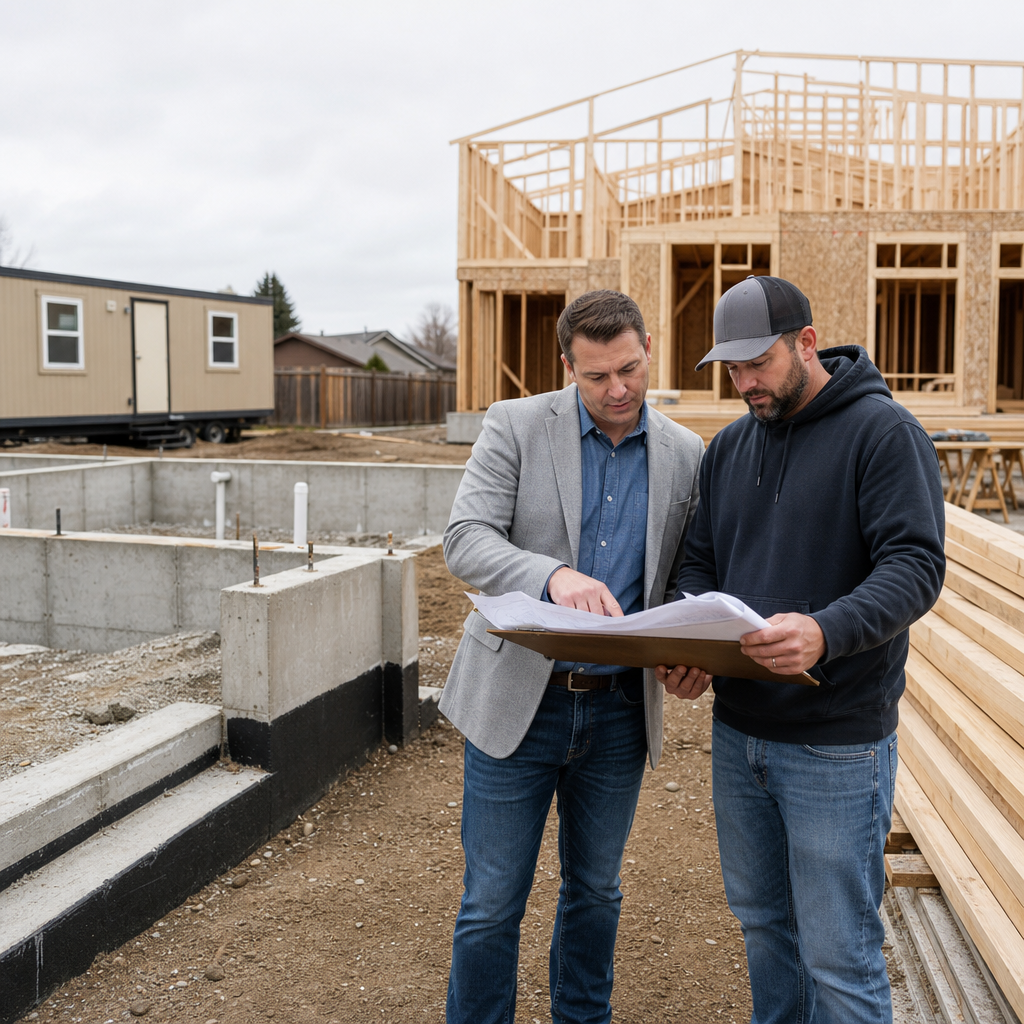
Direct point: Private lenders package duplex construction financing as short term, tightly structured loans that prioritize staged control of capital over long term underwriting niceties. That means expect interest only billing, staged draws tied to inspections, upfront fees, and conservative loan sizing based on after repair value rather than construction cost alone.
Common private duplex loan products
- Short term construction loan: Typical hard money product for ground up or heavy rehab. Term 6 to 18 months, underwrite to ARV, interest only during build, usually funds up to 65 to 70 percent of ARV.
- Construction to permanent hybrid: Less common with private lenders. Some will underwrite a short construction term with a committed follow on to a permanent loan only if borrower and property meet strict conditions at completion.
- Bridge to construction: A fast acquisition loan that later converts to a build loan. Useful when land purchase closes before permits or GC contract is finalized.
- Renovation or rehab loan for duplex conversions: Funds staged work that converts a single family to a two unit. Lender emphasis is on scope clarity and permit milestones rather than conventional seasoning.
- Owner builder or developer financing: Available but heavily restricted. Lenders typically require a licensed GC or strong escrowed retainage if borrower self builds.
- Equity line or partner capital: Structured as subordinate financing or drawable line. Low cost on cash out but requires stricter controls on waterfall and lien priority.
How lenders structure risk and cash flow
Key mechanics: Private lenders control execution through three levers – draw schedules, retainage, and reserves. Draws are released against a schedule of values after inspection and lien waivers. Retainage of 10 to 20 percent holds the GC accountable for punch list items and final waivers. Lenders also set an interest reserve to cover interest while funds are drawn.
- Interest reserves: Funded at close to cover months of interest while construction proceeds. If underfunded the borrower must top up or payments begin mid build.
- Contingency and soft cost treatment: Private loans often exclude soft costs from automatic draws. Expect to prove invoices for permits, utility hook ups, and inspection fees.
- Inspection cadence and fees: Third party inspections required for each draw. Plan for 48 to 72 hour turn times and inspection fees that reduce usable proceeds.
- Upfront fees and servicing: Common fees include origination 1.5 to 3 percent, underwriting fees, and wire or document fees that are deducted at funding.
Tradeoff to internalize: You buy speed and flexibility with higher ongoing cost and tighter oversight. That works when timing or non standard collateral matters. It fails when ARV is uncertain or when you under estimate soft costs and inspection timing.
Concrete Example: A developer has land and plans for a duplex with projected ARV 520000, hard costs 280000, soft costs 40000 and land 120000. A private lender willing to fund 70 percent of ARV will size the max loan at 364000. After closing fees and required contingency the borrower must bring roughly 80000 to 100000 cash to cover the shortfall and reserves. With a 10 percent interest rate and average outstanding balance 200000 during the build monthly interest runs about 1667. Add origination fees and inspection costs and the effective carry materially increases required equity.
Quick rule: If ARV drives the loan sizing, stress test ARV down 10 to 15 percent. Private lenders will price conservatively and you cannot budget your way out of a weak market.
Next consideration: Before committing to private construction capital, map your draw timing to contractor milestones, budget a realistic interest reserve, and run the exit refinance path to confirm conventional lenders will accept the finished product. For a short primer on construction loan basics see the CFPB guide at Consumer Financial Protection Bureau.
3. Underwriting Checklist Private Lenders Use for Duplex Projects
Underwriting for a duplex construction loan is practical and checklist driven — lenders want evidence that the build will finish on time, on budget, and be salable or refinanceable. Missing one or two documents will delay closing; missing the wrong document will kill the deal.
Core borrower and entity items
- Borrower profile: credit snapshot, recent bank statements, proof of cash/equity to close and cover contingencies
- Entity docs: LLC operating agreement, Articles of Organization, EIN, and personal guarantor signature pages if required
- Experience evidence: summary of prior projects or contractor references; private lenders accept strong GC credentials in lieu of years of borrower experience
Project, valuation, and exit documentation
- Detailed budget and schedule of values: hard costs, soft costs, permits, utilities, contingency (usually 10%), and lender fees broken out
- Architectural plans and permit-ready package: permits or permit-ready designs reduce underwriting friction
- ARV support: comps and appraisal approach showing duplex comparables – lenders discount optimistic upside and want conservative comps
- Exit plan proof: either a refinance lender pre-qualification, letters of intent from buyers, or documented rental refinance strategy
Practical insight: private lenders will underwrite to a conservative ARV and treat construction contingency as real borrower exposure. Do not assume permitted soft costs or speculative sales premiums will be counted toward loan coverage.
Contractor, site, and risk controls
- Fixed price GC contract: line item schedule of values, milestones, and payment terms; lenders reject vague time-and-materials deals
- GC credentials: license, COI insurance, lien waiver policy, portfolio of completed duplex or small multifamily work
- Third-party reports: current title with recorded liens, ALTA or boundary survey, soil report if required by local code, and utility availability confirmation
- Disbursement controls: draw schedule tied to inspections, retainage percentage, and final lien release requirements
Tradeoff to accept up front: stricter GC requirements speed funding and reduce lender resistance, but they may limit your ability to shop lower-cost, less-documented contractors. In practice, a vetted GC will get you funded faster with private capital.
| Document | Why lender requires it |
|---|---|
| Schedule of values | Shows allocation of funds and lets lender calculate draw amounts and retainage |
| Fixed price GC contract | Defines scope and shifts cost overrun risk away from lender |
| ARV comps / appraisal | Determines maximum loan sizing and stress testing on resale or refinance |
Concrete example: A developer brings a lot-plus-build duplex: land $120,000; hard costs $220,000; soft costs $40,000; projected ARV $520,000. A private lender underwriting to 70 percent ARV shows a theoretical max loan of $364,000, but will still require a fixed-price GC contract, a 10 percent contingency held outside draws, proof of builder insurance, and a current title report before funding — leaving the borrower responsible for any soft cost gaps and the contingency until final completion.
Common red flag lenders flag: overreliance on a single high comp, incomplete permit packages, or an unsigned GC change order policy. These are frequent deal-killers because they expose the lender to both completion and valuation risk.
If you want speed with private capital, bring paperwork that removes uncertainty: fixed-price GC, permit-ready plans, defensible ARV comps, and clear exit evidence.
Next consideration: before you submit an application, pre-build the checklist into your deal model so you can price owner equity for contingency, retainage, and lender fees rather than discovering the cash gap at underwriting. For more on how holdbacks are structured see What Are Holdbacks in Construction Lending? Explained, and for rate and term expectations see Interest on Hard Money Loans: Rates, Terms & Negotiation.
4. Cost Model and Example Math for a Phoenix Duplex Using 70 Percent LTV
Straight to the point: if you underwrite this Phoenix duplex to a 70 percent ARV cap, the private lender will likely provide about $420,000 on a $600,000 ARV — that number drives every cash requirement and contingency you must plan for.
Assumptions and lender mechanics
Assumptions used in this model: land $150,000; hard construction $250,000; soft costs $30,000; total project cost $430,000; projected ARV $600,000; lender max 70 percent ARV; interest rate 10% annual; origination fee 2%; build time 8 months; typical retainage 10% on draws. These are conservative, realistic inputs for private money in Phoenix.
Key lender mechanics that change the math: private lenders underwrite to ARV not cost. Fees and reserves are often deducted from the loan proceeds or required as cash at close. Holdbacks/retainage reduce what contractors see until final draw; lenders commonly require an interest reserve sized to expected funded balance over the build.
Numeric example: who brings cash and when
| Line item | Amount |
|---|---|
| Projected ARV (market comps) | $600,000 |
| Max loan at 70% ARV | $420,000 |
| Total project cost (land + hard + soft) | $430,000 |
| Immediate funding gap (project cost – loan) | $10,000 |
| Origination fee (2% of loan) | $8,400 |
| Estimated interest reserve (avg funded 60% for 8 months @10%) | $16,800 |
| Estimated closing/appraisal/inspections | $3,000 |
| Recommended contingency (10% of hard costs) | $25,000 |
| Estimated borrower cash required at close (total) | $63,200 |
Practical insight: that $63k is not optional. In practice the lender may advance the origination fee and appraisal from the loan proceeds which reduces usable funds; but the contingency and any shortfall between staged draws and contractor pay requests must come from you. Private capital reduces underwriting friction, not economics.
- How retainage affects cash flow: a 10 percent retainage on $250k hard costs equals $25,000 withheld until final close — the contractor must accept it or you must front-gap that amount.
- Interest reserve sizing trade-off: shrinking the reserve raises your immediate cash need but increases the chance of needing a bridge top-up mid-build if draws run behind.
- Origination fee timing: some lenders deduct the 2 percent fee from the initial draw, effectively reducing the money available to pay acquisition or early site work.
Real-world use case: an investor buys a lot for $150k and closes a duplex construction loan the same week. The lender funds an initial acquisition draw but deducts origination and appraisal, leaving the borrower to bring about $60k in verified funds to cover contingency and the interest reserve. The investor uses an aggressive GC who accepts retainage; otherwise the borrower must negotiate a higher contingency or stagger final payments through a cash cushion.
Hard judgment: lenders advertise 70 percent LTV because it fits most comps — but that percentage can hide real shortfalls. Always model fees, interest reserve, retainage, and contingency as cash you must provide or verify before close.
What this implies for deal selection: pick projects where ARV is conservative versus comps and where your contingency stays below ~10 percent of hard costs. If you rely on the full 70 percent to pay acquisition plus build, your buffer is thin — expect overruns, inspection delays, and retainage friction that will eat profit if you do not plan the cash gap.
Next consideration: run a sensitivity table before you submit: 1) ARV down 5–10 percent, 2) build time +2 months, 3) contractor holdback at 15 percent. If any single scenario turns your required borrower cash above your available funds, rework scope or financing before you close.
5. Application to Close: Step by Step Timeline for a Private Construction Loan
Straight answer: If your package is complete – fixed price GC contract, permit ready plans, realistic budget, and proof of equity – expect a clean private duplex construction loan to fund in 2 to 4 weeks. Missing or sloppy items double that timeline fast.
Timeline and milestones (typical, cleaned file)
- Day 0 to 1 — Application and preapproval. Submit application, budget spreadsheet, GC contract, and proof of funds. Many private lenders, including Level 4 Funding, will issue a preliminary approval within 24 hours if the file is lender ready.
- Day 2 to 7 — Appraisal and title. Lender orders an ARV appraisal and title report. Expect 3 to 7 business days for appraisal on a duplex in active markets; comps scarcity adds time.
- Day 3 to 10 — Underwriting and conditions. Underwriter validates contractor, budget, schedule of values, permits or permit ready plans, and exit strategy. Conditional approval lists requirements that must clear before docs.
- Day 10 to 14 — Closing. Sign loan documents, fund interest reserves and borrower equity. Private lenders can close quickly; once conditions are cleared funding often happens within 24 hours of docs.
- Post close — Draws and inspections. First draw typically requires foundation or permit milestone plus lender inspection. Expect 24 to 72 hours between inspection report and funds release for routine draws; final retainage released on CO and final lien waivers.
Practical insight: Lender speed only matters when you match it with builder readiness. A lender can fund in 24 hours but cannot erase missing permits, an unlicensed GC, or an ambiguous scope of work. In practice delays cluster around permits, appraisal comparables for duplexes, and incomplete schedule of values.
Trade off to plan for: Faster private capital costs more up front. That is fine if time to entitlement or a quick purchase secures a bargain. But every day of delay increases interest carry and eats contingency. Budget a conservative extra 15 to 25 percent of expected carrying cost for schedule slippage.
Concrete example: An investor buys a lot and applies for a duplex construction loan. Preapproval arrives day 1. Appraisal completes day 5. Underwriter clears conditions day 9 after receiving a signed fixed price contract and permit ready plans. Closing and funding occur day 12 with an interest reserve that covers the first 6 months. First draw for footing and foundation is approved on day 22 after the city issues the building permit and the on site inspection verifies progress.
What slows deals the most in real world files: incomplete contractor scope of work, missing schedule of values that ties milestones to draws, appraisals that struggle to find duplex comps, and unresolved title issues. Fix these before you apply; it shortens underwriting and reduces unexpected conditions at closing.
Final judgment: If timing is the driver use private money, but accept the discipline: tighter draws, stronger documentation, and an ironed out exit plan. If any of those are weak, slow the process, shore up the file, and avoid funding speed that masks project risk. For context on lender cost and negotiation, read Interest on Hard Money Loans: Rates, Terms & Negotiation and the CFPB primer on construction loans at CFPB.
6. Exit Strategies: Refinance, Sell, or Convert to Long Term Rental
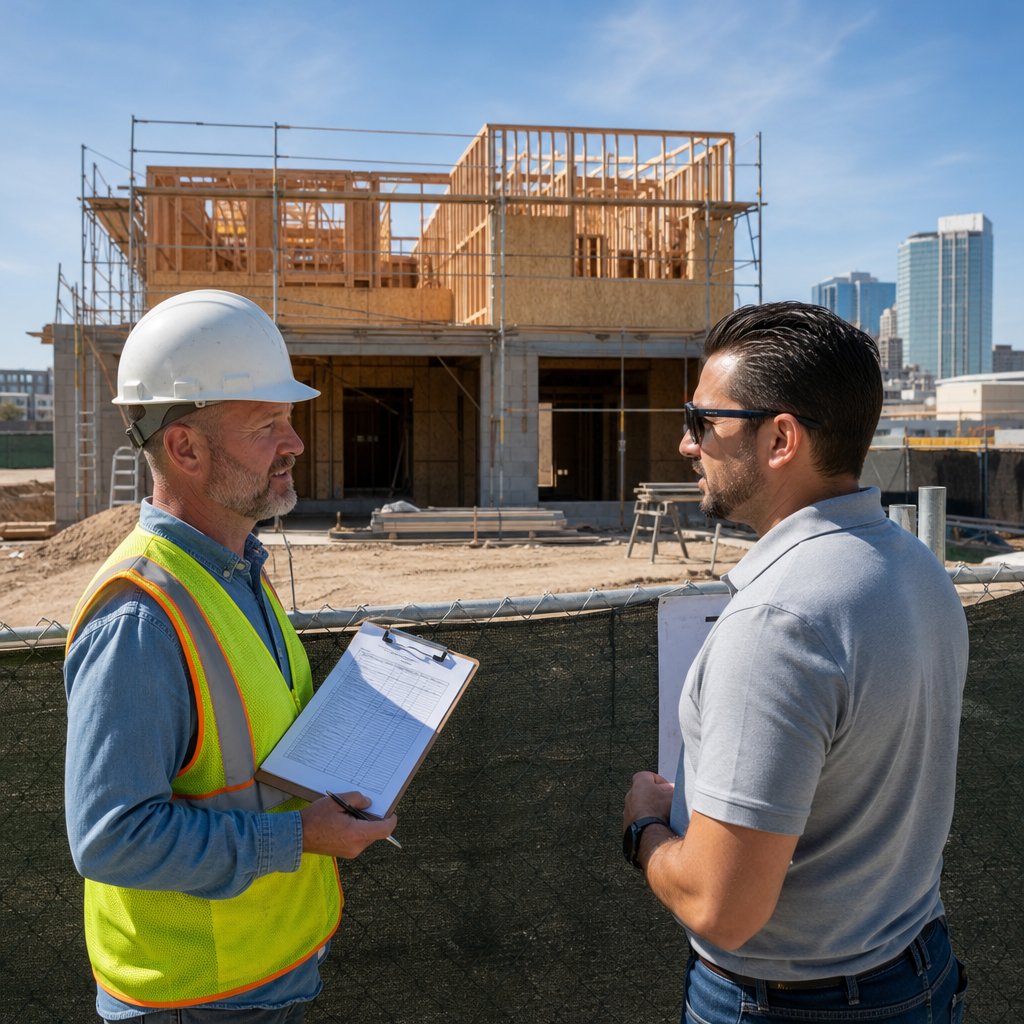
Straight answer: pick the exit that matches your capital need and timeline because refinancing a duplex construction loan rarely produces large immediate cash out unless you planned equity ahead of time. Most surprises happen at appraisal and seasoning.
Refinance to a conventional or portfolio mortgage
What you need: a certificate of occupancy, a finished appraisal showing the actual market for comparable duplexes, clear lien releases from your GC, and a borrower credit picture that fits the permanent lender. Conventional construction to permanent or a portfolio duplex mortgage will underwrite to finished value, not the soft pro forma you used for construction financing.
Trade-off: refinance is cheap long-term debt and stabilizes your carry, but it takes time and often requires 30 to 90 days of seasoning for rental income or owner occupancy rules depending on the product. If you used hard money at 70 percent ARV, expect limited immediate cash out unless you started with significant borrower equity.
Concrete example: You finish a duplex with ARV 600000. The private construction lender advanced 70 percent ARV (420000). A conventional lender will loan up to 75 percent of finished value in many cases (450000), which after paying off 420000 leaves only 30000 before closing costs. That 30000 may evaporate after fees, so plan equity or a different exit if your goal is cash extraction.
Sell turnkey to capture immediate profit
What to expect: selling is the fastest way to convert project equity to cash, but agent commissions, closing costs, and holding/carry reduce net. Price aggressively for comps; marketing a duplex requires buyer-educated comps and showing both units as income-producing.
- Costs to model: 6 to 8 percent selling costs, transfer taxes, and any timing-related carrying costs.
- Market timing risk: selling in a down cycle can push you into discount territory; if your build schedule is tight, have a backup refinance plan.
- Use case: best when exit timing is tight and you want to eliminate market risk and contractor/liability exposure quickly.
Convert to long term rental and refinance to a DSCR or 30-year mortgage
When this works: your local rental market supports stable rents and you prefer passive cash flow over flipping profit. DSCR and conventional rental refinances let you stretch payment over 30 years and may allow better leverage than a construction bridge, but underwriters require reliable rent comps, property management plans, and often a period of stabilized occupancy.
Limitation: DSCR lenders focus on income, not borrower FICO, but their allowed LTV and required DSCR thresholds vary widely. Expect extra documentation: rent comparables, signed leases or pro forma with conservative vacancy, and proof of property systems working. If you planned to refinance immediately but cannot demonstrate rental income, you may be forced to sell or extend hard money at a high cost.
Important: never model refinance proceeds assuming the full construction lender ARV backstop. Appraisers and permanent lenders are conservative; plan for a 5 to 10 percent appraisal haircut.
Judgment: most investor mistakes come from assuming an easy cash-out refinance right at completion. If your goal is to extract capital, build that into acquisition equity or use a pre-arranged buyer or permanent lender with known terms. Relying on optimistic ARV or immediate rental income is where deals fail.
Next consideration: before you close construction financing, run three exit scenarios in your model — conservative refinance, sale net, and rental-stabilized refinance — and underwrite each with a 10 percent haircut on appraisal and a 10 percent contingency on costs.
7. Risk Management and Common Pitfalls Specific to Duplex Construction
Immediate reality: duplex builds compound ordinary construction risk because you are effectively delivering two income producing units under one roof. That doubles the points of failure that matter to lenders and investors: permits, utilities, inspections, unit separation, and final marketability. Treat the project as two smaller projects that must interlock cleanly.
Primary risk buckets and quick mitigations
- Entitlement and code risk: zoning, parking, and fire separation rules can force redesigns. Mitigation: confirm zoning and setback compliance before closing and budget a permit contingency equal to at least 5 percent of hard costs.
- Utility and meter risk: converting a lot to dual meters or separate sewer laterals is common and often expensive. Mitigation: get utility providers involved early and price meter and lateral work into soft costs.
- Appraisal and market risk: appraisers treat duplexes like small multifamily which can lower comparable values versus two singles. Mitigation: stress test ARV down 10 to 20 percent and assemble comps that show true duplex sales.
- Contractor and lien risk: two-unit framing or MEP mistakes impact completing both units. Mitigation: staged payments tied to unit milestones, required conditional lien waivers, and a final unconditional waiver at completion.
- Insurance and completion risk: gaps in builder risk or COC delays block refinance or sale. Mitigation: require builder risk that names the lender and confirm the path to certificate of occupancy early.
Practical insight: private lenders accept these risks faster than banks but they price them. Expect tighter holdbacks and higher retainage on duplex projects because lenders see multipoint failure. See our breakdown on holdbacks for how retainage affects borrower cash flow at close and during draws What Are Holdbacks in Construction Lending? Explained.
Contractor payment tradeoff: unconditional lien waivers give you a clean title but cost you leverage. Using conditional waivers until funds clear protects you from mechanic liens if a subcontractor claims nonpayment. In practice, require a mix: conditional waivers during progress draws and unconditional waivers for the final disbursement.
Concrete example that happens in real deals
Concrete Example: a Phoenix investor budgets 250000 for hard construction and 10 percent contingency. Permit reviews require an upgraded sewer lateral and dual meter vault adding 12000 and 4500 respectively. Without the extra 16500 the investor covers the gap with a cash infusion, delaying the next draw and incurring 30 extra days of interest. That delay pushes the construction to permanent refinance timeline and increases carrying costs by roughly 1 months interest and inspection fees.
Appraisal misread judgment: many investors assume ARV scales linearly with unit count. It does not. If nearby duplex sales are scarce, an appraiser may value the property closer to a single family with an ADU premium. In practice, underwrite deals to the lower ARV scenario before lender conversations.
What to do now: add a separate schedule line for duplex specific items in your budget – utility conversion, separate HVAC and fire separation costs, and duplex appraisal fees. If speed matters, private capital can bridge these issues faster than banks; see how fast funding solves timing risk for local projects Top AZ Hard Money Lender: Fast Funding for Local Deals.
Next consideration: before you lock financing, run a failure scenario that reduces your ARV by 15 percent and increases soft costs by 20 percent. If the project still works under that stress case, proceed. If not, reprice the scope or increase equity before closing.
8. Working with Level 4 Funding: What to Expect and How to Prepare
Straight answer: Level 4 Funding will move faster than a bank on a duplex construction loan, but speed comes with non negotiable documentation and active cash management. Expect funding windows measured in hours to days, firm holdbacks and staged draws, fees deducted at closing, and close scrutiny of your builder contract, schedule of values, and exit plan.
What Level 4 will verify before funding
- Entity and title: clean title, correct vesting, corporate or LLC docs, and up to date beneficiary statements for Arizona parcels
- Builder package: fixed price GC contract with a schedule of values, active license, insurance declarations, and recent project photos or references
- Valuation support: ARV memo with comps, local market evidence for duplexes, and the appraisal order when required
- Site readiness: permit ready plans or issued permits, utility hook up notes, and any required soil/geotech report for lot work
- Escrow and wiring: verified wiring instructions, awareness that fees and origination points may be deducted at closing, and proof of borrower funds for equity
- Draw controls: acceptance of staggered inspections, requirement for lien waivers at each draw, and a typical 10 to 20 percent retainage on final pay
Practical limitation: Level 4 will fund quickly only when the file is complete. If permits are missing, GC scope is vague, or title has unresolved issues, the deal stalls despite advertised 24 hour funding. In practice, borrowers who try to paper the file at closing end up paying overnight interest reserves or pushback on draw timing.
How to prepare – a short, lender‑ready checklist
- Pre‑submit an ARV package: 3 comparable duplex sales, photos, and a short market memo so the underwriter can accept ARV before ordering an appraisal
- Upload the GC contract with schedule of values: line items for foundation, framing, MEP, finishes so draws map cleanly to invoices
- Assemble title and entity docs: preliminary title report, recorded deed, operating agreement, and authorization to sign for entities
- Line up inspections and lien waiver process: name the third party inspector you will use and confirm GC will provide conditional lien waivers per draw
- Fund the contingency and interest reserve: plan to wire contingency (minimum 10 percent) and the first 2 months of interest upfront or have them included in the loan structure
- Coordinate closing logistics: confirm lender wiring window and closing attorney, and expect origination fees to be paid out of the loan proceeds at signing
Tip: Read the draw schedule with your GC and the lender together. Small mismatches in schedule of values are the most common cause of delayed inspections and unpaid invoices. Pre align the invoice format the lender requires.
Concrete Example: An investor buys a lot for 120000, budgets hard costs 240000 and soft costs 40000 for a total project cost of 400000. Projected ARV is 520000, so at a 70 percent ARV cap Level 4 would underwrite a maximum loan of 364000. That means the borrower must cover the 36000 shortfall plus lender fees and an interest reserve. If the rate is roughly 11 percent and the build takes 8 months, budget another ~32000 for interest reserve and fees — do not assume the lender covers those without clear agreement.
Judgment you should accept: Level 4 is best for borrowers who already have a tight build plan, a vetted GC, and an exit that is mortgageable or saleable within 12 months. If you need soft underwriting, long seasoning, or permit remediation, a private duplex loan will cost you in fees and delays and conventional routes might be cheaper overall.
Next consideration: Before you sign a GC contract, run the lender checklist against it line by line. The time you spend tightening documents pre close will save weeks and multiple interest payments once construction starts.