


Hard Money Lending in Phoenix: Fast Funding for Investors
October 14, 2026
Hard Money Lenders in Miami, FL: How to Find the Right Private Lender for Your South Florida Deal
If you are closing a flip, bridge, or construction deal in South Florida, finding reliable hard money lenders in miami fl is the difference between a profitable project and a money pit. This guide explains how Miami underwriting quirks – flood zones, condo and HOA pitfalls, insurance and permitting delays – change rates, LTV, and timelines, and it gives a practical checklist and lender-evaluation metrics to compare true cost. You will also get sample term comparisons, negotiation levers, and a step-by-step closing playbook designed to get funding in days rather than weeks.
1. Why Miami Deals Need Hard Money: Market forces that change financing needs
Direct reality: Miami deal economics often require speed and flexibility that conventional banks cannot deliver. Rapid price moves, high rehab and insurance costs, and condo or permitting friction create short windows to lock deals — and that is where hard money lenders in miami fl become a practical solution for investors who need funding on the seller's timetable.
Carrying costs matter first: In Miami you do not win on the purchase price alone — you win on holding cost. Weeks delayed for a bank appraisal or HOA estoppel can turn a profitable flip into a break-even project because insurance premiums in flood zones and higher property taxes push monthly carrying into the thousands. See market context on values and flip activity at Zillow and trend data from ATTOM.
Underwriting trade-off: Hard money gives speed and higher allowable rehab encumbrance, but the trade-off is higher effective cost and tighter covenants. In practice that means you accept a higher interest rate and points in exchange for a faster close, and you should budget lower effective LTV when the property sits in a flood zone or is a condo with HOA risk.
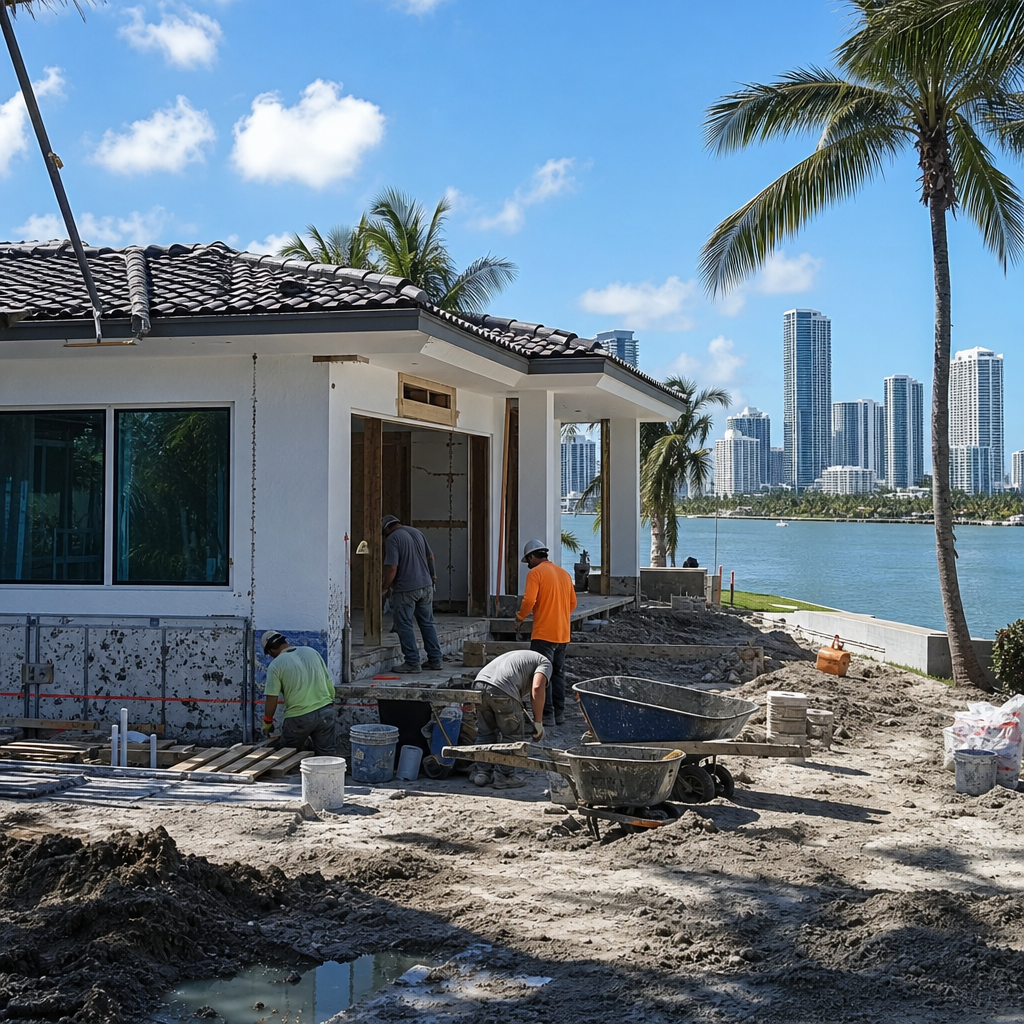
Concrete example: An investor finds a Miami bungalow listed at $420,000 with an ARV of $600,000 after $80,000 of work. A conventional mortgage underwriters the deal to 65 percent LTV and needs 45 days for closing; the hard money offer funds in 3–7 days at 65–70 percent LTV but charges higher points and a monthly servicing fee. Taking hard money preserves the purchase and the arbitrage between buy and ARV; losing the property to a slower lender would cost the investor the deal margin, not just the fees.
Key Miami-specific forces that change financing needs
- Flood and insurance pressure: high premiums and elevation documentation lower effective LTV and often require lender-mandated reserves.
- Condo and HOA friction: estoppel letters, short-term rental bans, or special assessments commonly slow closings and tighten terms.
- Permitting and code risk: Miami-Dade and Broward permitting timelines plus trade contractor backlog increase hold time and contingency requirements.
- Market velocity: periodic double-digit appreciation and frequent flip activity raise competition for off-market deals where speed wins.
- Regulatory complexity: lenders will underwrite differently for coastal or short-term-rental-exposed assets; not all lenders will touch every product.
Practical judgment: For standard buy-rehab-sale plays with tight timelines, a reliable hard money lender — including local private lenders familiar with Miami ordinances and condo nuances — is usually the correct match. National lenders can compete on price and structure for clean single-family deals, but when HOA estoppels, elevation certificates, or permitting complexity are present, local or specialized private capital closes faster and reduces surprises. Level 4 Funding, for example, lists same-day to 24-hour funding capability and up to 70 percent LTV for qualifying deals; compare their terms against other providers rather than assume equivalence (Interest on Hard Money Loans).
2. Define your deal parameters and exit plan before you call lenders
Start with numbers, not a pitch. Before you pick up the phone, decide the purchase price, realistic ARV, exact rehab scope and budget, projected hold time, and your exit strategy. Lenders will underwrite against those inputs; if your numbers are fuzzy they will price risk up or hang up.
Core deal variables to lock down
- Purchase price: the contract number. Lenders often cap loan size off purchase or ARV depending on product.
- ARV methodology: be explicit about comps, adjustments, and the date range you used. Inflated ARV estimates are the single biggest cause of failed lender approvals in Miami.
- Rehab budget and scope: line-item budget, contractor bids, and a draw schedule. Lenders want contracts and realistic timelines, not ballpark figures.
- Anticipated hold time: days to close, rehab duration, sales marketing window. Longer holds increase interest, insurance, and property tax exposure in coastal Miami.
- Exit strategy: sale (flip), refinance to a rental, convert to long-term lease. Each one steers you to different lenders and terms.
Practical trade-off: decide whether you want the highest feasible LTV or the fastest funding. Lenders who fund in 24–48 hours will often accept a slightly lower underwriting LTV but will move faster on draws and title. If speed costs you 1 point in fee, calculate whether the faster close preserves more margin than the fee eats.
How the exit plan changes lender fit
Match product to outcome. Fix-and-flip deals need lenders who do rehab draws, short-term loan terms, and flexible prepayment. A buy-and-hold or rental conversion needs lenders that underwrite rental income or offer portfolio-style products with lower LTV and possible seasoning. Many private lenders in Miami will only permit refinance-to-rental with additional reserves or a lower LTV.
| Variable | Example value | Why it matters to lenders |
|---|---|---|
| Purchase price | $240,000 | Base for purchase-LTV calculations; lower purchase price raises borrower equity share |
| ARV | $400,000 | Sets max loan size if lender uses ARV-based LTV; inflated ARV reduces approval odds |
| Rehab budget | $80,000 | Determines draw schedule and proof-of-work needed for funding |
| Hold time | 6 months | Impacts interest expense, insurance exposure, and contingency reserves |
| Exit | Sale after rehab | Favors short-term, draw-enabled lenders who accept flip timelines |
Concrete example: You buy a Miami bungalow at $240,000 (60 percent of a $400,000 ARV), with $80,000 rehab and a 6-month hold to sale. If a lender uses 70 percent of ARV the maximum loan is $280,000 — enough to cover purchase plus rehab. If another lender uses 70 percent of purchase plus rehab (70 percent of $320,000 = $224,000), you need additional cash. That difference determines whether you must bridge the gap with private capital or change lenders.
Key judgment: always prepare two financing scenarios and ask the lender which basis they use: ARV or purchase+rehab. In Miami, flood premiums and condo/oA issues often force lenders to lower their effective LTV; assume your usable LTV will be 5–10 points lower than published until you get a written term sheet.
Prepare the purchase contract, contractor bid, and two ARV comp sets before you call. This shaves days off underwriting and prevents mis-specified LTV calculations.
Next consideration: once your variables and exit plan are firm, tailor your lender list. Fast funding lenders for flips value quick draws and clean scopes; portfolio lenders for rentals prioritize income metrics and long-term underwriting. Pick the match before you shop price.
3. Lender evaluation criteria and the true cost of capital
Key point: Advertised rate is only the starting line. For hard money lenders in miami fl you must convert rate, points, fees, reserves, and underwriting friction into a single effective monthly cost so you can compare offers apples to apples.
Practical checklist to compare lenders
- Loan economics: max LTV, annual interest rate range, points, origination fee, any funding or wire fees
- Carrying adjustments: required reserves for taxes, insurance, HOA arrears, and initial interest holdbacks
- Underwriting friction: appraisal or BPO requirement, contractor vetting, draw schedule, and minimum FICO or seasoning
- Timeline and deliverables: promised funding time and what breaks that promise – HOA estoppel, flood insurance, title issues
- Legal structure: recourse versus nonrecourse, personal guarantees, and cross collateral clauses
- Service costs: monthly servicing fees, inspections, draw administration fees, and prepayment penalties
Practical insight: Lenders that advertise fast funding often offset speed with higher upfront points or stricter draw controls. If your hold time is short, prioritize lower upfront points. If your project risks delays – permits, HOA reviews, or flood insurance gaps – prioritize flexible cure periods and longer draw windows even if rate is higher.
Convert to effective cost – example comparison for a six month flip
| Lender | Assumed terms | Total 6 month cost | Monthly cost (dollars) | Monthly cost (% of loan) |
|---|---|---|---|---|
| Level 4 Funding | 10% annual, 2 points, 1% origination, 0.5% funding fee | $17,000 | $2,833 | 1.42% |
| Lima One Capital | 9% annual, 3 points, 1% origination, 0.5% funding fee | $18,000 | $3,000 | 1.50% |
| Anchor Loans | 12% annual, 1% points, 1.5% origination, 0.5% funding fee | $18,000 | $3,000 | 1.50% |
How to read the table: Totals assume a $200,000 loan over 6 months. Interest is simple interest for the hold period. Upfront points and origination fees are added to the total cost because most flips pay those at closing. The monthly percent equals total cost divided by loan then by months. Use this to compare how much the loan actually drains from your margin every month.
Concrete Example: A Little Havana duplex purchase at $250,000 with $50,000 rehab needs a 30 day close and 4 month rehab. Choosing a lender with lower points saves cash at closing and preserves working capital for change orders. If permitting likely adds two months, a lender with more flexible draw scheduling and a modestly higher monthly cost will preserve the deal where a low point lender with rigid draws would force a costly bridge or equity infusion.
Judgment: Do not pick a lender on headline LTV alone. In Miami many properties – condos with HOA assessments or properties in high flood zones – will see effective LTV drop and reserve requirements increase the capital you must bring. That changes the true cost of capital more than a 0.5 percent rate swing.
Always demand a sample term sheet showing every upfront and recurring fee, reserve requirement, and the draw schedule. If a lender refuses, treat that as a material red flag.
Next consideration: Take your deal worksheet, run the effective monthly cost calculation above for each lender, then add the impact of any required down payment increases because of flood or condo underwriting. Use those adjusted numbers when you negotiate rate versus points and when you choose who to submit to for a fast approval.
4. Miami specific underwriting and regulatory issues that affect loan terms
Key point: Flood designation, condo and HOA rules, permitting, and title quirks change loan economics in Miami more than headline interest rates. Lenders price or limit risk through lower LTV, extra reserves, slower draw release, or outright exclusions.
Flood zones and insurance – the single biggest LTV killer
Flood impact: Lenders require flood insurance and, for coastal properties, often an elevation certificate before funding. High premiums or limited private flood options force lenders to reduce effective LTV because insurance pushes up monthly carrying costs and can make a project cash-flow negative.
Tradeoff: You can accept a lower LTV or pay the premium yourself to hit a target leverage. Paying for a private flood policy or buying down hazard coverage speeds approval but raises holding cost and may erode flip margins.
Condos and HOAs – paperwork that kills fast closings
Condo underwriting: Many lenders treat Miami condos conservatively because of special assessments, rental caps, and incomplete reserve studies. Common lender actions are lower LTV, requiring HOA estoppel letters, and demanding proof the association meets lender-friendly criteria.
Concrete Example: A borrower planning a 300000 purchase on a Miami two-bedroom condo expected a 70 percent loan or 210000. After the lender discovered a recent special assessment and weak HOA reserves the LTV dropped to 55 percent or 165000. That increased the borrower cash at close by 45000 and forced a financing gap or higher seller credits.
Permitting, code enforcement, and contractor requirements
Underwriting behavior: Lenders in Miami commonly require a licensed general contractor, permit-ready scopes, and contingency reserves for code-related delays. Unpermitted work or open code cases are often ineligible for draws until cured, which stalls projects and increases carrying time.
Practical insight: If you need speed, pre-order permits or have a GC who can sign off on permit-ready plans. Lenders will trade speed for documentation; lacking it they will either lower LTV or hold back a larger contingency on draws.
Title, surveys, and coastal property defects
Title friction: Miami transactions reveal title exceptions from seawalls, riparian rights, or historical easements. Lenders frequently require surveys, title curative, or indemnity policies. These items add time and fees and can be a condition precedent to funding.
- Do this before you shop lenders: order an HOA estoppel, flood elevation certificate, and a contractor bid to limit surprises
- Expect: lower LTVs or additional escrowed reserves for properties in V zones, weak HOAs, or with open permits
- Speed vs cost tradeoff: paying for pre-funded inspections and private flood can get you faster funding at a higher all-in cost
Judgment: Most investors underestimate how much these Miami-specific items change dealer math. A lender that looks cheap on rate can be the most expensive option after you add insurance, estoppel, curative title work, and delayed draws. Choose the lender who understands Miami paperwork and will price known risks rather than surprise you with last-minute holdbacks.
5. National versus local lenders: who to call first and why
Call the lender that fixes your single biggest risk first. If time is the exposure, prioritize lenders who can fund quickly; if underwriting quirks (condo rules, flood, permitting) are the risk, prioritize local knowledge and relationships.
How national and local lenders actually differ in practice
National lenders bring product breadth, predictable pricing, and scale. Expect standardized term sheets, online portals, and faster turn once conditions are standard. They underwrite to templates, so unusual condo bylaws or a quirky Miami elevation certificate can trigger conservative adjustments or delays.
Local lenders and private funds trade a bit of price for flexibility. They know Miami-Dade permitting timelines, have established title/HOA contacts, and accept local comps that national automated models sometimes ignore. That local edge can be decisive on deals with condo estoppels, special assessments, or conditional permitting.
| Dimension | National Lenders | Local/Regional Lenders |
|---|---|---|
| Speed on standard deals | Fast once file matches template | Fast for complex local issues |
| Pricing | Often lower base rates on vanilla deals | Higher rates/points but negotiable terms |
| Condo/HOA friction | More likely to tighten LTV or require documentation | More willing to work with estoppels or cover special assessments |
| Flood/policy nuance | Centralized rules may reduce LTV | Can work with local insurers and elevation certificates |
| Product variety | More loan types (portfolio, rental, construction) | Niche products; flexible draws/conditions |
- Who to call first: simple fix and flip with clean title: National lenders such as Anchor Loans or Kiavi can often close fast and price competitively.
- Who to call first: condo in Miami Beach with HOA complexity: Start local. A regional private lender or a Miami-based fund will likely know the board, estoppel timing, and special assessment history.
- Who to call first: rental conversion or portfolio buyout: Call national specialists like CoreVest or Lima One Capital who underwrite rental cash flow and portfolio credit.
- Who to call first: distressed property with permitting questions or code liens: Call a local lender or a lender that has closed similar Miami-Dade projects — they will accept local contractors and manage escrowed repairs more cleanly.
Concrete Example: A buyer in Little Havana bought a 3-unit condo with a pending special assessment and a complicated estoppel. A national lender quoted lower rate but capped LTV at 55 percent and required a full HOA audit. A local private lender accepted 65 percent LTV with an escrow for the assessment and a shorter funding window because they had an existing relationship with the HOA attorney.
Practical trade-off: Faster is not always cheaper. National lenders can close standard deals quickly, but their rigidity can cost you time or force a lower LTV on anything out of the ordinary. Local lenders charge a premium but often save you weeks and unquantified execution risk on tricky Miami deals.
- Suggested opening questions to triage who to call: What is your funding time for qualified files in Miami? Do you lend on condos with recent special assessments? Will you accept local contractor invoices and permit draws? What flood documentation do you require and how does it affect my LTV? Do you take nonrecourse or require personal guarantees?
One practical pairing strategy: If you want both speed and backup, submit in parallel — a national lender for the baseline fast offer and a vetted local lender for contingencies. That dual-track approach forces competitive terms while giving you a realistic path if Miami-specific issues appear.
6. Due diligence and red flags when vetting a hard money lender
Start with verification, not trust. Before you sign anything, confirm the lender exists as a legal entity in Florida and has a track record funding deals similar to yours. Use the Florida Office of Financial Regulation to check registrant status and the Miami-Dade Property Appraiser to confirm property details when a lender cites recent comparable closings.
Core due diligence steps you cannot skip
- Verify entity and filings: Obtain the lender EIN, corporate registration, and the name(s) of the operating principals. Confirm filings on Florida OFR and the state Division of Corporations.
- Request executed loan documents: Ask for a redacted executed loan package for a recent Miami closing – not just a term sheet. That reveals default remedies, guaranty language, and escrow instructions.
- Get three on-market references: One borrower, one title company, and one contractor or real estate attorney who worked a deal funded by the lender in the last 12 months.
- Confirm funding source and reliability: Ask whether funds are private capital, a warehouse line, or a third-party investor. Request the lender provide the percentage of their loans funded on the promised timeline in the past 6 months.
- Title and escrow partners: Verify the title company will work with the lender and accept the lender’s escrow wiring instructions. Lenders who insist on sole-title partners or unusual routing are higher risk.
- Insurance and flood handling: Require a sample insurance binder template and the lender s procedure for force-placed flood and property insurance in Miami.
- Fee transparency: Obtain a line-item settlement statement before commitment showing interest, points, origination, underwriting, inspection, and servicing fees.
- Draw and contractor policy: Confirm who approves draws, required lien waivers, and whether the lender accepts contractor references local to Miami-Dade or Broward County.
- Recourse and guaranty clarity: Have the lender state recourse status in writing and provide sample personal guaranty language early.
Practical trade-off: Demanding complete transparency slows the fastest closings but proceeding without it risks title disputes, unexpected insurance costs, or worse – a lender that will not fund at closing. Prioritize the three items that most affect your deal – title acceptance, flood insurance plan, and funding source – and get quick confirmations in writing.
Concrete example: A Miami investor planned a Brickell condo flip. One lender promised 48 hour funding but refused to sign off on the borrower s preferred title company and required that HOA estoppel be cleared before funding. A second lender agreed to an escrow holdback for the estoppel and closed in five days. Verifying title partner flexibility saved the deal and the margin on the flip.
| Red flag | Likely consequence | What to demand |
|---|---|---|
| Vague funding timeframe or shifting dates | Deal stalls, carrying costs eat margin | Written funding window and contingency clause |
| Refusal to share executed loan docs | Hidden default clauses or onerous guaranties | Redacted executed package and sample note |
| Unclear wiring instructions or offshore accounts | Increased fraud and inability to trace funds | Bank letter showing routing and escrow controls |
| Excessive NDA before a simple term sheet | Difficulty comparing terms across lenders | A limited NDA or mutual nonconfidential term sheet |
| No local references in Miami area | Lender unfamiliar with condo, HOA, or flood quirks | Two local deal references within the last 12 months |
Hard judgment: Fast funding claims are marketing, not a guarantee. In practice the lenders worth working with will produce verifiable proof – funding stats, local references, and executed documents – within one business day. If a lender digs in heels on process points you cannot accept, walk. Negotiating on earnest money or a short holdback is cheaper than fixing a funded but defective loan later.
7. Playbook to close a Miami hard money loan within 7 to 14 days
Start by owning the timeline. Closing in 7 to 14 days is a project-management exercise more than a financing miracle. If you control document flow, pre-pay for necessary rush items, and accept a few cost tradeoffs, most Miami single-asset rehab and bridge deals will fund in this window. The variables that blow timelines up are HOA estoppels, title exceptions, and flood insurance procurement.
Fast-close timeline (practical sequence)
- Day 0 – Lock lender and transmit deal pack: Send executed purchase contract, simple cover memo with ARV and comps, contractor bid and draw schedule, proof of funds, borrower ID and entity docs. Offer higher earnest money to signal seriousness if the seller is price sensitive.
- Day 0-1 – Order appraisal/BPO and title commitment: Pay for rush appraisal or BPO immediately. In Miami, a BPO plus strong photo set often moves faster and is accepted by many private lenders for quick closings.
- Day 1-3 – Trigger HOA and flood checks: Order HOA estoppel if condo, request flood quote and elevation certificate if required, and provide photos/video for condition verification to avoid appraiser surprises.
- Day 2-5 – Underwriting Q&A and conditional approval: Respond to underwriter items within 24 hours. Provide contractor license, insurance, and reference photos for draws. Negotiate any reserve or inflation buffer upfront.
- Day 5-10 – Clear title and conditions: Resolve title exceptions, get payoff letters, and confirm closing agent. If a municipal lien or open permit appears, fund with escrowed reserves rather than delay the close.
- Day 7-14 – Wire funding and record: Once conditions are satisfied and title policy issued, execute docs and wire. Insist on same-day funding windows with the lender and title company.
Practical acceleration levers and their cost tradeoffs. Paying for a rush appraisal or accepting a BPO costs money but saves days. Letting the lender use their preferred title company usually removes procedural friction but reduces leverage on title fees. Agreeing to a modest additional reserve for unknowns buys speed; the tradeoff is higher initial cash outlay and slightly worse effective LTV.
Concrete Example: A Miami investor buying a $420,000 single-family for a 90 day flip closed in 8 days by pre-ordering the BPO, wiring a $10,000 earnest money deposit, and authorizing the lender to use a local title firm. The investor supplied contractor insurance and a signed draw schedule at application, which removed back-and-forth during underwriting.
- Files to attach in your initial email: executed contract, comps, itemized contractor bid, borrower ID, entity operating agreement, proof of funds, recent photos, and HOA contact if applicable.
- Negotiation points that speed close: flexible title company, willingness to accept BPO, paid rush fees, larger earnest money, and pre-agreed draw schedule.
Sample opener email for velocity: Use a tight one-page deal memo. Example subject line: Quick-fund request – 1234 NW 10th St Miami – 65 percent LTV – 90 day flip. In the body include purchase price, ARV, rehab budget, requested loan amount, desired close date, and an attachments list. Attach contractor license and photos up front to avoid follow-ups.
Final judgment: If the deal margin cannot absorb the extra fees and reserves required to close in under 14 days, do not force a fast close. Rushing a technically problematic property in Miami, especially condos or properties in high-risk flood zones, trades short-term certainty for longer-term cost and execution risk. When speed matters, price the acceleration into your underwriting before you bid.
8. Sample term sheet comparison and how to interpret tricky clauses
Start here: term sheets are not pricing tables only. The numbers you see – rate, points, LTV – tell part of the story. The clauses underneath determine who carries the risk when permits slip, contractors file liens, insurance gaps appear, or the exit takes longer than expected. Read the small print first, then the price.
How to read the moving parts that change your real exposure
Key clause focus: recourse vs nonrecourse, cure period, contractor lien handling, draw inspection triggers, force placed insurance, and cross collateralization. A nonrecourse label does not mean the lender will not pursue guarantors if a carve out applies. Cure periods under 10 days are practically meaningless in Miami for construction delays.
| Term item | Level 4 Funding | Lima One Capital | Anchor Loans |
|---|---|---|---|
| Max LTV | Up to 70% on qualifying rehab deals | Typically 65% for rehab, 75% for rental | 60% to 70% depending on property type |
| Interest rate (typical range) | 8.5% – 12% depending on risk and term | 7.5% – 11% for rental and rehab products | 9% – 14% for single asset bridge loans |
| Points / origination | 1 – 3 points | 1 – 2.5 points | 2 – 4 points |
| Funding time | Same day to 24 hours for clean files | 7 – 14 days standard | 24 – 72 hours for simple bridge deals |
| Typical loan term | 6 – 24 months | 12 – 30 months | 6 – 18 months |
| Recourse stance | Usually recourse; negotiable on deals with strong comps | Mixed; often nonrecourse for portfolio rental products | Typically recourse for single asset short term loans |
| Draws / construction | Draws available with inspections and contractor documentation | Structured rehab draws, contractor approval required | Limited draw programs, often for smaller rehab budgets |
| Prepayment penalty | Rare for flips, possible short tail interest charge | Sometimes tiered prepay on longer loans | May include yield maintenance on very short terms |
| Typical fees | Underwriting fee, inspection fees, appraisal or BPO | Underwriting, appraisal, servicing | Underwriting, funding fee, wire and inspection fees |
Practical insight: Faster funding usually means looser paperwork but tighter clawbacks later. If a lender advertises same day funding in Miami, expect strict post-closing draw controls and mandatory lien waiver flows rather than softer oversight. That protects speed but increases admin friction during rehab.
Concrete example: A Miami bungalow in a high flood zone needed an elevation certificate and a permit that took six weeks. The borrower negotiated a 45 day cure period and an interest reserve to cover the extra time. That negotiation cost 0.5 point but prevented a default when permitting pushed the sale date.
- Negotiation checklist: Ask for a defined cure period of at least 30 days for permitting delays – do not accept open ended language.
- Swap strategy: Offer one point for a 1 percent rate reduction when you can prove clean title and experienced contractor – lenders take less risk on proven teams.
- Lien management: Require a documented lien waiver process in the term sheet and cap third party draw inspection fees to avoid surprise charges.
- Insurance and taxes: Insist the lender provide written conditions on force placed insurance costs and escrowed taxes so you can model worst case carrying cost.
Cure periods and contractor lien language are the clauses that break or save Miami deals. Do not let high level LTV numbers lull you into skipping clause negotiation.
If you want a practical template to convert rate plus points into a true 6 month cost, use the method in Interest on Hard Money Loans: Rates, Terms & Negotiation and verify the lender on Florida OFR before signing.