


Hard Money Loan vs Bank Loan: Why Real Estate Winners Don’t Wait in 2026
August 19, 2026
Hard Money Loan Rates 2026: The Real Estate Investor’s Guide to Capital Costs
August 20, 2026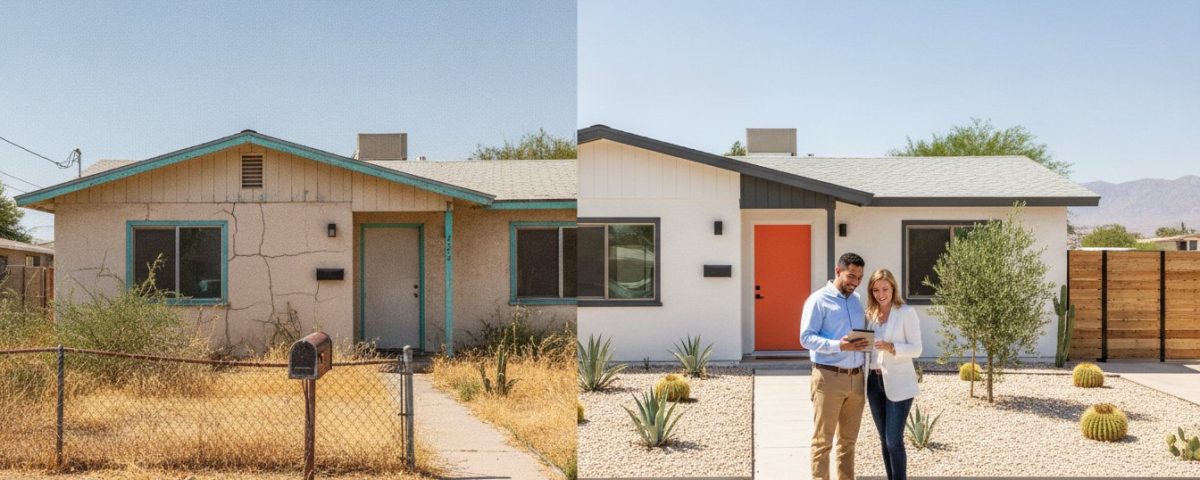
Why are you still letting a 30-day bank window kill your profit margins? You found a distressed gem in Phoenix. You ran the numbers. You’re ready to move. Then the “big bank” bureaucracy hits. They want tax returns. They want a pristine credit score. They want time you don’t have. By the time they say maybe, another investor has already closed. It’s frustrating. You know that learning how to finance a fix and flip property shouldn’t feel like begging for a favor. It should feel like a strategic partnership.
Stop losing deals to slow lenders. This 2026 fast-track guide is your blueprint for securing high-speed capital that turns houses into massive profits. You’ll learn how to secure asset-based funding that focuses on the property’s potential. Not your past. We’ll show you how to close in 7 days or less, finance 100% of your rehab costs, and scale your portfolio without touching your life savings. No red tape. No complex draw schedules. No excuses. It is time to start flipping.
Key Takeaways
- Traditional banks kill deals with 45-day windows. Learn why asset-based speed is the only way to win in a competitive market.
- Discover how to finance a fix and flip property using hard money to cover up to 100% of renovation costs without draining your personal savings.
- Stop trading equity for slow capital. Compare HELOCs and private partners to find the funding strategy that keeps you in control of your profits.
- Master the After-Repair Value (ARV) math that lenders actually care about. Focus on the property’s potential rather than your personal credit history.
- Leverage local Phoenix market expertise to bypass national bureaucracy and close your next distressed property deal in 7 days or less.
Why Banks Fail Fix and Flip Investors & Better Options
Banks love safe bets. They want cookie-cutter suburban homes with manicured lawns and working stoves. But you? You’re looking at the house with the boarded-up windows and the caved-in roof. That is where the profit lives. Understanding what flipping a house means requires recognizing that the “distressed” part is the opportunity. However, traditional lenders see that distress as a deal-breaker. This is why you need to know how to finance a fix and flip property through channels that actually understand the business. Fix and flip financing is short-term, high-leverage capital designed for rapid property turnaround. It is built for speed. It is built for the “ugly” houses banks won’t touch.
The Red Tape Reality Check
Your debt-to-income ratio is a massive distraction. Professional flippers don’t have time to explain their tax returns to a loan officer who doesn’t know a joist from a jack-post. Traditional lenders are terrified of “distressed” assets. If a house lacks a functional kitchen or has a hole in the roof, the bank’s computer says no. It is that simple. They rely on “committee approvals” that move at the speed of a glacier. In a fast-moving Arizona market, a 45-day closing window is a death sentence for your deal. You aren’t just fighting other investors. You are fighting the bank’s own internal bureaucracy. They want you to fit into a box. We know the best deals are always outside the box.
The Alternative: Asset-Based Lending
Asset-based lending flips the script. It shifts the entire focus from your personal credit score to the property’s profit potential. Private capital operates outside the “big bank” ecosystem. There is no red tape. No endless requests for documents you already sent. No waiting weeks for a “maybe.” This is about the After-Repair Value (ARV). When you are learning how to finance a fix and flip property, you need a partner with a “can-do” attitude. You need someone who looks at a gutted interior and sees a six-figure payday. Asset-based lenders provide the high-octane fuel your business needs to move fast. They don’t care about your past mistakes. They care about your current deal’s potential. It is about results, not formalities. You get the capital. You fix the house. You keep the profit. That is how the professional game is played.
- No “Condition Gap”: We fund the houses banks are too scared to touch.
- No “Speed Trap”: Close in days, not months. Never lose a deal to a slow closing window again.
- No Credit Obsession: Your property’s potential is your strongest asset.
Hard Money Loans: The High-Octane Fuel for Real Estate Flips
Forget the “last resort” labels. Hard money isn’t a safety net for people with bad credit. It is a strategic weapon for investors who value speed over everything. If you want to know how to finance a fix and flip property while the competition is still filling out bank forms, this is your answer. You need to close in days. You need to leverage the lender’s capital to fund 100% of your renovation. You need to stay in control. Successful Phoenix investors don’t want equity partners taking half their profit. They want private capital that does its job and then gets out of the way. This is high-octane fuel for your business growth.
How Hard Money Actually Works
The philosophy is simple: Asset-first. Your equity is the property itself, not just the cash in your pocket. Understanding How Fix and Flip Loans Work means recognizing that the property’s value protects the deal. You will pay “points” at closing. Think of these as the price of admission for moving at the speed of light. Most loans focus on the short term. A 6 to 12 month window is the flipper’s sweet spot. It keeps you moving. It keeps the pressure on to finish the rehab and get the property back on the market. This isn’t a 30-year commitment. It is a professional sprint designed for maximum ROI.
Why Beginners Need an Expert Ally
Don’t fly solo on your first flip. A seasoned hard money lender acts as a second set of eyes on every deal. If an experienced lender won’t fund the project, the deal probably isn’t as good as you think. There is a common myth that hard money requires zero credit checks. That’s not the reality. Lenders look at the whole picture, but they prioritize the asset. They want to see a solid plan. They want to see a property with enough meat on the bones to weather a market shift. As you build a track record, you unlock better terms and faster cash. You become a preferred partner. This is how you scale from one house to five. If you are ready to move, a local hard money lender can help you evaluate your next project’s potential before you sign the contract. We want the deal to happen just as much as you do.
- Speed: Close in 7 days or less. Beat the “cash” buyers who are actually waiting on bank approvals.
- Leverage: Keep your life savings in the bank. Use our capital for the heavy lifting and renovation costs.
- Control: You own the deal. You keep the equity. We provide the fuel to get you to the finish line.
Comparing Your Funding Options: Hard Money vs. HELOCs vs. Private Partners
Don’t get blinded by low interest rates. If you want to know how to finance a fix and flip property, you need to look at the total cost of the deal, not just the APR. Cheap capital often comes with strings that can strangle your business before it even starts. You have options. But only one is built for professional speed and scalability. Let’s look at the reality of the market in 2026.
As of August 2026, national average HELOC rates sit between 7.23% and 7.50%. This looks like a bargain on paper. But it’s a trap for the unwary. You are gambling with your primary residence. One major market hiccup or a renovation delay, and you aren’t just losing a flip. You’re losing your family’s home. Is that 5% interest savings worth the risk of foreclosure on your own front door? Probably not. Private partners are another common path. They seem “free” because there’s no monthly bill. But they usually want 50% of your profit. If you hit the 2026 median gross profit of $66,000, you just paid $33,000 for that capital. That is the most expensive money on the planet. Seller financing is the “unicorn” of the industry. It’s rare and often complex. You must stay aware of consumer protection in seller financing to avoid predatory structures that set you up for failure.
The Hidden Costs of “Cheap” Money
Waiting is the most expensive thing you can do in real estate. A traditional bank takes 45 days. A hard money lender takes 7. In those 38 days of silence, you are bleeding cash. You are paying holding costs. Taxes. Insurance. Utilities. Worse, you lose the deal to an investor who closed while you were still on hold with a loan officer. Comparing the total dollar cost of a deal is the only way to see the truth. Percentage rates are for homeowners. Profit margins are for investors.
The Winner: Hard Money for Scalability
You cannot scale to five flips a year using only your personal credit. You will hit a wall. Hard money allows you to keep your personal assets separate from your business risks. This is the “Infinite Returns” model. By using the lender’s money for the heavy lifting, you keep your own cash in the bank. You stay liquid. You stay ready for the next opportunity. Scalability requires a system that doesn’t rely on your life savings. When you learn how to finance a fix and flip property the right way, you use leverage to multiply your results. You don’t just buy a house. You build a business.
- Cash-Out Refinance: Recycle equity from your existing portfolio to fund your next down payment.
- Risk Mitigation: Keep your primary residence safe by using asset-based loans for business ventures.
- Profit Retention: Pay an interest rate, not a percentage of your hard-earned equity.
Mastering the Numbers: ARV, LTV, and Rehab Budgets
Math is the difference between a massive payday and a financial disaster. You cannot wing it. If you want to know how to finance a fix and flip property, you must master the metrics that professional lenders use to evaluate risk. Numbers don’t lie. They don’t have “feelings” about a neighborhood. They only show the spread. In the 2026 market, where Phoenix inventory has risen 15% to 20% year-over-year, your margins must be bulletproof. Stop guessing. Start calculating.
Hard money lenders prioritize the After-Repair Value (ARV) above all else. This is the anchor for your Loan-to-Value (LTV) ratio. While traditional banks obsess over your purchase price, we look at the finish line. Most asset-based loans are capped at 75% of the ARV. You also need to understand Loan-to-Cost (LTC). This covers the purchase price plus the renovation. In 2026, experienced flippers are still leaning on the 70% Rule: pay no more than 70% of the ARV minus estimated renovation costs. With average Phoenix rehabs costing between $50,000 and $80,000, that margin is your only shield against market shifts.
Calculating ARV Like a Professional
Don’t fall into the “Comps Trap.” Active listings are just dreams; recent sales are the reality. Look at what has actually closed in the last 90 days within a half-mile radius. ARV is the estimated market value of a property after all renovations are complete. Factor in the 2026 trend of rising inventory. Buyers are more discerning now. They won’t pay a premium for “average” work. Build your ARV based on the high-end finishes that moving buyers actually demand. If you’ve got the numbers ready, apply for a fix and flip loan to see how much leverage your deal can handle.
Navigating the Rehab Draw Schedule
Lenders don’t just hand over a bag of cash for renovations. They use a draw schedule. This is a series of stages where funds are released after specific work is verified. Foundation. Framing. Drywall. Finish work. It keeps the project moving. It protects the capital. Managing your contractors is key here. Never pay for work that isn’t done. A pro keeps the “Inspection-to-Cash” cycle tight. You finish a stage. We inspect. You get paid. Your crew stays on-site because they know the money is coming. No delays. No stalled projects. Just pure momentum.
- ARV is King: The property’s future value dictates your current funding.
- LTV vs. LTC: Know how much of the project cost is covered versus the final value.
- Padding is Pro: Always add a 10% to 15% contingency to your rehab budget for the unexpected.

Securing Your Fix and Flip Loan in Phoenix: The Level 4 Funding Advantage
National lenders are slow. They rely on cold algorithms and out-of-state underwriters who have never stepped foot in Maricopa County. In a market where homes in Phoenix spent a median of 74 days on the market in early 2026, you don’t have time for a data center in Delaware to approve your vision. You need local boots on the ground. You need a partner who knows that a flip in Maryvale is a different beast than a project in Scottsdale. We understand how to finance a fix and flip property in the Arizona heat because we are investors ourselves. We don’t just lend money. We fund success.
Level 4 Funding (DBA Setabay Private Hard Money) was built for speed. No red tape. No corporate bureaucracy. No “committee” waiting to reject your deal because of a minor credit blemish from five years ago. We focus on the asset. We focus on the profit. If the deal makes sense, the money is there. It is that simple. We provide the leverage you need to scale your portfolio across Phoenix, Scottsdale, and Tucson without the headaches of traditional finance. We are the direct, no-nonsense ally you’ve been looking for.
Local Market Dominance
We know these neighborhoods better than any bank. We know why a property in Tempe commands a premium and why Buckeye is a hotspot for entry-level flips. A bank in New York won’t touch a unique “Sedona Factor” property because it doesn’t fit their rigid suburban model. We see the opportunity. We fund the unique, the distressed, and the high-potential deals that scare off traditional lenders. For more insights on the market, check out Fix and Flip Loans: The Real Estate Investor’s Secret to Fast Funding in 2026. Our local expertise is your competitive edge.
Your Fast-Track Application
Ready to move? We can get you a “Yes” in 24 hours. You don’t need a mountain of paperwork. You don’t need to explain your life story. You need two things: a solid deal and a clear exit strategy. Show us the ARV. Show us the rehab plan. We take care of the rest. Our “No-Hassle” close is designed to get you to the finish line while your competition is still waiting for a return phone call. Stop begging for capital. Start deploying it. Your next project is waiting. Get Your Fix and Flip Deal Funded Now and turn that distressed house into your next massive profit.
- 24-Hour Approval: Speed is our currency. We move as fast as the Arizona market demands.
- Investor-to-Investor: We speak your language. No corporate jargon. Just results and profit.
- Arizona Focus: Deep specialization in Phoenix, Scottsdale, and Tucson markets for maximum accuracy.
Stop Dreaming and Start Closing Deals
The 2026 market doesn’t wait for slow bankers or mountain-high paperwork. You’ve seen the reality. Traditional loans are a dead end for distressed assets. Mastering how to finance a fix and flip property means choosing speed over bureaucracy. It means focusing on the After-Repair Value rather than your personal credit score. You need a partner who knows the streets of Phoenix and Scottsdale as well as you do. Level 4 Funding provides the fast, asset-based approvals you need to scale your business without the traditional friction.
Managed by seasoned pro Matt Prosory, we bring expert local knowledge to every deal we fund. We don’t care about your tax returns. We care about your exit strategy. Don’t let another profitable property slip through your fingers while you wait for a “maybe” from a corporate office. Stop waiting for the bank and get your deal funded today with Level 4 Funding. The capital is ready. The deals are out there. It’s time to take your portfolio to the next level. You have the blueprint. Now get the fuel.
Frequently Asked Questions
How much down payment do I need for a fix and flip loan?
Hard money lenders typically require 10% to 20% of the purchase price. Some aggressive programs finance up to 95% of the purchase for experienced flippers. You need some skin in the game to align your interests with the lender. It isn’t just about the cash. It’s about showing you have a vested interest in the property’s success. The stronger the deal, the less cash you usually need to bring.
Can I get a fix and flip loan with bad credit?
You absolutely can. Asset-based lenders prioritize the property’s potential over your personal credit score. If you are figuring out how to finance a fix and flip property, remember that the asset is the star. While a bank might reject you for a 600 FICO, a hard money lender looks at the After-Repair Value. If the deal has a solid profit margin, the credit score becomes a secondary detail. Your past hurdles won’t stop you.
How fast can a hard money lender close a deal in Arizona?
Most hard money lenders in Arizona close in 7 days or less. In fast-paced markets like Phoenix or Scottsdale, speed is your greatest competitive advantage. You cannot wait 30 days for a traditional appraisal or a loan committee. We eliminate the red tape. We provide the rapid funding you need to secure distressed properties before other investors even get a return phone call from their bank.
What is the “70% rule” in fix and flip financing?
The 70% rule is a safety framework for evaluating deals. You should pay no more than 70% of the After-Repair Value (ARV) minus the estimated renovation costs. This formula creates a built-in profit buffer. It protects you from unexpected construction delays or market fluctuations. While it’s a quick and dirty tool, it remains a gold standard for professional investors who want to ensure every project is worth the effort.
Do fix and flip loans cover the cost of renovations?
Yes, many programs are designed to cover 100% of the rehab budget. This is a core part of how to finance a fix and flip property without exhausting your personal savings. The lender typically holds these funds in escrow and releases them in draws as you hit specific project milestones. This structure keeps your contractors motivated and ensures the renovation moves at the speed of your business plan.
Is it better to use a hard money loan or a private partner?
Hard money is usually the more profitable choice. A private partner often demands 50% of your total equity in exchange for the cash. A lender just wants a set interest rate. If you land a $66,000 profit, giving away $33,000 is a massive price to pay for capital. With hard money, you keep the control. You keep the profit. You build your own business legacy. Results matter more than formalities.
What happens if I can’t sell the property before the loan term ends?
You have several exit strategies if the property doesn’t sell quickly. You can request a loan extension or refinance into a long-term rental loan. The key is proactive communication. Lenders want to see you succeed, not take back a half-finished house. Most will work with you to find a solution that protects your equity while ensuring the debt is eventually satisfied. Don’t panic; just have a backup plan.
Are there prepayment penalties on fix and flip loans?
Most fix and flip loans have zero prepayment penalties. The entire model is built on speed. Lenders expect you to buy, renovate, and sell within a 6 to 12 month window. They want you to pay off the loan early so you can move on to the next deal. Always review your specific term sheet, but professional hard money lenders thrive on your rapid success and high-volume project turnover.

About the author
Matt has a bachelor's degree in political science from Northern Arizona University and works at Level 4 Funding, a private lending company that offers hard money and rental home loans to real estate investors in 35 states.
With Matt's leadership, the firm has financed almost $300 million in loans for investment properties. He often helps real estate investors with rental property purchases, foreclosures, refinancing, and fix-and-flip projects. Matt has extensive experience in fix-and-flip, buy-and-hold, rental properties, and real estate sales. He has lived in Arizona for 43 years and is married with three children. Matt is licensed as a mortgage broker and loan originator in Arizona, with NMLS 2062278 and NMLS 1118493.
Equal Housing Opportunity. This is not a Good Faith Estimate, and it is not a Guarantee to lend; it should not be considered as such. Costs, rates, estimates, and terms can only be determined after a full application is completed. To the extent this message includes any tax or legal advice, this message is not intended or written by the sender to be used, and cannot be used, for legal or tax purposes or advice. This is an advertisement. Copyright © 2026. All rights reserved.