

The Ultimate Guide to Real Estate Financing Options for Investors: From Hard Money to Conventional Loans
November 8, 2026
Fix and Flip Loans: The Complete Investor’s Guide to Financing Your Next Rehab Project
November 9, 2026
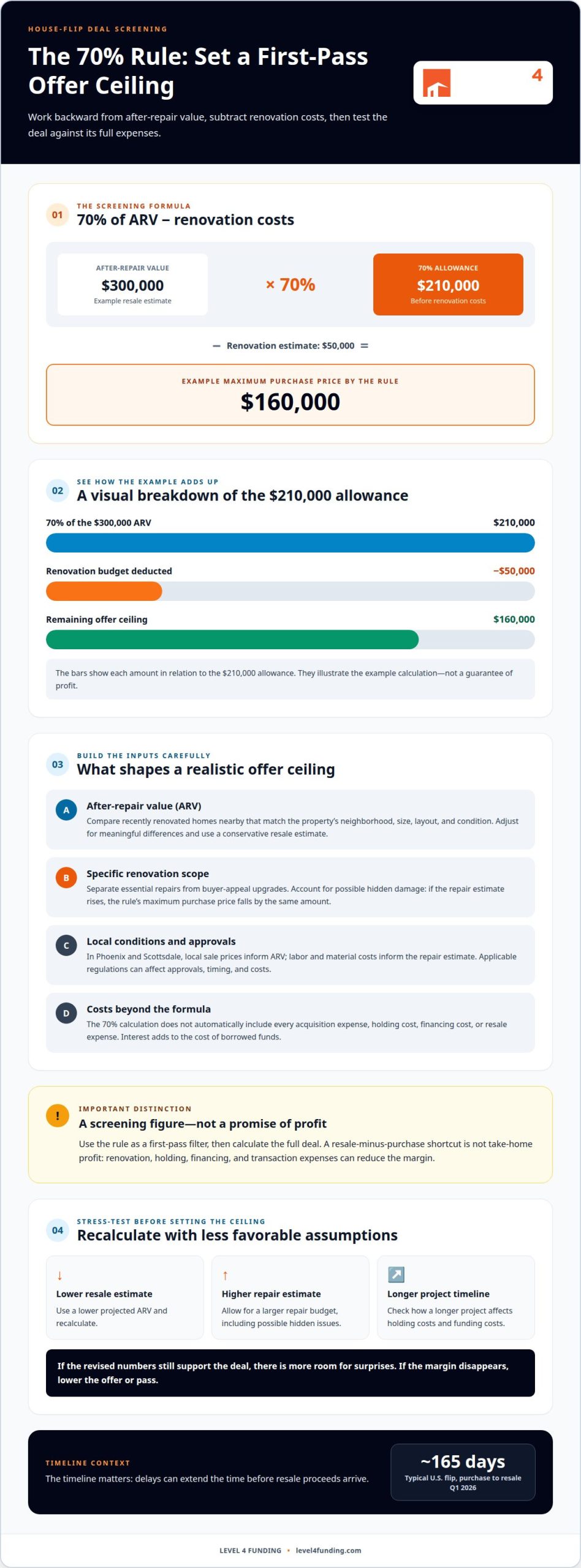
A profitable flip is won before renovation begins. If you’re asking how you make money as a house flipper, the core move is to buy below the property’s after-repair value, control renovation and holding costs, then sell for more than your total investment. A common guideline is the 70% Rule: pay no more than 70% of the after-repair value, minus renovation costs. For example, a home expected to be worth $300,000 after repairs, with $50,000 in renovation costs, points to a maximum purchase price of $160,000.
And no, a cash offer isn’t the only route into house flipping. Your funding plan still has to leave room for the purchase, repairs and the costs that accumulate while the project is underway. This guide breaks down how to estimate a workable purchase price, use the 70% Rule without treating it as a guarantee of profit, plan the project timeline, and account for holding costs. You’ll come away with a clearer starting framework for evaluating a flip in Phoenix or Scottsdale before you commit to the deal.
Key Takeaways
- Estimate the after-repair value and renovation budget before setting your maximum offer, then account for transaction costs that can reduce your margin.
- Use the 70% Rule as a starting point for evaluating a deal, not as a substitute for checking the project’s full costs.
- Build a realistic schedule for finding, renovating, and selling the property; delays can add holding costs and squeeze profit.
- Start with a clear plan for the property, repairs, resale, and funding before making an offer.
- A cash offer isn’t the only way to fund a flip; Fix and Flip Loans are one financing option to consider.
1. Buying below after-repair value
Your margin starts with the purchase price, not the resale announcement. Estimate the after-repair value (ARV) using recently renovated homes that match the property’s neighborhood, size, layout, and condition. For a Phoenix or Scottsdale property, nearby sales are more useful comparisons than a citywide average. A remodeled home across town may attract different buyers and sell for a different price.
Build the ARV from comparable properties, then work backward. First, identify completed sales with features buyers are likely to compare. Next, adjust your estimate for meaningful differences, such as an extra bedroom, a different lot, or a renovation standard your project won’t match. Finally, choose a conservative resale figure. An optimistic ARV can make an overpriced purchase look profitable on paper.
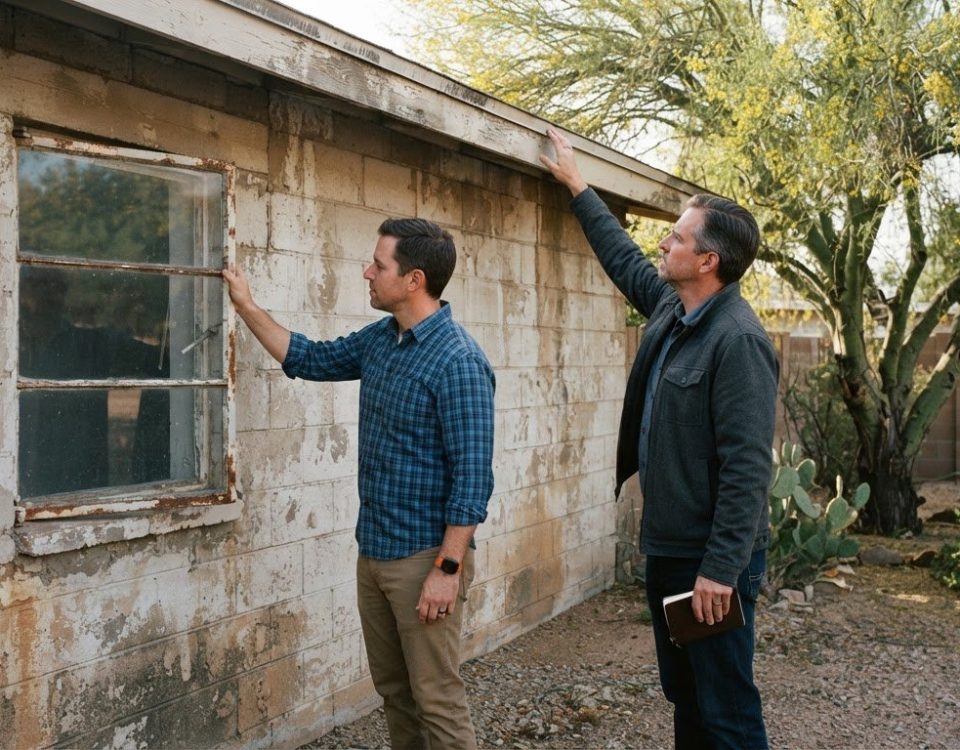
Compare the repair scope with the ARV before making an offer. Separate essential work, such as fixing functional problems, from upgrades intended to improve buyer appeal. The distinction matters: high-end finishes may cost more without raising the sale price enough to protect your profit. For each improvement, ask whether it supports the expected resale value and suits the likely buyer in that Phoenix or Scottsdale neighborhood.
Include acquisition and selling expenses in your deal calculation, not just the home price and renovation budget. Title charges are one example of a transaction cost, and they vary by location: according to the Federal Reserve, average title charges were about $2,000 in California and Texas and about $650 in North Dakota and North Carolina. Those figures aren’t Phoenix estimates, but they show why location-specific closing expenses belong in your own calculation.
Use the full deal calculation, not the resale-minus-purchase shortcut. That difference is not your take-home profit. Holding costs and other transaction expenses still reduce the proceeds.
Before committing, write down the expected resale price, purchase price, repair scope, and transaction costs. Then test the numbers with a lower resale estimate or a larger repair allowance. If the deal only works under the most favorable assumptions, the purchase price leaves too little room for surprises. A stronger buy is one whose margin survives a less optimistic scenario.
2. The 70% Rule for maximum offers
The 70% Rule gives flippers a quick ceiling for a potential purchase offer. Multiply the property’s after-repair value by 70%, then subtract the estimated renovation costs. The result is a screening figure, not a promise of profit or a universal market price. Use it before making an offer, then test whether the property’s actual costs support that ceiling.
In Phoenix and Scottsdale, local sale prices shape the after-repair value, while labor and material costs shape the renovation estimate. Applicable regulations can also affect which work requires approval, project timing, and costs. Together, these factors determine how much room remains between your offer and the property’s projected resale value.
Start with comparable renovated homes near the property, not a broad Phoenix-area average. The finished homes should resemble your target in location, layout, size, and condition. If a Scottsdale property’s best comparisons have features yours won’t offer, don’t use their full sale prices as your expected after-repair value. A realistic, lower ARV gives you a more useful maximum offer.
Next, make the repair estimate specific. Break the scope into visible updates and essential work, then account for what could be uncovered once construction starts. An outdated kitchen may be easy to spot; hidden damage can change the budget and undermine the original offer. If the repair estimate rises, the 70% Rule’s maximum purchase price falls by the same amount.
Financing also affects the deal. Interest adds to the cost of borrowed funds, so a maximum offer that ignores your financing plan can overstate the available profit. Compare the expected project timeline and funding costs with your resale assumptions. The aim isn’t to maximize the offer, but to preserve enough margin after expenses.
Apply the rule as a first pass, then calculate the deal’s full costs. Include acquisition expenses, renovations, holding costs, and expenses tied to resale. The 70% calculation doesn’t automatically account for every item. If a Phoenix property’s estimated resale value looks attractive but the remaining margin disappears after those costs, lower the offer or pass.
Run a second scenario before settling on a number. Reduce the projected resale value, increase the repair estimate, or allow for a longer project timeline. Then recalculate the maximum purchase price. If the revised figure still supports the deal, your offer has more breathing room. If not, the original assumptions were doing too much work.
The rule works best as a filter, not a substitute for local analysis. Phoenix and Scottsdale properties can differ in resale potential, renovation scope, and approval needs, even when their asking prices look similar. Evaluate each property on its own facts, and let the revised numbers set your offer ceiling.
3. Time required to find, renovate, and sell a property
A flip’s timeline starts before the purchase and ends when the resale closes. A typical U.S. house flip took about 165 days from purchase to resale in Q1 2026. That period includes acquisition, construction, and sale, so each delay can extend the time before proceeds arrive.
Finding the right property has no fixed schedule. Set your criteria before reviewing Phoenix and Scottsdale listings: target neighborhood, property condition, likely buyer, and renovation scope. Then assess each candidate against those criteria. A home that needs work but has a clear resale path may be a stronger fit than a cheaper property with uncertain repairs.
House-flipping returns and rental investing work differently. A flip aims to earn a profit through resale after renovation, while a rental property generates income through ongoing tenant occupancy. The choice depends on whether you’re pursuing a sale-based return or longer-term rental income, as well as each property’s costs and management needs.
There’s no single renovation cost that fits every U.S. property. The budget depends on the home’s condition, required work, finish choices, and local labor and material costs. For a Phoenix project, separate essential repairs from cosmetic upgrades, then base your estimate on the actual scope rather than a national average.
Once you own the property, organize the work in a sequence that limits bottlenecks. Confirm the repair scope, line up materials, and schedule tasks that depend on one another. For example, complete work that must happen before painting before booking the painter. A missed handoff can leave workers waiting and push back the listing date.
Include the resale stage in your schedule, too. After construction, the property still needs to be prepared for buyers, marketed, and sold. A finished house isn’t the same as a completed flip. A delay between the last repair and the listing can extend the project without improving the home or its expected sale price.
Track progress against milestones, not just a target closing date. Mark when the renovation scope is finalized, major work is complete, and the home is ready to list. If a task slips, identify the next dependent task and update the schedule. This makes it easier to see how a construction delay affects the sale.
Buyers also shape the final stretch. The home’s condition, presentation, and asking price influence interest after listing. Plan the resale strategy before construction ends so the finished property matches its intended audience. In Phoenix or Scottsdale, a project calendar is useful only when it accounts for finding, renovating, and selling the specific home.
4. Typical project duration and holding costs
A house flip generally takes four to six months from purchase to sale of the finished home. That window covers more than construction. It includes the time the property sits on the market and the period before the sale closes. Each extra week can add carrying expenses and delay access to the sale proceeds.
What are the costs of buying, renovating, and selling a house? Buying costs can include the purchase price and transaction expenses; renovation costs depend on the home’s condition and planned work. Selling costs and holding expenses also reduce what remains after resale.
Holding costs build while you own the property. Depending on the project and financing, the budget may include loan interest, property taxes, insurance, utilities, and upkeep. A vacant home still needs basic care. For example, unfinished repairs can delay the listing while recurring expenses continue.
Map these costs across the project timeline instead of treating them as one lump sum. Record which expenses begin at acquisition, continue during renovation, or arise during the sale. This makes the effect of schedule changes visible. If work finishes later than planned, estimate which recurring expenses will continue before setting a revised resale target.
Keep the construction schedule tied to your holding-cost plan. Confirm the work sequence, track progress, and address delays that could push back the listing. For example, if a repair must be completed before finish work begins, a late start can move several tasks at once. A simple milestone schedule helps expose those dependencies early.
Plan for the period after renovation, too. A finished property may still need cleaning, listing preparation, buyer visits, and time to close. Keep the home maintained during that stretch. A Phoenix or Scottsdale flip that looks complete on the contractor’s final day may still incur carrying costs until the sale is finalized.
Review projected profit as the timeline changes. Compare actual spending with the budget, update expected holding expenses, and revise the estimated proceeds. If the project takes longer, the sale price alone won’t show whether the deal remains profitable. The full calculation must account for acquisition, renovation, holding, and selling costs.
Before starting work, set a clear plan for managing the property until resale. Keep records of payments and schedule changes, and connect each delay to its financial effect. A four-to-six-month estimate is a planning frame, not a reason to ignore the calendar. Tracking expenses as they occur gives you a sharper view of your margin at sale.
5. Steps for starting to flip houses
Start with a defined project, not a random listing. Decide whether you’re targeting a light renovation or a property needing substantial work. In Phoenix or Scottsdale, focus your search on a specific area and the buyers likely to want the finished home. This keeps property selection, repairs, and resale plans connected from day one.
House-flipping profits are generally taxed according to the transaction and the taxpayer’s circumstances. Keep clear records of the purchase, renovation expenses, financing, holding costs, and sale proceeds so the project’s financial activity can be reported accurately.
There isn’t one universal permit list for every flip. Requirements depend on the property’s location and planned work, so define the renovation scope and determine which local approvals apply before work begins.
The biggest risks are paying too much, underestimating repairs, delays, and a weaker resale result than expected. Reduce them by using realistic comparable sales, defining the work before purchase, tracking expenses, and planning for schedule changes.
Then build your deal plan in a clear sequence. First, define the likely buyer and the features that matter to that audience. A Phoenix home aimed at buyers seeking updated living areas may call for a different scope than a Scottsdale property with a different layout or finish level. Let the resale plan guide the renovation, not personal taste.
Next, review the property’s condition and turn your observations into a written scope. Separate essential repairs from optional upgrades, then estimate the cost of each. A vague allowance for “general updates” hides risk. A line-by-line scope makes it easier to spot missing work and judge whether the expected resale value can support the project.
Choose a funding approach that matches the project’s needs and timeline. Map when you’ll need funds for acquisition and construction, and include ongoing costs in the plan. If borrowing, account for interest and how a longer project could affect the total cost. Keep expected sale proceeds separate from the money needed to complete the work.
Before committing, stress-test the plan. Consider what happens if repairs expand, work takes longer, or buyers respond differently than expected. If the deal depends on every assumption going right, revisit the purchase terms or project scope. Keep receipts, invoices, and schedule updates together throughout the flip.
Once the numbers, work plan, and exit strategy align, discuss funding for the project with a next step toward flip financing.
Level 4 Funding: Fix and Flip Loans
Level 4 Funding offers Fix and Flip Loans for real estate investors financing a renovation and resale project. Consider this option when your purchase and repair plan is clear, and you’re assessing how to fund the flip without using only cash.
For projects involving new construction or substantial building work, Construction Loans may also fit. The right financing depends on the property, project scope, and your plan for completing the work and selling the finished home. Include those details in your decision alongside the expected timeline and holding costs.
Bring your project details into the conversation, including the property, planned work, and exit strategy. Contact Level 4 Funding to discuss financing for your house-flipping project.
Make your next flip a deliberate move
Understanding how you make money as a house flipper is only the start. The next move is turning your deal plan into a clear financing decision. Before pursuing a property, organize its scope, timeline, and exit strategy so you can explain what the project needs and how you intend to complete it.
Level 4 Funding offers Fix and Flip Loans for renovation-and-resale projects, Construction Loans for building work, and Commercial Property Loans for qualifying investment properties. Match the financing conversation to the property and plan you’ve developed. A focused discussion can help you explore which option fits the project you’re preparing to take on.
Ready to discuss financing for your next real estate investment? Contact Level 4 Funding today. Bring your plan, sharpen your next move, and take the first step toward putting a well-evaluated project into action.
Frequently Asked Questions
Do I Need to Have a Cash Offer to Flip a House?
No, you can finance a flip instead of paying entirely in cash. Nationwide, about 63% of house flips are purchased with cash, which means financed purchases also form part of the market. How do you make money being a house flipper without paying all cash? By choosing a financing plan that leaves room for project costs and a workable resale strategy. Consider available capital, the project timeline, and how borrowing costs affect projected returns.
How Much Do House Flippers Make?
There’s no fixed income for a house flipper because each project has different purchase, renovation, and resale costs. U.S. flips generated median profits of about $73,500 per property in 2024, but that figure isn’t a promise of personal earnings or necessarily the amount left after every expense. Evaluate a specific deal by estimating proceeds after project costs, then consider how many projects you can realistically complete.
How do house flippers make money?
House flippers aim to earn money by reselling a renovated property for more than the combined cost of acquiring, improving, and holding it. The question “How do you make money being a house flipper?” comes down to controlling total costs and selling at a price that exceeds them. Remember to account for selling expenses, too. Improvements may boost buyer appeal, but they don’t automatically add the same amount to the sale price.
What is the typical profit margin for house flipping in the United States?
The typical U.S. house flip had a 25.4% gross return in Q1 2026. Gross return is not the same as net profit: financing, holding, and transaction costs reduce what remains. Use the figure as national context, not a forecast for a Phoenix or Scottsdale property. A local deal’s outcome depends on its purchase price, renovation scope, sale proceeds, and expenses throughout the project.
How do you calculate a house’s maximum purchase price for flipping?
Use the 70% Rule as a screening calculation: multiply the estimated after-repair value by 70%, then subtract renovation costs. This gives a maximum offer guideline, not a complete profit calculation. Before deciding, account separately for financing, holding, acquisition, and resale expenses. If those costs leave too little margin, the purchase price needs to come down or the project may not suit your investment plan.
How do house flippers finance a property, and what are typical loan rates and fees?
Flippers may use cash or financing, including private hard money loans. Loan rates and fees vary with the lender, property, borrower, and deal structure, so there isn’t one rate that applies to every project. Review the interest rate and any points or other charges alongside the repayment terms. Then model how financing costs affect the project if renovation or resale takes longer than planned.
What are the steps to find, buy, renovate, and sell a flip house?
Use a clear sequence: define your target property and likely buyer, assess the home, estimate repairs, and evaluate the deal’s costs and resale plan. Arrange funding that fits the project before committing. After purchase, manage the renovation scope and schedule, then prepare the finished home for listing and sale. Keep records of expenses and changes so you can judge the project’s financial result accurately.

About the author
Matt has a bachelor's degree in political science from Northern Arizona University and works at Level 4 Funding, a private lending company that offers hard money and rental home loans to real estate investors in 35 states.
With Matt's leadership, the firm has financed almost $300 million in loans for investment properties. He often helps real estate investors with rental property purchases, foreclosures, refinancing, and fix-and-flip projects. Matt has extensive experience in fix-and-flip, buy-and-hold, rental properties, and real estate sales. He has lived in Arizona for 43 years and is married with three children. Matt is licensed as a mortgage broker and loan originator in Arizona, with NMLS 2062278 and NMLS 1118493.
Equal Housing Opportunity. This is not a Good Faith Estimate, and it is not a Guarantee to lend; it should not be considered as such. Costs, rates, estimates, and terms can only be determined after a full application is completed. To the extent this message includes any tax or legal advice, this message is not intended or written by the sender to be used, and cannot be used, for legal or tax purposes or advice. This is an advertisement. Copyright © 2026. All rights reserved.