


How to Find a Hard Money Lender in Colorado Springs for Your Next Investment Property
November 11, 2026
A house flip can be legal and still carry legal risk. In Phoenix, it is generally legal to be a house flipper, but the renovation, intended property use, sale, and financing all matter.
The question is not just whether you can buy low, renovate, and resell. You also need to understand when contractor licensing may apply, how zoning can affect the project, and what restrictions may come with an FHA-insured mortgage. A missed permit, undisclosed problem, or title issue can turn a promising deal into a dispute or costly delay.
This guide explains the key issues Phoenix investors should consider before committing: licensing, land-use limits, FHA-related anti-flipping restrictions, and legal risks during renovation and resale. It also covers why written contractor agreements, organized project records, and accurate disclosures matter. The goal is to identify legal issues early and plan a flip that works on paper as well as on the property.
Key Takeaways
- Distinguish the legality of flipping a home from the separate rules that may govern renovation work, property use, and resale.
- Assess zoning and land-use limits before settling on a renovation plan or intended use for a Phoenix property.
- Account for possible FHA-insured mortgage restrictions when planning the purchase and resale timeline.
- Reduce avoidable disputes with clear contractor agreements, careful title review, and accurate disclosures about known property issues.
- Explore Level 4 Funding’s Fix and Flip Loans when private financing is part of the project plan.
1. Legal and real estate professional advice
Is it legal to be a house flipper? Generally, yes. Buying and selling property you own does not by itself mean you need a real estate license. That differs from representing another person or negotiating property for compensation. Whether it is legal to be a house flipper also depends on what you do beyond buying and reselling, especially if you perform renovation work.
For a Phoenix project, get legal guidance before signing documents that shape the deal. A real estate attorney can review the purchase agreement, sale contract, contractor terms, and financing documents. Each document has a different purpose: a purchase contract should reflect the agreed transaction, while a contractor agreement should specify the work and payment terms. Clear paperwork helps prevent closing disputes and disagreements about renovation responsibilities.
Build a record from the first offer through the final sale. Keep signed agreements, change orders, receipts, financing terms, and written communications together. If a contractor’s scope changes, document the revision rather than relying on a conversation. These records can help explain what the parties agreed to if a buyer, contractor, seller, or lender later disputes the project.
Ownership can bring its own legal complications. A title search can reveal who holds ownership and whether competing claims exist. If a title issue appears, the flipper may need to address it with the title insurance company or through litigation. A real estate attorney can review the documents, identify the dispute, and explain possible next steps before it disrupts a closing.
Licensing exemptions in another state don’t establish Arizona’s rules. According to the California Legislature, a California homeowner may qualify for the principal-residence licensing exemption only if the homeowner lived in the residence for the 12 months before the work was completed. That California rule concerns contractor licensing, not a general real estate license for selling an investment. Don’t treat it as a Phoenix rule.
If you’re asking whether it’s legal to be a house flipper, consider the purchase and renovation separately. A buyer may dispute a flipped home, especially if important documents, title issues, or property conditions are contested. An attorney can assess the contracts and records and explain whether a claim or response has a legal basis. For investors, the practical step is to organize deal documents and seek advice when a specific contract, title, or buyer dispute arises.
2. Zoning and land-use restrictions
Federal, state, and local rules can all affect a flip. Federal fair housing laws apply when advertising, selling, or renting, while state and local requirements can shape property use, renovations, and permits. In Phoenix, the parcel’s zoning and your project plan matter: renovating a home for resale differs from changing its use.
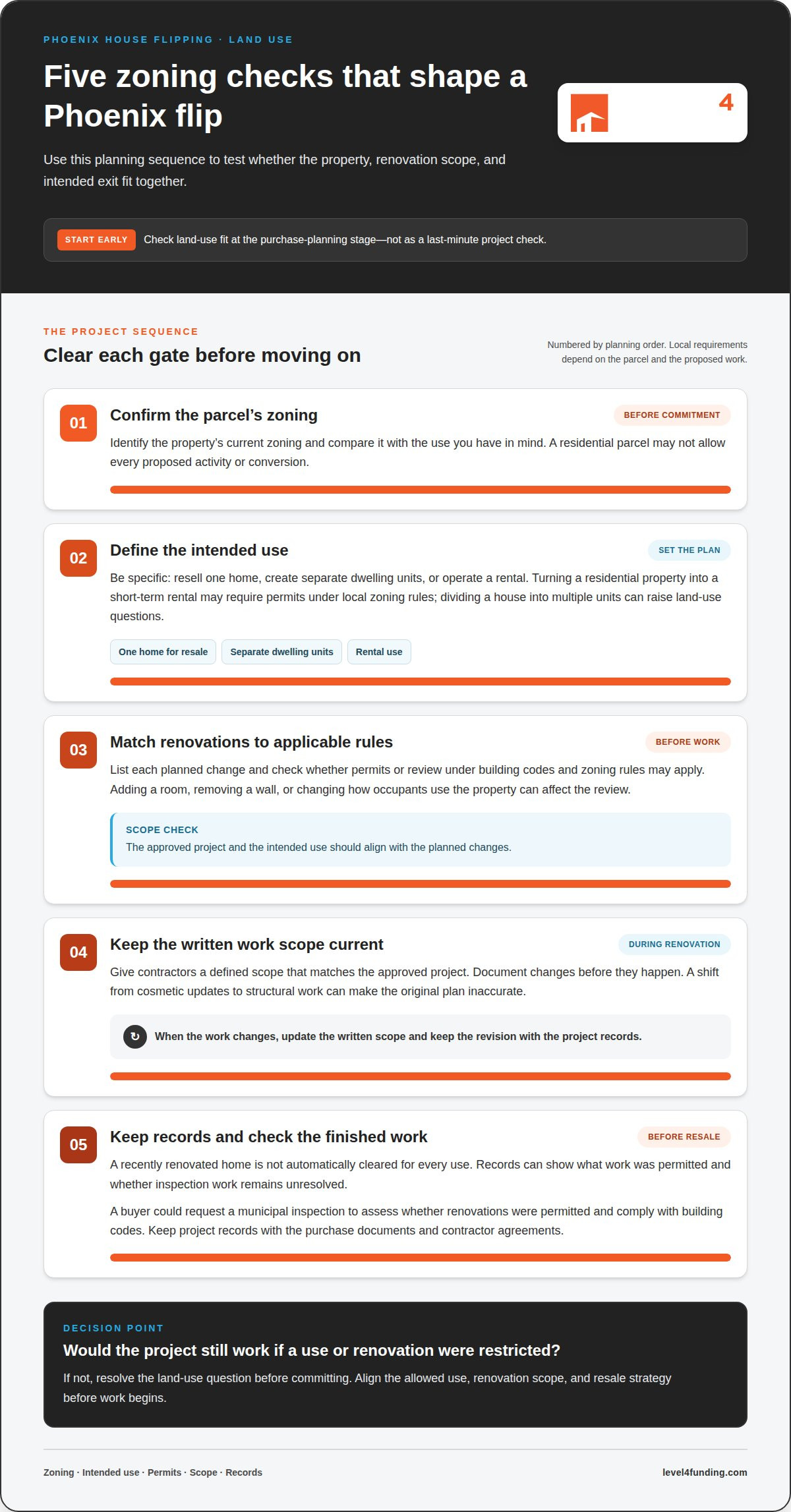
Start by identifying the property’s current zoning and comparing it with the intended use. A residential parcel may not allow every proposed activity or conversion. For example, turning a residential property into a short-term rental may require permits under local zoning rules. Dividing a house into multiple units can also raise land-use questions before construction begins.
Clarify the intended use before finalizing a purchase or renovation scope. Is the plan to resell one home, create separate dwelling units, or operate a rental? Each use can involve different constraints. A floor plan that adds a room, removes a wall, or changes how occupants use the property may require permits or review under applicable building codes and zoning rules.
Contractors should work from a defined scope that matches the approved project. Put the planned work in writing, then document changes before they happen. If a renovation expands from cosmetic updates to structural changes, the original plan may no longer accurately describe the work. That mismatch can create complications during inspections, resale, or a later review of the property records.
Phoenix investors should treat zoning review as a purchase-stage task, not a last-minute check. Identify the parcel, describe the intended use, and list each planned change. Compare those details with the applicable local land-use rules and permit requirements, then keep the records with the purchase documents and contractor agreements. This can expose a mismatch between the deal assumptions and what the property can support.
Do not assume a recently renovated home is automatically cleared for every use. A home may look finished even when records show a different permitted scope or unresolved inspection work. For example, a buyer could request a municipal inspection to assess whether renovations were permitted and comply with building codes. Complete records can help a flipper explain what changed and support a smoother sale.
A practical test is whether the project would still work if a proposed use or renovation were restricted. If not, resolve that land-use question before committing to the plan. Zoning, permits, and building-code requirements can affect both the work and the resale strategy. Align the property’s allowed use, renovation scope, and intended exit before work begins.
3. Anti-flipping rules
“Anti-flipping rules” do not mean every quick resale is illegal. In Arizona, an investor using an FHA-insured mortgage may face restrictions on how often they can purchase and sell a home. The financing matters: a restriction tied to an FHA-insured loan is not automatically a ban on every Phoenix house flip.
House-flipping rules differ by state and city because federal mortgage-program conditions, state rules, and local requirements can apply to different parts of a transaction. For a Phoenix investor, separate loan terms from rules governing the property, renovation, and sale.
Start with the financing plan. If the purchase or resale involves an FHA-insured mortgage, identify the loan’s applicable timing conditions before setting a resale date. A fast renovation schedule alone does not establish that the transaction meets those conditions. The lender’s requirements and mortgage program determine whether the proposed purchase and sale sequence presents an issue.
Keep the timeline clear. Record the purchase date, renovation milestones, and planned listing date in one project file. If a buyer’s financing depends on FHA insurance, that loan may bring its own timing considerations. Do not assume another financing path follows the same conditions.
For example, an investor might buy a Phoenix property, complete improvements, and plan to resell soon afterward. If an FHA-insured mortgage is part of the transaction, account for potential restrictions before committing to that exit schedule. The fact that the property has been improved does not by itself answer whether the financing conditions are met.
Separate anti-flipping concerns from local land-use rules. A Phoenix property’s permitted use and renovation approvals are different questions from an FHA-insured mortgage’s purchase-and-sale restrictions. A project can meet one set of conditions and still face an issue under another. Keep the financing documents and project timeline together so each can be reviewed on its own terms.
Do not confuse a loan-program restriction with a universal waiting period. The rule discussed here identifies possible restrictions for flippers using FHA-insured mortgages, but does not establish one timing limit for every transaction. Do not apply a number from another loan type or state to a Phoenix deal without support in that transaction’s terms.
Before setting the exit date, map the proposed financing against the purchase and resale timeline. Note whether an FHA-insured mortgage is involved, who will use it, and when each transfer is expected. This sequence can expose timing conflicts early, before a listing strategy or closing plan depends on an assumption about anti-flipping rules.
4. House flipping basics
A house flip follows a simple sequence: buy a property below market value, improve it, then resell it. The profit test is just as direct. The resale price must exceed the purchase price and remodeling costs, with other project expenses included in the plan.
Start with the exit, not the demolition. Estimate a realistic resale value for the finished Phoenix property, then work backward through the purchase and renovation plan. If the expected sale price cannot cover the acquisition and improvements, the deal needs a lower purchase price, a narrower scope, or a different strategy.
Separate the renovation scope into essential repairs and value-focused improvements. For example, a roof repair may address a major property need, while updated finishes may help present the home to buyers. This distinction keeps attractive extras from crowding out work essential to completing and selling the property.
Build a project budget that covers more than materials. Include the purchase, remodeling, holding period, and transaction expenses. Allow for scope changes: a repair discovered after work begins can alter the total. Written estimates and documented revisions make costs easier to track.
Timing affects carrying costs and the planned resale. A successful flip might take four to six weeks, but that is not a guaranteed schedule for every property. The actual timeline depends on the work, contractor coordination, materials, inspections, and the steps needed to prepare the home for sale.
Use milestones to keep the project moving. Track the acquisition, start of work, completion of key improvements, final preparation, and listing. If a task slips, update the projected completion date and holding period. This shows more clearly how a delay may affect the original profit calculation.
For example, a Phoenix investor considering a dated house can compare two renovation plans. One might focus on necessary repairs and a clean resale presentation; another might add optional upgrades. Compare each plan’s total cost and timeline with the expected resale value before choosing a scope.
A flip succeeds through disciplined decisions, not renovation activity alone. Keep the purchase price, improvement budget, project schedule, and resale assumptions connected. If one changes, recalculate the deal before adding more work. This helps distinguish a project with a viable margin from one that only looks promising during demolition.
5. House flipping legal risks
A Phoenix flip can run into trouble at purchase, during renovation, or after resale. Title disputes, contractor disagreements, permit problems, disclosure claims, and tax treatment each create different risks. Keep a clear record of the property, the work, and the sale rather than relying on memory when questions arise.
Plan for taxes before listing. A home resold within a year of purchase will usually have proceeds treated as business income for tax purposes, subject to exceptions. Capital-gains and self-employment tax treatment are separate questions, and the outcome depends on how the activity is classified and the investor’s circumstances. Keep purchase, improvement, and sale records organized for tax reporting.
What must a seller disclose? Disclosure duties vary by state, but sellers may need to disclose known property issues and hazards. A Phoenix flipper should accurately describe known defects and hazards, including lead paint or asbestos discovered during renovation. Do not conceal a problem behind new finishes. A buyer may allege misrepresentation if the seller knowingly hides a material issue.
Permit and licensing consequences depend on the requirement involved and the work performed. There is no single Arizona penalty amount for every unpermitted project. Unpermitted work can create disputes and complicate a sale. Records of permits, inspections, and contractor work help show what was done and whether the project followed the required process.
Contractor disputes can start with a vague scope. For example, a written agreement that says “renovate the kitchen” leaves room for disagreement about materials, completion, and payment. Specify the work, payment terms, timeline, and dispute-resolution process. Keep signed changes with the original agreement, especially when repairs expand beyond the initial plan.
Address title problems before closing. A title history search can help reveal ownership and competing claims, while liens or unpaid tax debts can create costs or threaten a purchaser’s interest. If a title issue surfaces, preserve the transaction documents and address the problem through the title insurance company or litigation, as appropriate.
Fair housing rules also apply to advertising, selling, or renting. A listing or screening practice that discriminates against families with children can create legal exposure. Review marketing language and transaction practices for discriminatory terms, and keep communications consistent. For the financing side of a project, explore private financing for your flip as part of a documented plan.
Consequences depend on the licensing or permit requirement and the work performed. Unpermitted work can lead to disputes and complicate a sale.
Level 4 Funding: Fix and Flip Loans
Level 4 Funding offers Fix and Flip Loans for real estate investors financing a renovation-and-resale project. If the plan centers on construction, Construction Loans may be relevant; the right fit depends on the project’s financing needs. These loan options don’t replace careful legal planning. Keep the property’s use, renovation scope, permits, contractor agreements, and resale strategy aligned before moving ahead. Clear project records can help connect the financing plan to the work and intended exit. Investors evaluating financing for a flip can consider whether a Fix and Flip Loan fits the project, or whether its construction needs point toward a Construction Loan.
For financing options for your project, contact Level 4 Funding.
Turn your plan into a finance-ready project
So, is it legal to be a house flipper in Phoenix? The next step is to turn your project idea into a clear go-or-no-go plan. Set out the property, intended use, renovation scope, expected exit, and financing approach before committing. This gives you a practical framework for deciding whether the opportunity fits your investment strategy.
Financing should support the project you’re actually undertaking. Level 4 Funding offers Fix and Flip Loans, Construction Loans, and Commercial Property Loans for real estate investors. Consider which type aligns with the property and work involved, then organize your project details for a financing conversation. A focused plan can help you move from a promising idea to a deliberate next step.
Ready to discuss financing for your investment project? Contact Level 4 Funding today. Build your plan carefully, make the next decision with purpose, and move forward with confidence.
Frequently Asked Questions
When are Developers or House Flippers Exempt from Having a Contractor’s License?
There is no single nationwide exemption that automatically covers every developer or house flipper. Licensing rules depend on the state, the work, and whether the owner performs it or hires contractors. California’s owner-builder exemptions are specific to California and do not establish an exemption for a Phoenix project. For an Arizona flip, distinguish managing the investment from personally performing construction work, then assess licensing requirements for the actual project scope.
Is house flipping legal in the United States?
Yes, house flipping is generally legal in the United States. If you’re asking, “Is it legal to be a house flipper?”, the answer depends on completing the purchase, renovation, financing, and sale in line with applicable rules. A Phoenix investor’s project may involve different requirements from one in another state. For example, the buyer’s mortgage conditions and the seller’s disclosure duties can affect the transaction separately.
What licenses or permits are required to flip houses?
There is no single nationwide house-flipper license or permit that covers every transaction. Whether it is legal to be a house flipper in Phoenix does not settle which approvals a particular renovation needs. Requirements depend on location, intended property use, and planned work. Distinguish buying and selling your own property from obtaining construction approvals. A cosmetic refresh and work that changes a home’s structure can raise different permitting and contractor-licensing questions.
What building permits and contractor licenses are required for renovations?
Renovation requirements depend on the work and the property’s location. Major changes, such as removing a wall or adding a room, often require construction permits. Contractor licensing requirements also depend on the jurisdiction and work involved, so do not assume rules from another state apply in Phoenix. Define the scope first, including structural changes and trade work, then align the renovation and contractor arrangements with applicable local requirements.
What legal risks should house flippers consider, including liens, title issues, and code violations?
For a Phoenix flip, title claims, property liens, unpaid tax debts, and code problems can disrupt ownership, raise costs, or complicate a sale. A title history search can help identify ownership questions or competing claims; project records can show what work was completed and which approvals it involved. Keep purchase documents, contractor agreements, invoices, and permit or inspection records together to clarify the property’s history if a dispute arises.

About the author
Matt has a bachelor's degree in political science from Northern Arizona University and works at Level 4 Funding, a private lending company that offers hard money and rental home loans to real estate investors in 35 states.
With Matt's leadership, the firm has financed almost $300 million in loans for investment properties. He often helps real estate investors with rental property purchases, foreclosures, refinancing, and fix-and-flip projects. Matt has extensive experience in fix-and-flip, buy-and-hold, rental properties, and real estate sales. He has lived in Arizona for 43 years and is married with three children. Matt is licensed as a mortgage broker and loan originator in Arizona, with NMLS 2062278 and NMLS 1118493.
Equal Housing Opportunity. This is not a Good Faith Estimate, and it is not a Guarantee to lend; it should not be considered as such. Costs, rates, estimates, and terms can only be determined after a full application is completed. To the extent this message includes any tax or legal advice, this message is not intended or written by the sender to be used, and cannot be used, for legal or tax purposes or advice. This is an advertisement. Copyright © 2026. All rights reserved.