


Commercial Hard Money Loans: The Complete Guide for Investors and Business Property Buyers
November 24, 2026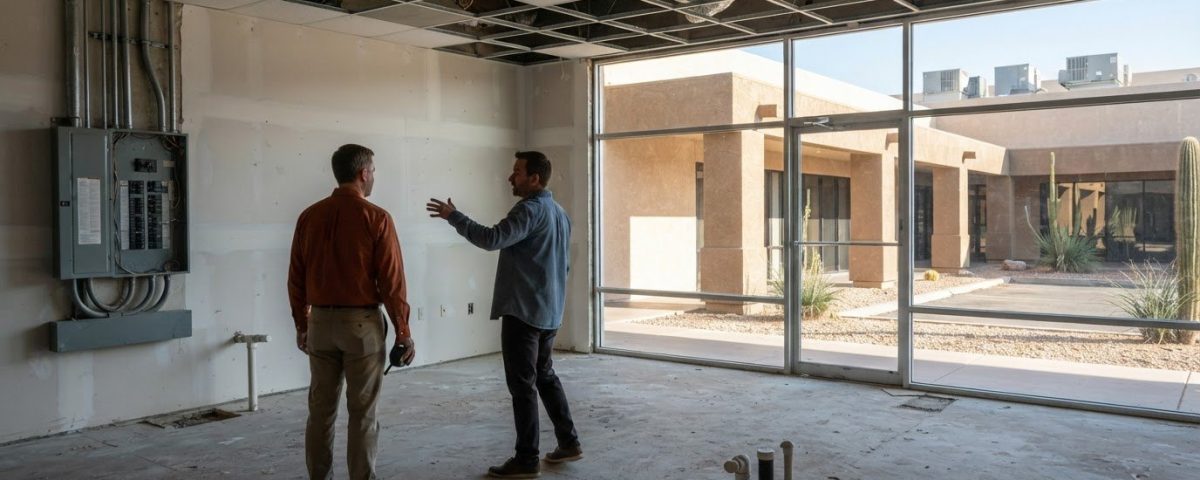
A vacant building doesn’t automatically rule out bridge financing. A Phoenix commercial bridge loan for vacant property can provide short-term financing while you lease, renovate, or otherwise work toward stabilizing the asset. Bridge lending and hard money lending are related, but they aren’t interchangeable: “bridge” describes the financing’s role, while “hard money” describes a form of private lending.
Before committing, focus on the terms and how the financing fits the project. The right structure depends on the property’s condition, vacancy, business plan, and repayment strategy, so a headline rate alone won’t tell you whether the loan makes sense.
This guide explains how vacant-property bridge loans work in Phoenix, what shapes their terms and costs, and how lenders assess a project. It covers how to present the deal clearly, including property and purchase details, financial records, and a realistic stabilization plan. You’ll get a clearer picture of what the financing can solve and what to prepare next.
Key Takeaways
- Vacancy can make a property a bridge-loan candidate, but underwriting weighs the borrower, available reserves, and a credible stabilization plan.
- Commercial bridge loans commonly run 1 to 5 years; match the term to the lease-up timeline and a clear repayment exit.
- Interest-only payments may ease cash flow during the loan term, but the balance still needs to be repaid or refinanced.
- Prepare property, purchase, financial, collateral, and project-plan documents to give the lender a clear view of the deal.
- Build the exit strategy around a permanent refinance or sale, and account for the time needed to establish operating history.
Lease-up, renovation, and purchase-close financing
A commercial bridge loan for vacant property in Phoenix is short-term financing for an acquisition or property transition. It can cover the period before leasing, rehabilitation, or improved operating performance supports the next financing step.
Short-Term Phoenix Bridge Financing
Short-term commercial bridge financing in Phoenix helps investors fund a property while they work toward a defined next stage. Bridge loans are generally intended to provide temporary financing during a transition rather than long-term repayment. That distinction matters when a seller’s closing deadline arrives before a property is ready for permanent lending.
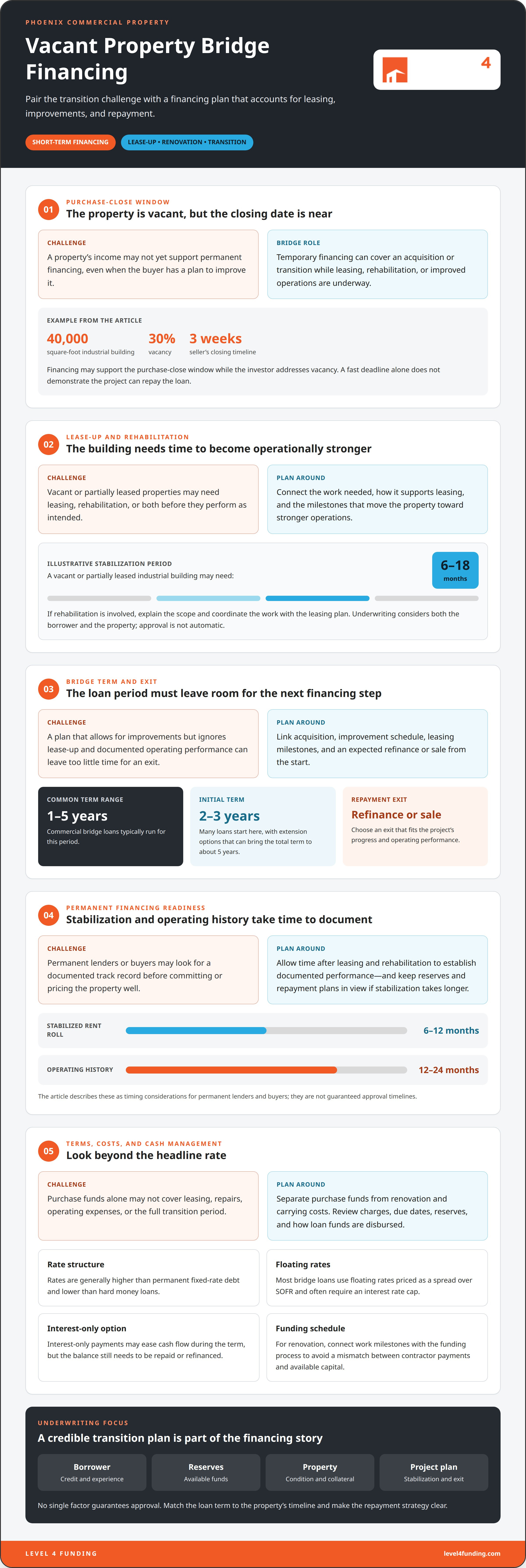
Consider a 40,000-square-foot Phoenix-area industrial building with 30% vacancy. If the seller wants to close in three weeks, the buyer may need financing before leasing can improve the rent roll. Bridge financing can support that purchase-close window while the investor addresses vacancy and plans the building’s next phase. The lender still weighs borrower credit, experience, reserves, and the property’s route to stabilization. A fast deadline alone doesn’t establish that the project can repay the loan.
Financing Vacant and Transitional Properties
Vacant and transitional-property financing supports assets that need leasing, rehabilitation, or both before they can perform as intended. An empty building may lack the income history expected for permanent financing, even when the investor has a practical plan to improve it.
A vacant or partially leased industrial building may need six to eighteen months to stabilize. If rehabilitation is part of the plan, explain what work is needed, how it supports leasing, and how the project will progress toward stronger operations. For example, an investor might coordinate repairs with a staged leasing plan instead of treating construction and occupancy as separate problems. Approval isn’t automatic. Underwriting considers the borrower and the property, including the project’s condition and path to stabilization.
Bridge Loans to Permanent Financing
A bridge loan can provide time to improve occupancy and operating performance before pursuing permanent financing. That can matter when the property’s current income doesn’t yet support a long-term commercial mortgage.
A permanent lender may require six to twelve months of stabilized rent roll before committing to a commercial mortgage. Commercial properties may also need 12 to 24 months of operating history before permanent lenders or buyers will price them well. That timing makes the exit plan central from the start. The bridge term must leave room for leasing and rehabilitation, followed by the time needed to establish documented performance. If stabilization takes longer than planned, the borrower’s reserves and repayment strategy matter. A workable transition links the acquisition, improvement schedule, leasing milestones, and expected refinance or sale into one coherent plan.
Bridge loan terms and funding for Phoenix investment properties
Approval and funding timing depends on how quickly the lender can assess the borrower, property, renovation scope, and closing documents. A Phoenix commercial bridge loan for vacant property should be structured around the deal’s actual schedule, not just the target closing date.
Commercial Bridge Loan Terms
Commercial bridge loan terms define the loan period, interest structure, repayment plan, and any extension conditions. Align these details with the property’s expected leasing or renovation timeline.
Commercial bridge loans typically have terms of 1 to 5 years. Many use an initial term of 2 to 3 years, with extension options that can bring the total term to about 5 years. Rates are generally higher than permanent fixed-rate debt and lower than hard money loans. Most bridge loans use floating rates priced as a spread over SOFR, and often require an interest rate cap. The term sheet should make those moving parts clear.
Plan how the loan will be repaid. Depending on the project’s progress and operating performance, the exit may be a property sale or a refinance into a permanent commercial mortgage. Private financing may suit a property moving through renovation or leasing, but its short horizon makes the exit plan central to the deal.
Fees, Reserves, and Cash Management
Fees, reserves, and cash management terms describe the costs and funds tied to closing and operating the loan. They matter because the investor needs working capital for the property, not just funds for the purchase.
For a Phoenix commercial bridge loan for vacant property, budget for leasing, repairs, and operating expenses during the transition. Project costs depend on the property and loan structure, including renovation scope and term. Review the loan documents to understand applicable charges and when they are due. Separate purchase funds from renovation and carrying costs in the budget so you can assess whether the planned equity covers the full transition.
Cash management terms can also determine how funds are disbursed and monitored. For a renovation, the schedule should connect work milestones with the loan’s funding process. That helps prevent a mismatch between contractor payments and available capital. The borrower’s reserves matter to underwriting alongside credit, experience, and collateral; no single factor guarantees approval.
Extensions and Repayment Risks
An extension option may allow more time beyond the initial term, subject to the loan agreement. It can matter if leasing or renovation takes longer than planned, but it shouldn’t replace a workable repayment strategy.
For example, a loan beginning with a 2- to 3-year term may offer extensions that bring the total term to about 5 years. The agreement governs the extension conditions and any revised terms. A delayed lease-up can push back refinancing, while incomplete renovation can weaken the property’s operating case. Investors should model those risks against available reserves and a sale or refinance exit. Extra time is useful only if the property can move toward repayment during it.
Approval and Funding Timeline
The funding process includes reviewing the borrower, property, project plan, and closing requirements. Complete, well-organized information helps keep the review moving, particularly when the seller’s schedule is fixed.
For an industrial property with prior industrial or manufacturing use, a Phase 1 environmental site assessment may delay closing. The property’s condition, renovation scope, valuation, and supporting documents also shape the review. A clear purchase contract, project budget, and repayment plan give the lender a connected view of the transaction. No universal approval or funding duration applies to every Phoenix property; complexity and document readiness drive the schedule. Set the target closing date against those review tasks, not just the seller’s requested date.
Are bridge loans interest-only?
Most commercial bridge loans are interest-only during the initial term, so payments cover interest rather than reducing principal. For vacant property, a lender still weighs the borrower, collateral, cash flow, reserves, and the plan for stabilizing the asset.
More conservative commercial bridge lenders typically cap loan-to-value at around 65%. That is a loan-to-value limit, not a universal minimum down payment; required equity depends on valuation, collateral, cash flow, reserves, and the borrower’s credit and experience.
In Phoenix, zoning, permits, and property-condition reviews can affect whether the planned use and renovation are feasible. For industrial property, clear height, dock configuration, power capacity, and layout can influence appraisal value.
How Interest-Only Payments Work
During an interest-only period, scheduled payments don’t reduce the principal balance. This structure can leave operating capital available for leasing or rehabilitation, but the full principal remains due through refinancing, sale, or another repayment source.
The example shows why you should review the payment schedule alongside the total funding and exit plan. A vacant property may need cash for repairs and operations while producing limited income, so understand how payments fit the project’s cash flow.
What Underwriting Weighs
A lender evaluates the borrower and property together, rather than treating one strong feature as automatic approval. Credit, real estate experience, reserves, collateral, cash flow, and the property’s path to stabilization all matter.
For an industrial building, underwriting may consider whether the layout supports the intended use and whether planned improvements address functional limits. A strong leasing plan connects the property’s current condition to realistic income assumptions. Support income and value projections with evidence: inflated rent estimates or an appraisal that overlooks physical constraints can weaken a financing proposal.
Questions a Lender May Ask
Expect the lender to examine the intended use, vacancy, renovation scope, leasing plan, available reserves, and repayment strategy. These questions test whether the project’s assumptions connect to the property itself.
For example, a lender may ask how the proposed layout suits tenants, what work must happen before leasing, and how the loan will be repaid. Experience managing comparable property can help explain how the project will be carried out. Clear answers let the lender assess the deal as a whole, not just the purchase price.
Choosing a Lender for the Property
Choose financing based on how the lender evaluates the asset, the borrower, and the intended transition. Compare the proposed loan-to-value basis, interest-only payment structure, term, reserves, and repayment expectations as one package.
For vacant property, make sure the analysis accounts for both current condition and the planned use. A Phoenix industrial asset’s power capacity or dock configuration can matter to value; a multi-tenant retail building with 40% vacancy may not meet a long-term lender’s income requirements. The right financing structure must fit the actual property and its route to repayment.
Refinancing or selling to repay a bridge loan
A bridge loan needs a defined exit, such as refinancing into a permanent commercial mortgage, selling the property, or an SBA takeout for an owner-user. Plan for that route from acquisition onward: lease-up, renovation, and operating performance all affect whether it is workable.
Build the Exit Around the Property
For a refinance, the investor aims to move from transitional financing to permanent debt once the property supports that next loan. The lender assessing the refinance may weigh documented income, occupancy, property value, credit, and the borrower’s finances. A sale follows a different route: the buyer’s purchase proceeds repay the bridge balance. An owner-user may consider a different permanent financing route instead of a conventional bridge-to-permanent structure.
These exits aren’t interchangeable. A rental property’s income may support a refinance, while a property with limited leasing progress may depend more on a sale. Choose the route that fits the asset and borrower, then connect its milestones to the bridge term. A written plan should identify the target exit, the operating evidence it depends on, and a fallback if leasing or renovation is delayed.
How a DSCR Refinance Scenario Works
A DSCR refinance focuses on a rental property’s income relative to its debt obligations. It may be a takeout option for an investment property once leasing produces supportable rent records, but the property’s financials need to support the case.
A refinance review would consider that documented income alongside expenses, occupancy, property value, and proposed mortgage obligations. The rent figure alone doesn’t establish that a new loan will cover the bridge balance. The borrower’s credit and financial position also remain relevant. Build the scenario with realistic operating assumptions rather than treating one rent figure as a lender commitment.
Sale, Timing, and Repayment Risk
A sale can repay the bridge loan when market demand and the property’s condition support a buyer’s purchase. Account for the work needed before sale, such as completing renovations or establishing stable operations. If those milestones take longer, the original schedule may no longer fit the loan’s maturity.
Track progress against the written exit plan, including leasing, property improvements, operating records, and readiness for a refinance or sale. If permanent financing is the goal, organize the income and property information needed to support the application. If selling is the plan, expected proceeds must cover the outstanding debt. Build extension terms and repayment risks into the plan before closing, not when the maturity date approaches.
Documents a lender needs for a commercial bridge loan
A strong application connects the property, borrower, and planned use of funds. For a vacant-property deal in Phoenix, show what the asset needs, how the project may affect cash flow, and how the financing supports the intended exit.
Borrower and Business Financials
Financial records help the lender assess the borrower’s capacity, available resources, and experience with the proposed project. Commercial loan applicants should typically provide tax returns for the past 3 years, along with a current business balance sheet and profit and loss statement.
- Tax returns: Include the past 3 years to show business and borrower financial history.
- Business statements: Provide a current balance sheet and profit and loss statement so the lender can review assets, liabilities, revenue, and expenses.
- Personal financial statement: Prepare one for owners with a significant ownership stake of 20% or more.
These records put the project’s cash-flow assumptions in context. A vacant property may produce little rental income today, so explain how the plan will be supported while leasing or rehabilitation progresses.
Property, Purchase, and Collateral Records
Property documents help the lender assess the asset and transaction. Gather records for the property offered as collateral, along with any relevant purchase contract or lease agreements.
- Purchase contract: Shows the agreed transaction and helps connect the requested financing to the closing.
- Collateral records: Describe assets offered to secure the loan.
- Lease agreements: Document existing tenant arrangements and support income assumptions where leases are in place.
For a vacant building, describe the current occupancy accurately. If leasing or renovation is planned, make sure the property records match the project summary. Inconsistencies between the stated condition, occupancy, and proposed use can make the deal harder to assess.
Project Summary and Supporting Documents
A business plan or project summary should explain how the loan proceeds will be used and what the project aims to achieve. Link each planned use to a property need, such as rehabilitation, leasing, or another defined improvement. Explain how the project supports the repayment strategy.
Commercial loan applications may include supporting documents such as business licenses, articles of incorporation, lease agreements, or purchase contracts. Organize relevant records around the transaction. Accurate, complete paperwork helps keep the review focused and supports clear timing discussions. An accountant or tax advisor can help ensure financial records are accurate and complete.
Prepare the financial, property, collateral, and project records as one connected application. Discuss your commercial property financing needs when you’re ready to present the deal.
Level 4 Funding: Commercial Property Loans
Level 4 Funding offers Commercial Property Loans for investors financing vacant or transitional real estate. Bring the property details, proposed use of funds, renovation or leasing plan, and intended repayment route into one clear picture. That gives the financing discussion a practical starting point.
If the project centers on rehabilitation or new construction, Fix and Flip Loans or Construction Loans may better match the work involved. For an existing property with equity to access, Cash Out Refinance may fit a different financing need. The right route depends on the asset and project plan.
Have a Phoenix property and a defined financing goal? Contact Level 4 Funding to discuss your project.
Turn the Property Plan Into a Financing Decision
Use the next step to test the deal, not just the loan request. Does the property’s condition support the proposed work? Does the leasing or operating plan align with the intended repayment route? Clear answers keep the financing choice grounded in the asset’s actual stage.
A Phoenix commercial bridge loan for vacant property may suit a project with a defined transition ahead. If the building already produces stable income, consider whether permanent financing better fits the need. The goal is a structure that supports the investment plan without relying on optimistic assumptions or leaving the exit unclear.
Gather the property details, project plan, financial records, and repayment strategy into one coherent presentation. Then discuss how the financing can fit the deal. Contact Level 4 Funding to talk through your commercial property financing needs and take a clear next step.
Frequently Asked Questions
Is Phoenix bridge the same as hard money?
No. Bridge financing describes a loan’s temporary role, while hard money describes private, property-focused lending. The terms can overlap: a private hard-money loan may bridge the gap between acquiring a property and refinancing or selling it. For a Phoenix investor, focus on the actual loan structure. Review the collateral, repayment plan, interest arrangement, and maturity terms rather than relying on the label alone.
What documents will a lender need to assess my application?
Expect the review to focus on the property, transaction, borrower, and intended use of funds. Relevant materials can include a purchase contract, property and collateral records, lease agreements, a project summary, and business financial statements. For a vacant asset, explain its present condition and intended use clearly. Requirements vary by financing structure, and Level 4 Funding does not require tax returns, pay stubs, or income verification.
What property types qualify for bridge financing?
Commercial bridge financing can cover multifamily, office, industrial, retail, hospitality, and mixed-use properties. Property type is only one part of the assessment. An industrial building’s layout or power capacity can affect its use and value, while retail leases can shape its income picture. Present the intended use, current condition, and project plan together so the financing request reflects the asset.
Which Phoenix lenders offer commercial bridge loans for vacant properties?
Level 4 Funding offers private real estate financing, including Commercial Property Loans, for investors pursuing commercial-property projects. Its local focus includes Phoenix and nearby Arizona markets such as Scottsdale, Glendale, Tempe, and Mesa. For a vacant-property request, frame the discussion around the asset, planned improvements or leasing, and intended repayment route. Those details make it easier to match the financing conversation to the property’s stage.
What are typical Phoenix commercial bridge loan rates, fees, and loan terms?
Commercial bridge rates are generally higher than permanent fixed-rate debt and lower than hard-money loans. Many bridge loans use floating rates tied to a SOFR spread and may require an interest-rate cap. Commercial terms commonly range from 1 to 5 years, but the final structure depends on the transaction. Review the rate basis, payment structure, charges, extension conditions, and maturity date together; no single headline rate explains total borrowing cost.
What property types and vacancy levels do Phoenix bridge lenders accept?
Commercial bridge lenders finance property types including multifamily, office, industrial, retail, hospitality, and mixed-use assets. A specific vacancy percentage alone doesn’t describe whether a deal works. Underwriting considers the building’s income, borrower credit and experience, available reserves, and credible path to stabilization. For example, a partially leased property needs a leasing plan that connects current occupancy with the expected operating performance and repayment strategy.
What are the eligibility requirements, credit standards, and borrower experience requirements?
Commercial bridge underwriting weighs the borrower and property together, including credit, experience, cash flow, reserves, and collateral. No single factor guarantees approval. Level 4 Funding has no minimum credit score requirement, though lenders may review judgments, tax liens, or bankruptcy. A lower score can affect the down payment and interest. Explain relevant real estate experience and show how it supports the proposed project’s execution.
What documents does a lender need for a Phoenix commercial bridge loan application?
For Level 4 Funding, the application starts with a one-page form. Property-related materials can help present the specific deal, such as the purchase contract, lease information, collateral records, and a project summary describing planned use of funds. A vacant-property application should distinguish existing conditions from proposed work. Level 4 Funding does not require tax returns, pay stubs, income verification, seasoning, or reserve funds.

About the author
Matt has a bachelor's degree in political science from Northern Arizona University and works at Level 4 Funding, a private lending company that offers hard money and rental home loans to real estate investors in 35 states.
With Matt's leadership, the firm has financed almost $300 million in loans for investment properties. He often helps real estate investors with rental property purchases, foreclosures, refinancing, and fix-and-flip projects. Matt has extensive experience in fix-and-flip, buy-and-hold, rental properties, and real estate sales. He has lived in Arizona for 43 years and is married with three children. Matt is licensed as a mortgage broker and loan originator in Arizona, with NMLS 2062278 and NMLS 1118493.
Equal Housing Opportunity. This is not a Good Faith Estimate, and it is not a Guarantee to lend; it should not be considered as such. Costs, rates, estimates, and terms can only be determined after a full application is completed. To the extent this message includes any tax or legal advice, this message is not intended or written by the sender to be used, and cannot be used, for legal or tax purposes or advice. This is an advertisement. Copyright © 2026. All rights reserved.