

How to Finance and Win a Foreclosure Bid Using Hard Money: A Step-by-Step Playbook
November 26, 2026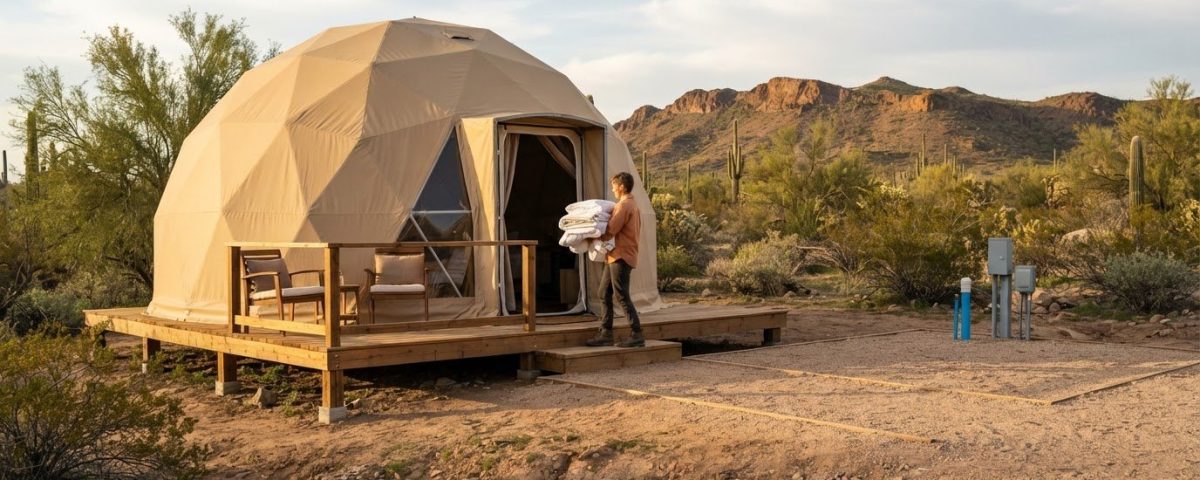
Phoenix private money for a glamping resort project may support an opening plan that starts with one dome and expands as demand develops. Financing can be shaped around the property, construction scope, and repayment plan. The key is to match the funding structure to the project’s actual phases.
Starting small can keep the opening plan focused, but the land, site improvements, construction, and future expansion still need careful planning. Phoenix private money for a glamping resort project can help investors consider these elements together, rather than relying on assumptions about how quickly bookings will grow.
This article explains how private money may fit a Phoenix-area glamping resort opening, what a lender may consider when reviewing the project, and how a phased plan can connect an initial dome to later growth. It also covers financing options and the documents and projections that can help present a clear project plan.
Key Takeaways
- Shape the opening plan around the first dome, then show how future expansion could follow demonstrated demand.
- Break the project into land, site work, utilities, and lodging so you can see how each part affects the financing request.
- Understand how down payment, loan-to-cost, loan-to-value, and real estate experience may factor into a lender’s review.
- Compare private money with other financing routes by weighing project fit, funding structure, and repayment plan.
- Organize property details, construction plans, and operating projections to present a clear, coherent financing application.
3. What private money lenders in Phoenix finance glamping resort projects?
Private money may support a glamping project when the financing request connects the real estate, planned improvements, and repayment strategy. A Phoenix-area borrower might seek financing for a property purchase, construction, or improvements to an existing commercial site. The review can consider the property, proposed work, project costs, and repayment strategy together. A one-dome opening plan can define the initial scope and explain how future phases could build on operating results.
Location helps frame the project, but it doesn’t establish demand on its own. A site’s access, utility needs, planned lodging, and intended guests all matter to the investment case. According to the National Park Service, the Grand Canyon is 278 river miles (447 km) long and up to 18 miles wide. Those scale markers describe a major Arizona attraction, not bookings for a specific resort. Connect any destination appeal to the proposed property and operating plan.
Phoenix-area examples show varied outdoor lodging and property uses. Mesa Gardens RV Park in Mesa has 90 newly activated sites. Phoenix Mountains Treehouse is on a 1-acre property in Phoenix, while Bar Lazy D is 22 miles from Phoenix. These examples illustrate different property contexts, not a required resort format. A proposed dome project should identify its own parcel, accommodations, supporting work, and intended guests.
Private money may be relevant when a project involves real estate and a defined path from acquisition or construction to operation. A lender can assess the land, proposed improvements, budget, and intended use. For example, a one-dome proposal can separate site preparation from the dome and supporting facilities. Any later expansion should have its own rationale, not rely solely on assumed booking growth.
For a glamping resort project in Phoenix, make the financing request specific. Explain what the funds would cover, how the first phase will become operational, and how repayment is planned. Include the property’s condition, construction scope, and operating assumptions. This presents the request as a real estate investment with a defined plan, rather than a broad hospitality concept.
- Property: Identify the parcel and its current condition.
- Scope: Separate acquisition, site improvements, and accommodations.
- Phasing: Distinguish the initial opening from later development.
- Repayment: Explain the intended source and timing of repayment.
A one-dome opening has a different scope from a property with multiple lodging types. Private financing may be an option when the real estate, planned work, and repayment strategy form a coherent case. The parcel and construction plan should support the request. An expansion vision alone cannot replace those details.
Private money lenders serving the Phoenix area may consider glamping projects involving a property purchase, construction, or improvements to an existing commercial site. They can assess the land, proposed work, budget, intended use, and repayment plan.
4. Do private lenders finance land acquisition, site work, utilities, cabins, and glamping tents?
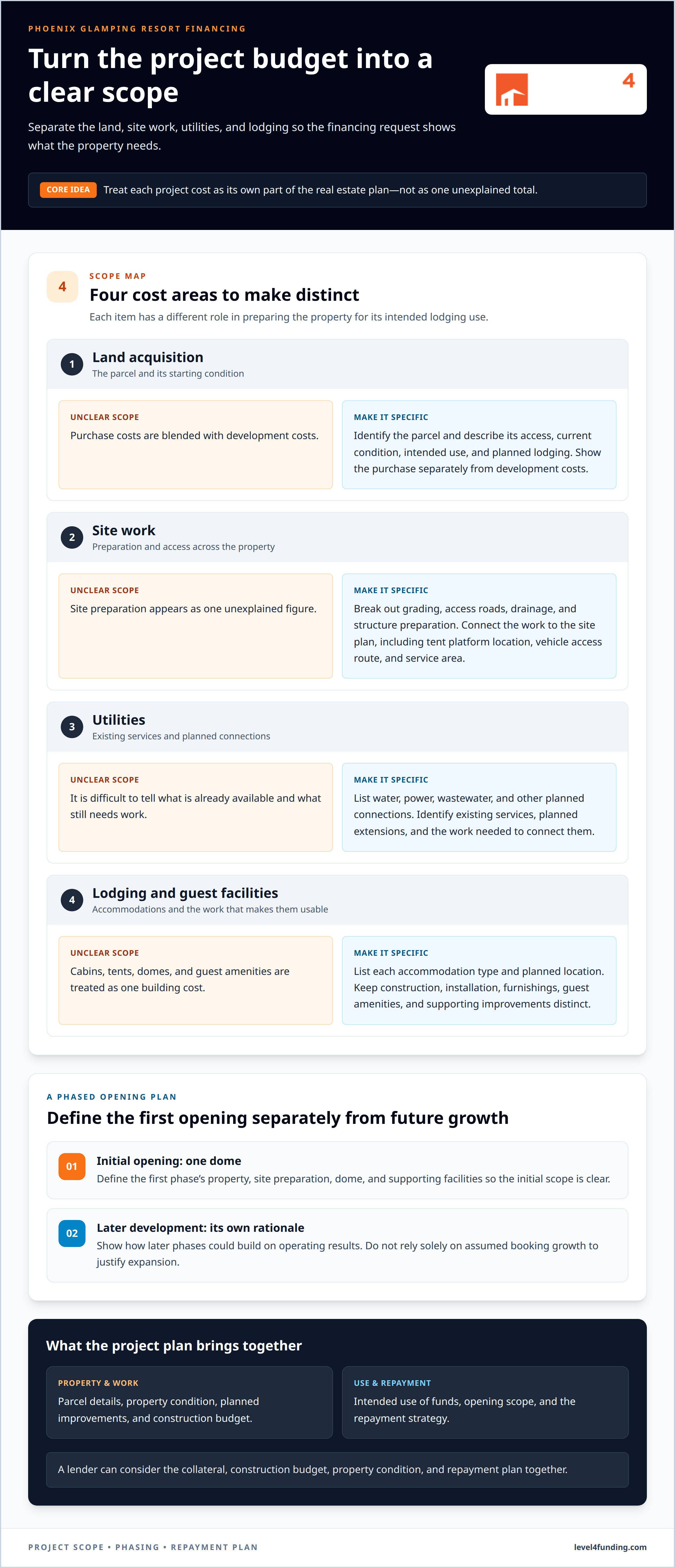
Private financing can be structured around a real estate project’s acquisition and planned improvements. The loan scope depends on the collateral, construction budget, property condition, and repayment plan. A land purchase, grading, utility connections, cabins, and tents are distinct budget items. Each needs a clear place in the project’s cost breakdown.
For land acquisition, a lender evaluates the parcel as part of the proposed project. Access, current condition, intended use, and planned lodging all inform the financing picture. A parcel without completed infrastructure has a different construction scope from a property with existing roads and utility connections. Show the purchase separately from development costs so the total request reflects what the property needs before guests can arrive.
Site work can include grading, access roads, drainage, and preparation for structures. These costs affect the construction sequence and the property’s readiness for operation. A lender reviewing a Phoenix-area project needs to see how the proposed work connects to the site plan. For example, show the tent platform location, vehicle access route, and service area as distinct parts of the plan, not as one unexplained site-work figure.
Detail utilities separately. Water, power, wastewater, and other planned connections can determine whether a site supports its intended lodging. Identify existing services, planned extensions, and the work needed to connect them. If cabins and glamping tents will use different arrangements, explain those differences. A clear scope distinguishes essential infrastructure from optional upgrades and shows how each improvement supports the property’s use.
Cabins and tents also need separate treatment. A cabin involves a different construction scope from a tent or dome, while furnishings and guest amenities can add other project costs. List each accommodation type, its planned location, and the work needed to make it usable. Keep construction, installation, and supporting improvements distinct. This lets a lender assess the real estate and improvement components instead of treating every expense as a single building cost.
- Acquisition: Describe the parcel and purchase-related project scope.
- Site work: Break out grading, access, drainage, and preparation.
- Utilities: Separate existing services from planned connections.
- Lodging: Distinguish cabins, tents, platforms, and related improvements.
Private lenders assess the complete package, not just the tent price. A budget that omits roads or utility work can understate the capital needed to complete the property. Tie each cost category to the site plan, construction schedule, and intended use. For a project involving significant improvements, construction loan options can be a relevant part of the financing discussion.
Backland in Williams, Arizona, has 10 glamping tents. Under Canvas Zion in Utah has 66 tents. Wildhaven Yosemite in Mariposa, California, has 25 glamping tents. Alila Ventana Big Sur has 15 safari-style glamping tents. A glamping property’s accommodation mix can include cabins as well as tents. Verde Ranch RV Resort in Camp Verde, Arizona, lists 386 RV sites, 16 cabins, 2 glamping sites, and 8 wagons.
These examples show why a financing request should distinguish lodging formats and supporting facilities instead of assuming a uniform build. The mix at each property helps illustrate how project scope and cost categories can vary.
5. Required down payment, LTC, LTV, and experience
The borrower contribution for a glamping resort depends on how the financing is structured. Don’t assume one down-payment figure applies to every Phoenix project. A lender may assess the property, proposed work, total project costs, and borrower’s equity together. For example, a land purchase with substantial site improvements presents a different financing picture from a property with existing infrastructure.
Down payment means the borrower’s contribution toward the project, rather than the amount financed. Depending on the deal structure, that contribution can include cash invested in the purchase or project. To explain the source and use of funds, separate land acquisition, site work, utilities, and lodging costs in the budget. This gives the lender a clear view of the project’s full capital plan.
Loan-to-cost (LTC) compares the loan amount with eligible project costs. The relevant cost base may include acquisition and planned improvements, as defined in the financing proposal. Loan-to-value (LTV) compares the loan amount with the property’s value. These measures answer different questions: LTC relates to the project budget, while LTV relates to collateral value. A proposal can show both calculations and identify the cost and value assumptions behind them.
For a one-dome opening, organize the numbers by phase. Show the land and initial construction separately from any later expansion, then connect each phase’s costs to the property and planned improvements. If the project budget includes utility work, identify it as its own line instead of folding it into a general construction figure. Clear categories make it easier to discuss how loan proceeds and borrower equity fit together.
Borrower experience is another part of the review. Relevant experience may include real estate investment, construction oversight, property management, or operating a hospitality business. Describe the borrower’s specific role on past projects. If the borrower hasn’t opened a glamping resort before, explain who will manage construction and operations and how those responsibilities connect to the plan. The goal is to show how the team can carry out the proposed work.
- Contribution: Identify the borrower’s planned equity and its source.
- LTC: Show eligible project costs and the proposed loan amount.
- LTV: Explain the property value used in the calculation.
- Experience: Connect relevant project roles to the resort’s execution plan.
An isolated LTC, LTV, or down-payment figure is not useful without its assumptions. A Phoenix glamping proposal should present the budget, collateral, borrower contribution, and team experience as one connected case. The exact contribution and leverage depend on the property, project scope, and financing structure being considered.
4. How do private money loans compare with SBA, bank, and hospitality development financing
Choose financing by matching the loan structure to the project’s stage and repayment plan. Private money, SBA-backed financing, bank lending, and hospitality development financing each have different review processes. For a Phoenix glamping project, compare how each route treats land, construction, operating projections, and the transition from opening to repayment. The label alone doesn’t tell you whether the financing fits.
Private money focuses on the real estate, proposed work, borrower contribution, and repayment strategy. It may suit a project with a defined property and construction scope, such as acquiring a site and building its initial guest accommodations. Put the purchase, site improvements, and construction into a clear budget. Also explain how repayment works if the resort opens in phases rather than all at once.
SBA-backed financing involves a program structure and lender review. Borrowers considering this route should understand how the proposed property and hospitality operation fit the program and its eligibility process. That review may make it a better match for one business plan than another. For example, a plan centered on operating a resort needs to present the business and its finances, not only the land and construction.
Bank financing has its own underwriting standards and documentation process. The lender evaluates the borrower, property, and ability to repay according to its criteria. A glamping resort with undeveloped land and a new operating model may require a detailed explanation of both construction and future income. Make those elements clear in the financing request rather than relying on the appeal of the destination.
Hospitality development financing addresses a lodging project as a broader development, with coordinated planning for the property, construction, and operating model. A resort plan with cabins, tents, guest facilities, and phased expansion must connect those components. This approach differs from financing focused mainly on a real estate asset or a discrete construction phase.
Review options side by side before choosing. Compare the financing purpose, underwriting focus, required documentation, repayment structure, and fit with each project phase. Don’t compare only the requested loan amount. For a one-dome opening, identify which route can address the first phase and how later expansion would be handled. Keep the assumptions consistent across every option.
- Private money: Connect the real estate and improvements to a clear repayment plan.
- SBA-backed financing: Present the hospitality business alongside its property needs.
- Bank financing: Prepare for lender-specific underwriting and documentation.
- Development financing: Explain how construction and resort operations fit together.
No financing route is a fit by name alone. A Phoenix project with a defined construction scope differs from an operating resort seeking capital for expansion. Match the structure to the property, project stage, documentation, and repayment plan. Then assess whether the proposed terms work for the resort’s business model.
Project comparisons can also note the accommodation formats pictured in other glamping examples. Birchwood Luxury Camping is shown with a 7-meter dome and an 8-meter dome; Port Wade Glamping is shown with a 7-meter dome. James Simoneau is shown with a 7-meter sage green dome, while Shel Zolkewich is shown with a 6-meter beige dome. Tirrito Farm is shown with 7-meter domes.
5. Documents and projections for glamping financing
A strong application connects the property, construction plan, borrower, and repayment strategy. For a one-dome opening, each document should tell the same story: what the site needs, what the first phase delivers, and how the financing fits. Conflicting costs or timelines can make the project harder to assess.
Start with property records and acquisition details. Include the purchase agreement when available, ownership information, existing debt details, and any property valuation or appraisal already prepared. Add a site plan showing the dome location, access, parking, and planned guest areas. Make the land’s current condition easy to understand.
Next, organize construction documents by scope. Provide a line-item budget for site preparation, utility work, the dome, and supporting improvements. Add contractor proposals, construction drawings, and a project schedule as available. If the first phase excludes cabins or additional domes, label them as future plans rather than including them in current costs. This keeps the loan request tied to the opening plan.
Operating projections should explain how the resort may generate revenue and meet expenses. Show the assumptions behind nightly rates, occupancy, seasonality, and booking volume. Pair projected revenue with operating costs such as staffing, maintenance, utilities, cleaning, and marketing. A base case and a more cautious scenario can show how booking changes may affect cash flow and repayment capacity.
Include an opening and expansion timeline. Show when the first dome is expected to be ready, when reservations could begin, and what conditions would support adding another unit. Tie each phase to its associated costs and projected operating results. Don’t treat expansion as automatic; explain which demand signals would inform that decision.
The borrower’s materials also matter. Include relevant real estate or hospitality experience, a concise project overview, and financial information that helps explain the borrower’s contribution and repayment plan. If a partner or manager will handle operations, describe that person’s responsibilities. Clear roles strengthen the plan and show who is accountable for each part.
- Property: Ownership, acquisition details, and site plan.
- Construction: Itemized scope, proposals, drawings, and schedule.
- Operations: Revenue assumptions, expenses, and cash-flow projections.
- Borrower: Experience, financial context, and project responsibilities.
Before submitting, reconcile the budget, timeline, and projections. If the schedule says the dome opens before utility work finishes, correct the mismatch. Keep assumptions visible, separate current costs from future phases, and make the repayment path easy to follow. Discuss your glamping project financing with these materials organized.
Level 4 Funding
Level 4 Funding helps real estate investors assess financing options for property acquisition, construction, and commercial projects. For a glamping resort, Construction Loans may fit a defined build plan, while Commercial Property Loans may suit a project centered on an investment property. The right discussion starts with the parcel, planned improvements, project budget, and repayment strategy. A phased opening plan can clarify how financing relates to the initial lodging and future development.
Bring the property details, construction scope, and projections together before discussing the project. That gives the financing conversation a practical foundation and keeps the request tied to the resort’s real estate needs. Contact Level 4 Funding to discuss financing for your glamping resort plan.
Move Your Resort Plan Toward a Financing Conversation
The next step is to turn your glamping concept into a clear investment case. Decide what the opening phase must accomplish, which improvements belong in it, and how you’ll judge whether expansion makes sense. A focused plan for Phoenix private money for a glamping resort project gives the financing discussion a practical starting point without treating future growth as certain.
Level 4 Funding offers Fix and Flip Loans, Construction Loans, and Commercial Property Loans for real estate investors. For a resort plan, the relevant financing conversation should center on the property, proposed work, and the project’s investment structure. Organize those decisions before you move forward. Clear priorities help keep the next step grounded in the project you intend to build.
Contact Level 4 Funding to discuss your project and its financing needs. Your glamping plan can move forward one considered decision at a time.

About the author
Matt has a bachelor's degree in political science from Northern Arizona University and works at Level 4 Funding, a private lending company that offers hard money and rental home loans to real estate investors in 35 states.
With Matt's leadership, the firm has financed almost $300 million in loans for investment properties. He often helps real estate investors with rental property purchases, foreclosures, refinancing, and fix-and-flip projects. Matt has extensive experience in fix-and-flip, buy-and-hold, rental properties, and real estate sales. He has lived in Arizona for 43 years and is married with three children. Matt is licensed as a mortgage broker and loan originator in Arizona, with NMLS 2062278 and NMLS 1118493.
Equal Housing Opportunity. This is not a Good Faith Estimate, and it is not a Guarantee to lend; it should not be considered as such. Costs, rates, estimates, and terms can only be determined after a full application is completed. To the extent this message includes any tax or legal advice, this message is not intended or written by the sender to be used, and cannot be used, for legal or tax purposes or advice. This is an advertisement. Copyright © 2026. All rights reserved.