


What Is a Proof of Funds Letter and How Do Real Estate Investors Get One Fast?
October 10, 2026
Land-Only Financing: Your Best Options When Banks Won’t Touch Raw Land
October 11, 2026
What if the fastest financing offer is the wrong fit for your property? A commercial hard money lender can provide asset-based capital for a time-sensitive Phoenix or Scottsdale deal, but speed alone won’t tell you whether the loan matches your project, budget, and exit plan. To compare options, understand what the lender evaluates, how you’ll use the funds, and what the repayment path looks like.
When conventional financing can’t keep pace with a property opportunity, private financing may offer another way to structure capital. Start with the deal itself: the asset’s value and condition, the capital required, your execution plan, and how you intend to repay or refinance. Those details matter as much as timing.
This article explains what commercial hard money financing is designed to do and how to compare lenders by project fit, terms, and execution, not just speed claims. You’ll also learn how to prepare a clear property proposal and assess whether asset-based financing fits your Arizona deal. Level 4 Funding provides private commercial property financing for investors evaluating opportunities in Phoenix, Scottsdale, Tucson, Glendale, Sedona, Flagstaff, Tempe, Mesa, and Buckeye.
Key Takeaways
- Assess whether private, asset-based financing fits the property and the project’s funding needs.
- Give a commercial hard money lender a clear picture of the property, project plan, and repayment path.
- Separate verified property details from estimates so your proposal is easier to evaluate.
- Compare financing by total terms, repayment structure, collateral, and process clarity, not speed alone.
- Build a focused request for an Arizona property, including a realistic exit plan for a Phoenix or Scottsdale deal.
When a Commercial Hard Money Lender Fits an Arizona Property Deal
A property can be a solid opportunity and still fail to fit a conventional lender’s process or structure. That doesn’t automatically make private financing the answer. Ask whether the loan’s purpose, repayment horizon, and collateral align with the deal you’re prepared to execute. A useful first check is to map the requested funds to specific property or project costs, then match the expected repayment date to a realistic exit.
Commercial hard money financing is private, asset-based funding for qualifying real estate projects, with the property serving as central collateral. It gives investors another way to structure capital for a commercial acquisition or project-specific plan. For a foundational overview of hard money lending and common real estate uses, see What is a Hard Money Loan?
What commercial hard money financing is designed to do
A commercial hard money lender considers the property and transaction alongside information about the borrower and project. The asset’s condition, intended use, and role in the business plan help explain the deal. The borrower’s experience and proposed repayment route help show how the plan may be carried out. Asset-based does not mean the rest of the proposal is irrelevant. The property is a key part of the financing picture, not a substitute for a workable project plan.
This is financing for commercial real estate purposes, not a consumer-purpose or personal loan. For example, an investor considering a commercial building in Phoenix can outline the acquisition, the property’s current condition, planned improvements or operations, the capital needed, and a route to repayment. That gives the lender a transaction-specific request rather than a generic funding amount. The details matter because a Phoenix property and project may call for a different financing structure than another deal.
Private financing may allow a project to be assessed around its particular asset and business plan. Conventional commercial financing may suit a borrower whose timeline, documentation, and property profile fit that lender’s process. Neither option wins by default. Compare how each structure supports the transaction, including its obligations and repayment requirements.
When the asset-based approach may fit, or may not
A defined acquisition or business plan can make asset-based financing worth considering when you need capital shaped around a particular property project. Connect the purchase to the work or operating steps ahead, show what funds are needed, and explain how the debt will be repaid. A clear exit is essential, whether it depends on a sale, refinance, or another credible repayment source.
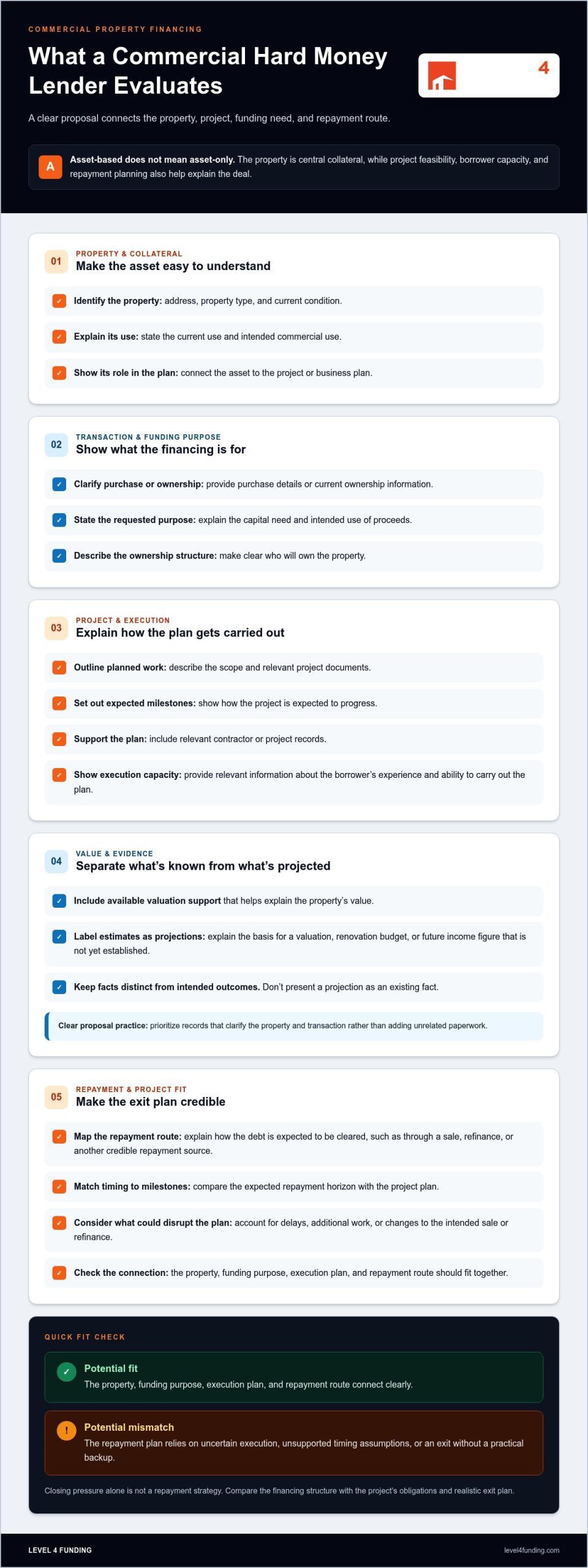
Pressure to close is not an exit strategy. Before taking on short-term debt, map the expected repayment horizon against project milestones and identify what could disrupt the plan, such as delays, additional work, or a change in the intended sale or refinance. If repayment depends on uncertain execution, untested assumptions, or an exit without a practical backup, the financing may be a poor fit, even if it solves an immediate capital problem.
- Potential fit: The property, funding purpose, execution plan, and repayment route connect clearly.
- Potential mismatch: The plan relies on timing or repayment assumptions the project may not support.
How a Commercial Hard Money Lender Evaluates the Property and Deal
A strong proposal makes the deal easy to understand. A commercial hard money lender may assess the property as collateral, the project’s feasibility, the borrower’s capacity to execute, and the plan to repay. The logic is straightforward: collateral value supports the financing case, project feasibility shows how the property will be used, and repayment planning explains how the debt is expected to be cleared.
Commercial real estate lending can involve property, borrower, and transaction considerations. The FDIC Guidelines on Commercial Real Estate Lending provide broader context on CRE lending. A specific private loan’s review depends on its terms and the property.
Property details and supporting documentation
Start with a clean property snapshot. Identify the purchase or ownership status, proposed ownership structure, property location and current use, and intended commercial use. Then organize records that support those details. The goal is to make clear what is being financed before explaining what the property could become.
- Property: Address, property type, current condition, and intended use.
- Transaction: Purchase details or ownership information, plus the requested financing purpose.
- Project: Planned work, scope, expected milestones, and relevant contractor or project documents.
- Value: Available valuation support, clearly distinguishing current facts from estimates.
For example, an investor seeking capital for a commercial property in Scottsdale can describe its present condition and proposed use, then document planned improvements. If a valuation, renovation budget, or future income figure is an estimate, label it as a projection and explain its basis. Don’t present an intended outcome as an existing fact. Prioritize records that clarify the property and transaction, rather than adding unrelated paperwork.
The deal plan, borrower capacity, and exit
Next, show how the project moves from acquisition to repayment. State the capital need and intended use of proceeds, then lay out the key steps in sequence. Include borrower experience and relevant resources where they help demonstrate the ability to carry out the plan. A realistic proposal doesn’t hide uncertainty. It identifies assumptions and makes them visible.
Separate the plan into documented facts and projections. A signed purchase agreement is a fact. A forecast of future rental income is an estimate. A contractor proposal may support a projected work budget, but it doesn’t prove the work is complete. This distinction makes the deal narrative clearer and helps surface gaps before they become execution problems.
Finally, explain the intended exit, such as a sale or refinance, and the conditions that need to be met for it to work. Consider what happens if leasing, construction, sale, or refinancing takes longer than planned. If repayment depends on one optimistic assumption, identify a practical contingency. Investors preparing a commercial property financing request can organize these details around the property, project, and exit from the start.
Compare Commercial Hard Money Lenders by Terms, Fit, and Risk
A low headline rate can look attractive and still leave a deal exposed. If the repayment schedule clashes with the project timeline or the loan structure doesn’t match how funds will be used, the offer may not fit. Compare the full financing package against the property plan, execution risks, and realistic exit, not one number in isolation.
Private asset-based financing and conventional commercial lending are different options, not automatic winners and losers. Processes and structures vary by lender and deal. A commercial hard money lender may assess a request around the property and transaction, while conventional financing may suit a project whose documentation, timeline, and structure align with that lender’s requirements. Compare written terms side by side.
Which lender terms deserve a side-by-side review?
Use the written proposal or term sheet to fill in the details. If an item is unclear or absent, make it an open question in your comparison rather than assuming how it works.
| Comparison factor | What to examine |
|---|---|
| Total financing terms | Rate, fees, and other costs over the expected time you’ll carry the loan. |
| Repayment structure | Payment schedule, maturity date, and how the planned exit fits the balance due. |
| Flexibility provisions | Extension and prepayment terms, including any conditions that apply. |
| Collateral and use of funds | What property secures the financing and whether the permitted use matches the project budget. |
| Project process | Any draw schedule, inspections, documentation steps, and conditions tied to releasing funds. |
| Process clarity | Whether responsibilities, decision points, and key terms are explained clearly enough to plan around. |
For a construction or renovation project, a draw process can affect when funds are available for planned work. For an acquisition, repayment timing and maturity may matter more. Focus on the terms that influence your project. For example, compare the loan’s maturity date with the milestones needed to complete improvements, stabilize operations, or reach a sale or refinance.
How to weigh speed against repayment risk
Speed matters when timing is part of the opportunity, but it doesn’t erase the debt obligation. A faster or more flexible structure still needs a credible repayment plan, and a lower rate won’t fix a project that can’t meet its maturity date. Look at total obligations, execution dependencies, and exit feasibility together.
Stress-test the plan. What changes if leasing takes longer, construction runs behind schedule, a sale is delayed, or refinancing doesn’t proceed as expected? Identify the likely effect on cash needs and repayment, then consider whether there’s a workable contingency. If the exit depends on everything going right, the headline terms won’t show the full risk.
For a deeper discussion of how financing costs factor into an investment decision, review this commercial mortgage interest rates guide. Apply that cost perspective to your own project by comparing each offer’s full obligations, process, and repayment fit before deciding which structure supports the deal.
Prepare a Strong Commercial Financing Request in Phoenix or Scottsdale
A focused financing request puts the essential facts in one place: what property is involved, what capital you need, how the project will unfold, and how the debt is expected to be repaid. Whether you’re pursuing a commercial acquisition in Phoenix or evaluating a property in Scottsdale, this preparation helps make the discussion clearer. Tailor the materials to the deal, not to a generic checklist.
Build your request in this order:
- Start with the property snapshot. Provide the property address, type, current condition, and intended commercial use. State whether you’re seeking to purchase or already own it, and summarize the transaction status. Keep the description factual so the property and request are immediately clear.
- Define the capital purpose. Explain what the funding will cover, such as acquisition or project costs, and how the requested amount relates to the plan. Break down major uses of proceeds rather than presenting one unexplained figure. Connect each use of capital to a specific step in the deal.
- Assemble available supporting materials. Include relevant purchase or ownership records, valuation support, property information, and project documentation. For planned work, outline the scope and organize available budget details. Prioritize records that clarify the property, costs, and transaction.
- Separate facts from assumptions. Label documented figures and estimates distinctly. For example, identify a contractor’s written estimate as supporting material, while marking projected future income or a proposed sale value as an assumption. Briefly state the basis for important estimates and avoid presenting forecasts as settled outcomes.
- Map milestones to repayment. Lay out the key steps from acquisition through project completion or operations, then state the intended exit, such as sale or refinance. Explain what needs to happen before that exit is realistic. If the financing is meant to bridge a temporary gap between acquisition and a longer-term plan, a commercial real estate bridge loan guide can help frame that type of financing need.
- Show the backup path. Consider what happens if leasing, construction, a sale, or refinancing takes longer than expected. Describe practical alternatives and the assumptions behind them. A contingency isn’t a promise that delays won’t happen. It shows you’ve thought through how the repayment plan responds if they do.
This structure helps a commercial hard money lender understand how the property, requested capital, and execution plan fit together. It also gives you a sharper view of gaps before you discuss the deal. Keep the package concise, current, and organized, with supporting records grouped by property, project, and repayment.
With the property details, funding purpose, milestones, and exit plan assembled, you’re ready to discuss how the request aligns with private commercial property financing. Discuss your commercial property financing plan with Level 4 Funding.
Work with Level 4 Funding on a Commercial Property Financing Plan
Level 4 Funding is a private real estate lender offering commercial property loans for investors evaluating property deals. Its asset-based approach brings the property, project plan, capital need, and intended exit into the financing conversation. Level 4 Funding provides private financing for commercial property projects, with each request centered on the transaction rather than a one-size-fits-all assumption.
What to bring into a lender conversation
Arrive with a concise deal brief and supporting materials organized around the decision you need to make. A commercial hard money lender can have a more focused discussion when the core facts are clear and projections are labeled honestly. Include:
- Property snapshot: Address, current ownership or purchase status, condition, and intended commercial use.
- Funding purpose: The capital need and how you expect to use the proceeds in the transaction.
- Project assumptions: Scope, budget support, key milestones, and a clear distinction between documented figures and estimates.
- Exit plan: Your intended repayment route, the steps required to reach it, and a fallback if timing changes.
- Decision context: The specific opportunity, deadline, or project constraint that makes financing relevant now.
Be direct about execution risks, too. If construction, leasing, a sale, or a refinance is central to repayment, explain what must happen and what could cause a delay. Naming a risk doesn’t weaken a proposal. It gives the financing conversation something concrete to address. A Phoenix acquisition and a Scottsdale project may involve different property details and plans, so keep the request specific to the asset.
Match the financing conversation to the project
Keep the discussion centered on the commercial property and its business plan. If the request involves construction, explain how the work connects to the property’s intended use and repayment strategy. Level 4 Funding provides construction loans for projects where building or improvement costs are part of the deal. For wider context on commercial hard money financing, review this commercial hard money loans overview.
Use the conversation to clarify how the property, capital request, project steps, and exit fit together. Keep the financing objective precise, and bring forward assumptions that could change the plan. That makes it easier to focus on the real decision: whether the financing structure supports the deal you intend to execute.
Ready to discuss a commercial property financing plan? Start a commercial financing conversation with Level 4 Funding.
Turn Your Property Plan Into a Clear Next Step
The next move isn’t simply choosing a lender. Decide what needs to be true for the deal to remain workable: which project milestones must stay on track, what repayment depends on, and what you’ll do if the preferred exit takes longer. Those decision points give you a practical way to judge whether proposed financing supports the investment, rather than forcing the project to fit the debt.
For an Arizona investor weighing an opportunity in Phoenix, Scottsdale, Tucson, Glendale, Sedona, Flagstaff, Tempe, Mesa, or Buckeye, a focused conversation can help turn the property plan into a commercial financing request. Level 4 Funding provides private commercial property loans using an asset-based approach to real estate projects. Bring the deal’s key details and priorities, then discuss how they connect to a potential financing plan. A clear fit between the asset, project, and repayment matters more than a speed claim.
If you’re ready to explore whether a commercial hard money lender fits your deal, discuss your commercial property financing plan with Level 4 Funding. Take the next step with a sharper plan and a clearer view of the decision ahead.
Frequently Asked Questions
What does a commercial hard money lender look at when reviewing a property deal?
A commercial hard money lender considers the property, the transaction, and the plan behind the request. For example, a lender may review whether the proposed use fits the property, how existing leases or operating information support projected income, and whether the purchase or ownership details are clear. Borrower experience and available resources can also help explain execution capacity. Present supporting records separately from estimates so assumptions are easy to identify.
Can a commercial hard money lender finance an investment property in Arizona?
Yes, private commercial property financing can be considered for an Arizona investment property, subject to review of the particular deal. Level 4 Funding serves Phoenix, Scottsdale, Tucson, Glendale, Sedona, Flagstaff, Tempe, Mesa, and Buckeye. Organize a request around the property’s commercial use, transaction structure, project needs, and repayment plan. The property and proposal shape the financing discussion.
How is a commercial hard money loan different from a commercial bank loan?
A commercial hard money loan is private financing that emphasizes the real estate asset, while a commercial bank loan follows the bank’s own underwriting process and requirements. The exact distinction depends on the lenders and transaction. Compare written terms, documentation process, payment obligations, collateral, and repayment structure for your deal. A private loan isn’t automatically better, and a bank loan isn’t automatically the better fit. The structure has to work for the property and plan.
How quickly can a commercial hard money loan close?
Closing time varies with the property, transaction complexity, documentation, valuation work, and other steps needed to complete the financing. Don’t build a purchase plan around a general speed claim or assume every deal follows the same schedule. Identify any contract or project deadlines, then compare them with the lender’s stated process and outstanding milestones. A clear package can help keep the discussion focused, but it can’t guarantee a particular closing date.
What documents should I prepare before applying for commercial hard money financing?
Start with the purchase agreement or ownership records, property details, intended commercial use, and a summary of the requested funds. Depending on the deal, useful supporting materials may include leases, operating records, valuation information, project budgets, contractor proposals, and entity or borrower background documents. Organize files by topic and mark estimates clearly. The aim is to distinguish existing property facts from future projections, while focusing on the documents relevant to your request.
Can I use commercial hard money financing for a property renovation or construction project?
Yes. Level 4 Funding provides construction loans, which can support investment plans involving construction or improvements. Explain the work in practical terms: what will change, how the work supports the property’s intended use, and how the project schedule connects to the expected exit. Include available scope and budget support. The financing structure and terms depend on the specific project.
What happens if my commercial property exit strategy takes longer than expected?
A delayed sale, refinance, lease-up, or construction schedule can leave repayment unresolved as the loan approaches maturity. Review the written agreement for maturity, extension provisions, and any conditions attached to them. Don’t assume an extension. Revisit cash needs and identify a practical alternative repayment route early. If the original exit changes, update the project plan and assess whether the new timeline still works with the loan obligations.

About the author
Matt has a bachelor's degree in political science from Northern Arizona University and works at Level 4 Funding, a private lending company that offers hard money and rental home loans to real estate investors in 35 states.
With Matt's leadership, the firm has financed almost $300 million in loans for investment properties. He often helps real estate investors with rental property purchases, foreclosures, refinancing, and fix-and-flip projects. Matt has extensive experience in fix-and-flip, buy-and-hold, rental properties, and real estate sales. He has lived in Arizona for 43 years and is married with three children. Matt is licensed as a mortgage broker and loan originator in Arizona, with NMLS 2062278 and NMLS 1118493.
Equal Housing Opportunity. This is not a Good Faith Estimate, and it is not a Guarantee to lend; it should not be considered as such. Costs, rates, estimates, and terms can only be determined after a full application is completed. To the extent this message includes any tax or legal advice, this message is not intended or written by the sender to be used, and cannot be used, for legal or tax purposes or advice. This is an advertisement. Copyright © 2026. All rights reserved.