


What is a Hard Money Lender? Phoenix Investor’s Guide
October 15, 2026
Hard Money Lenders in Chicago, IL: What Investors Need to Know Before Borrowing Private Capital
When speed, damaged condition, or tight timelines make a conventional mortgage impossible, hard money lenders in chicago illinois provide private, asset-backed capital that can fund acquisitions, rehabs, and short-term bridge deals. This article gives a neighborhood-aware checklist for vetting local private lenders, realistic term and fee ranges you will actually see in Chicago, and practical steps to structure flips, rentals, and construction loans so you can close fast without costly surprises.
When to Use Hard Money for Chicago Deals
Direct point: Use hard money when speed, collateral flexibility, or property condition are the binding constraints on your deal, not when interest cost is the primary concern. Hard money buys time and bypasses strict credit underwriting, but that convenience comes with higher carrying costs and lender-driven covenants you must plan around.
Decision triggers that justify private capital
- Timeline under 30 days: Conventional mortgages often miss tight closings. If your contract will expire before bank underwriting completes, hard money is appropriate.
- Seller requires all cash: Use hard money to convert a contract to a clean all cash offer and win competitive Chicago auctions or quick sales.
- Property condition disqualifies banks: Heavily distressed properties or missing permits that prevent conventional appraisal need equity-based lending.
- Bridge to refinance: When you intend to rehab and then refinance to a conventional loan, short-term bridge funding makes sense.
Tradeoff to accept: Expect a 1.5 to 3 percent hit in origination points plus monthly interest that can be 6 to 14 percent in many Chicago deals. That cost is acceptable when the alternative is losing the deal or facing a higher purchase price to close with conventional financing. It is not acceptable when you can close conventionally within your contract window.
Practical limit and consideration: If your exit will take longer than 12 months or you plan to hold as long term rental without a refinance path, hard money often becomes an expensive permanent capital solution. In those cases either negotiate long term takeout terms with the lender or pursue portfolio lenders and conventional options.
Concrete example: An investor has a two flat in Logan Square listed at 260000 with a required close in 10 days. The property needs 50000 in work to reach ARV of 380000. A private lender can fund the purchase in 5 to 7 business days and provide rehab draw schedule, allowing the investor to close the contract and begin work. The tradeoff is roughly 3 points and six months of interest, which must be baked into the resale math before committing.
Local nuance Chicago investors miss: Permit and tax timelines matter more here than in many markets. Cook County tax proration, transfer stamps, and slower permit turnaround for structural changes can extend your hold and increase interest exposure. Do not assume a fast rehab will stay fast just because funding was fast.
Operational judgment: Use hard money as a tactical tool not a default. Prequalify lenders forChicago-specific issues such as tax redemption timelines and local title quirks, and confirm whether the lender will convert a short term bridge into a longer term rental loan if your exit slips.
Next consideration – before you sign any term sheet, run the all in cost over a conservative 30 to 60 day delay scenario and compare net returns to a conventional close. That single calculation usually separates smart tactical use from expensive habit.
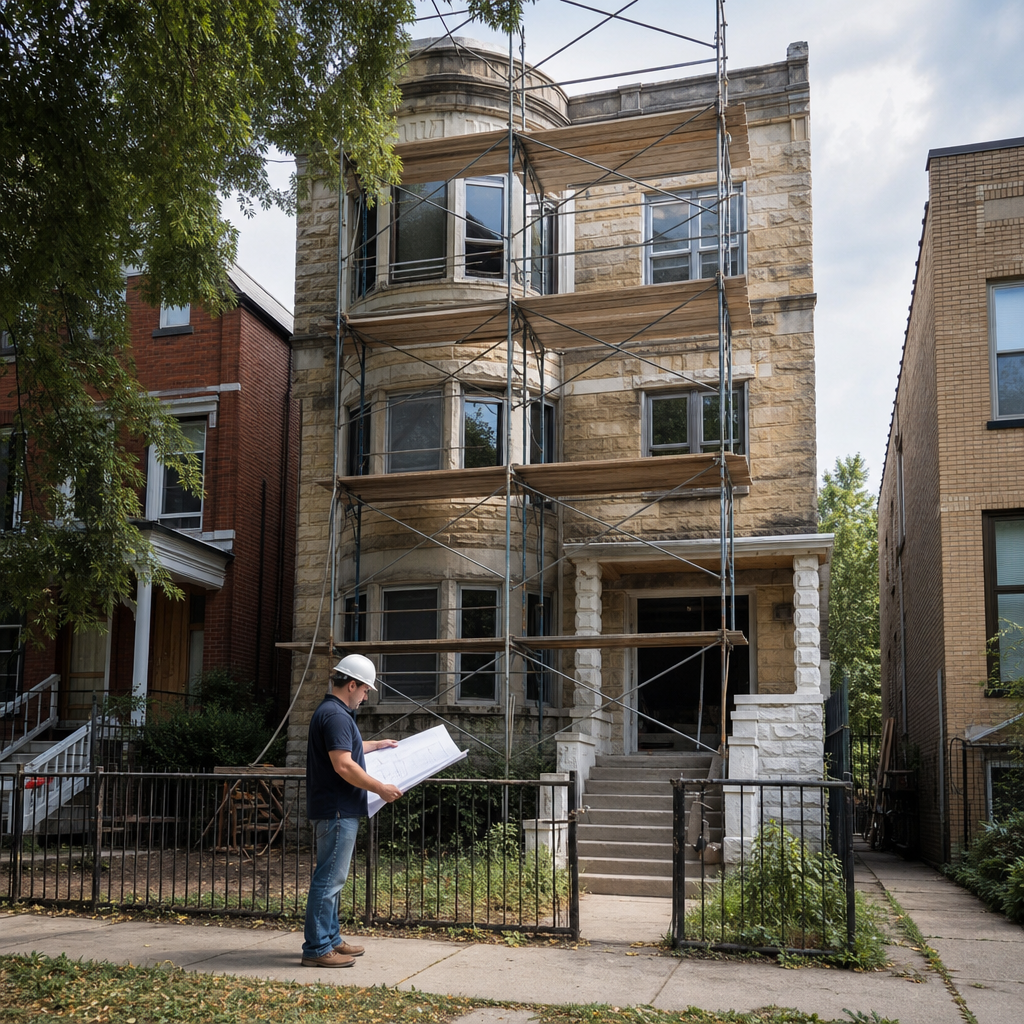
Chicago and Illinois Regulatory and Local Market Considerations
Key point: Local rules and market mechanics materially change how hard money lenders in chicago illinois underwrite, price, and exit a loan. You must treat regulatory checks, tax exposures, and neighborhood velocity as underwriting inputs not afterthoughts.
Regulatory checkpoints that matter
Verify licensing and registration: Confirm a lender or broker is registered where required with the Illinois Department of Financial and Professional Regulation using IDFPR and cross check for consumer complaints. For a high level primer on how hard money fits within consumer protections see the CFPB guide.
Documentation and disclosure are enforceable: In practice lenders who skip clear written disclosures create execution risk at closing and when servicing becomes necessary. Request sample promissory notes and statements of fees early. If a lender resists, consider that a red flag.
Cook County and Chicago-specific mechanics
Tax and title friction changes math: Cook County property tax burdens, possible tax delinquencies on target properties, and Chicago real estate transfer taxes add real dollars to closing and to holding cost. Budget those costs into your cash requirement and your hold period assumptions rather than treating them as contingencies.
- Title clouds and tax liens: Existing tax delinquencies or municipal liens slow closings and may cause lenders to reduce LTV or require cure at closing
- Transfer and recording fees: Chicago area transfer taxes and Cook County recording fees increase buyer cash need – verify with your title company early
- Foreclosure and liquidation timelines: Illinois court processing and Cook County caseloads mean foreclosure can be slower than in some states – that influences a lender willingness to underwrite high LTV deals
Neighborhood speed matters more than headline comps: A raw ARV number is not enough. Two properties with the same ARV in Logan Square and West Englewood will behave differently. Lenders will lower advance rates or raise price where comps are thin or days on market are high.
Concrete example: You bid a two flat in Logan Square needing a 45,000 rehab and expect a quick resale. A lender may accept 70 percent of ARV with a standard rehab draw schedule. The same lender reviewing a similar two flat in West Englewood will likely require a larger down payment, lower LTV, or higher interest because exit timing and resale price are more uncertain. That changes your required equity and your all in return.
Practical trade off: Faster funding lenders sometimes accept imperfect title or limited documentation to close quickly. That buys speed but transfers risk to you if a title defect or tax lien surfaces after closing. Insist on a pre-close title memo and factor title cure or escrow reserves into your offer if you choose speed.
Check licensing at IDFPR, review CFPB guidance on hard money, and get a title company pre-clearance before you sign a purchase contract.
Next consideration: After regulatory and tax checks are cleared, move to hard numbers – confirm how those local factors shift LTV, interest rate bands, and required reserves so your deal math matches reality. See additional reading on interest and rates at Interest on Hard Money Loans.
Typical Loan Terms and Fee Structure Investors See in Chicago
Key point: When you shop hard money lenders in chicago illinois you are buying speed and flexibility, not a cheap interest rate. Expect the headline rate to be only one piece of the cost picture — points, reserves, draw mechanics, inspection fees, and local closing charges usually double or triple the effective cost on a short-term deal.
What lenders charge (realistic ranges for Chicago deals)
| Term element | Typical Chicago range | What that means in practice |
|---|---|---|
| Interest rate | 8% to 16%+ annual | Higher for unproven sponsors, commercial conversions, or longer holds |
| Origination points | 2 to 6 points | Paid at closing; common advertised points are lower than total broker fees |
| LTV (rehab / ARV) | 60% to 75% of ARV | Many lenders advance less on purchase price and more on ARV after rehab |
| LTV (rental/long-term) | 50% to 65% of purchase price | Lower LTV reflects rent-roll underwriting and longer term risk |
| Term length | 6 to 24 months (typical) | Short-term bridge or flip financing; extension fees common |
| Draw holdback / retention | 5% to 20% of draws | Retention released after final inspection or completion |
| Per-draw / inspection fee | $150 to $400 | Charged each time the lender inspects and releases a tranche |
| Extension / late fees | 0.5% to 1.5% per month or fixed fee | Used when project overruns; can be more expensive than refinancing |
| Prepayment penalties | 1 to 3 months interest or yield maintenance | Less common on small private deals but still present |
| Local closing charges (Chicago/Cook County) | transfer taxes, recording, title, escrow | Budget several thousand dollars; check City of Chicago transfer tax rates |
Practical insight: Advertised rates and LTVs are negotiable but only if you bring strength where it matters — clean title, realistic rehab scope, a proven contractor, and an exit that reduces lender liquidation risk. Lenders price unknowns; your job is to replace unknowns with verifiable mitigants.
How fees change the effective cost
Compute the all-in cost: Add interest, origination points, draw fees, and reserves, then convert to an annualized percentage over the expected hold. Many investors misread a 10 percent rate as cheap until they include 3 points, capitalized interest, and a draw fee on every disbursement — that moves the effective rate well into the mid teens.
- What to include in your calculation: interest paid during the hold, origination points, inspection/draw fees, extension penalties, title/recording/transfer taxes, and interest reserve shortfalls.
- Common lender structures to watch: interest only vs capitalized interest (interest reserve), whether draws are paid net of holdback, and whether the lender requires taxes and insurance escrows.
- Trade-off: a lender who funds faster and with fewer questions will usually charge higher points or a larger draw retention — you pay for execution certainty.
Concrete example: You buy a two-flat for $200,000 with $60,000 rehab and an ARV of $350,000. A lender offers 70% of ARV (loan = $245,000), 10% interest, and 3 points. If the project holds 6 months, interest ≈ $12,250, origination = $7,350, plus $600 in draw/inspection fees and $2,000 in local closing charges — the all-in cash cost before sale is roughly $22,200, about 9% of project cost, materially higher than the 10% headline suggests because points and fees are front-loaded.
Headline rate is not a reliable comparison tool — always calculate all-in dollars and convert to an annualized return over your expected hold period.
Judgment: For Chicago fix-and-flips, I prefer lenders who put more cost into a transparent reserve or conditional draw holdback rather than opaque back-end penalties. It forces accurate budgets and gives you a clearer path to closeout without surprise extension fees that destroy margins.
Next practical step: When you receive term sheets, demand line-item breakdowns for interest, points, draw fees, reserves, and local closing charges. Compare offers on all-in dollars and on net proceeds at your planned exit, not just on the quoted interest rate — and read the sample promissory note for hidden triggers like default interest or unilateral extension clauses.
How to Vet a Hard Money Lender in Chicago
Start with verifiable track record. If a lender claims rapid Chicago funding, insist on proof: three recently closed deals in Cook County, contactable references, and signed settlement statements. Verifiable local closings beat glossy marketing every time.
Core vetting checklist — what to ask and confirm
- Recent Chicago closings: Request three closings in Chicago neighborhoods in the past 90 days and call the brokers or investors on those files to confirm timing and quirks.
- Sample loan package: Get a fully executed sample promissory note, mortgage/deed of trust, draw agreement, and a final closing statement to spot hidden fees and unusual clauses.
- Servicing and note ownership: Ask who will service the loan after funding and whether the lender intends to sell the loan. Servicing transfers create friction on draws and modifications.
- Default and cure procedures: Ask for the timeline and remedy steps in writing. Practical reality: lenders who can foreclose quickly still take different operational paths during a workout.
- Draw and inspection process: Confirm number of draws, inspector independence, holdback percentage, typical inspection-to-fund lag, and per-draw inspection fees.
- Title and escrow partners: Require the name of the title company used for Chicago deals and confirm if the lender pays curative costs or requires borrower to clear title issues.
- Recourse and guarantees: Clarify whether loans are recourse, whether sponsors must sign personal guarantees, and whether the lender cross-collateralizes other assets.
- Fee transparency: Get a line-item closing estimate showing origination points, interest reserve, inspection fees, reconveyance fees, extension fees, and wire fees.
- Regulatory standing: Verify state licensing and complaints via the Illinois Department of Financial and Professional Regulation and check CFPB guidance on hard money practices: IDFPR and CFPB primer.
- Wire and funding controls: Confirm written wire instructions and ask how they protect against wire fraud. Many investors lose weeks and funds to spoofed instructions during closings.
Operational credibility matters more than marketing. A lender who lists 24-hour funding on their site often depends on a clean title and prepared payoff statements; if your target property has tax liens, code violations, or complex estates, that speed evaporates. Ask how they handled similar complications recently.
Red flags that kill deals
- Refusal to provide sample documents or local references.
- Unclear draw or inspection criteria, or inspections performed by in-house unlicensed staff.
- Ambiguous servicing arrangements or refusal to say whether loans are retained or sold.
- Nonstandard escrow or payment routing requests (insist on title company wires).
- Overly broad default clauses that spike interest rates or allow immediate demand without cure rights.
Trade-off to accept consciously. The faster and looser the approval, the more you will pay and the less leverage you have if problems arise. In practice, accept faster funding only when the lender demonstrates clean local execution and a written plan for title or permitting issues specific to Chicago neighborhoods.
Concrete example: For a two-flat in Logan Square needing a 10-day close, verify the lender funded a Logan Square file within the past 60 days, confirm their title partner will accept the seller's payoff timeline, and require a draw schedule that releases rehab funds only after independent inspection. If the lender cannot show a recent local closing with similar timelines and issues, walk away or demand a conditional funding commitment tied to title cure responsibilities.
Important: Get a redlined sample note and mortgage before you sign anything. Hidden acceleration clauses and reconveyance fees are where deals go wrong.
Structuring Loans for Fix and Flip, Rental, and Construction Projects
Start with the exit in the structure. Lenders structure different products around how you will exit – resale, refinance to a conventional mortgage, or long term hold. Neglecting that alignment creates mismatched covenants, unexpected conversion costs, and forced sales in Chicago markets where permitting and taxes can already extend timelines.
Fix and Flip: ARV advances, staged draws, and retention
Fix and flip mechanics. Lenders underwrite flips against ARV and use a draw schedule tied to inspections rather than full release at each milestone. Expect an initial purchase advance, then periodic rehab draws after inspection and lien waiver submission, with a final retention commonly 10 to 15 percent until certificate of occupancy or clear title is delivered.
- Practical tradeoff: Faster funding at higher LTV increases risk of cashflow shortfalls if cost overruns occur – insist on a 10 percent contingency built into the budget.
- Common lender requirement: Licensed contractor bids, municipal permits filed, and third party inspections before releasing large draws.
- Reality check: Many Chicago lenders will withhold the last draw until final inspection paperwork and paid subcontractor lien waivers arrive; plan for that delay in sale timing.
Rental acquisitions and bridge-to-rental: underwriting for cash flow
Underwriting differences for rentals. Lenders shift from ARV to rent roll and NOI when the exit is hold and refinance. That means lower LTV and often a requirement for an interest reserve large enough to cover rent up to 3 months of vacancy or stabilization. If you plan conventional refinance, expect lender covenants requiring 6 to 12 months of rent seasoning before conversion.
Use case example: An investor buys a 4 unit in Avondale intending to hold. The private lender advances 65 percent of purchase with a rehab holdback. The borrower uses an interest reserve to cover debt service during tenant turnover. That reserve prevents immediate cashflow stress and reduces the chance of missed payments that trigger default clauses.
Construction and commercial conversion loans
Construction is different from rehab. True construction loans require a detailed schedule of values, contractor licensing proof, performance bonds in some cases, and permit-driven funding triggers. Lenders expect stronger borrower equity and will include tighter draw inspections, often with third party project managers on larger commercial conversions.
| Stage | Percent funded | Trigger | Example amounts for a 300,000 rehab |
|---|---|---|---|
| Purchase advance | 60% | Recorded purchase contract and title clearance | 180,000 |
| Early draws | 20% | Framing and rough inspections with lien waivers | 60,000 |
| Finish draw | 10% | Final inspection and CO or certificate of completion | 30,000 |
| Retention | 10% | Clear title and final lien waivers | 30,000 |
Judgment call investors miss often. Choosing the lowest rate without matching product mechanics is a false economy. A lower rate that requires full contractor bonding, tight draw inspections, or lengthy seasoning can cost you time and mobilization expenses. Match the lender product to your operational capability and timeline.
Next consideration: When comparing offers, include conversion rules and prepayment or extension fees in your model. For a deeper look at pricing mechanics and negotiation points see Interest on Hard Money Loans: Rates, Terms & Negotiation and the CFPB primer on hard money loans at CFPB.
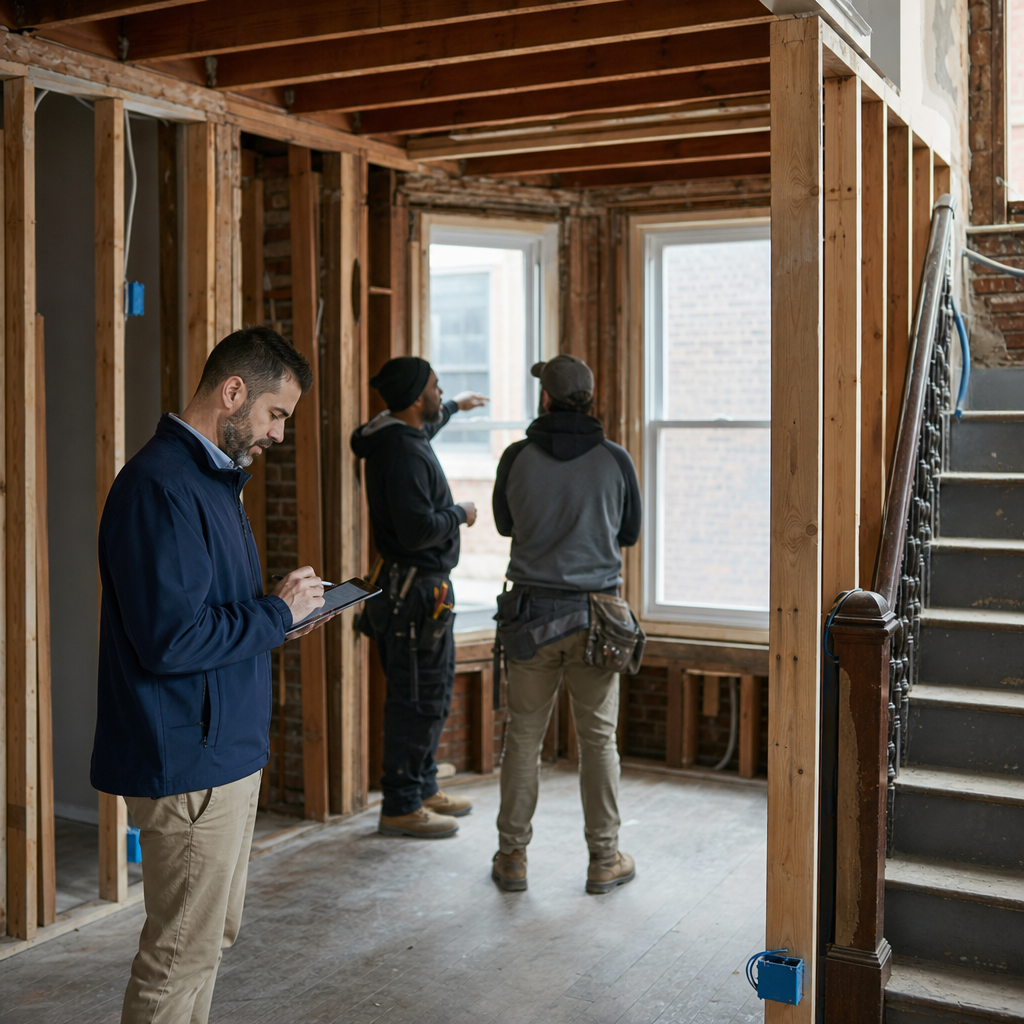
Exit Strategy Design and Stress Testing
Design the exit first, then size the loan. Hard money lenders in chicago illinois will underwrite to your stated exit, not your hope — so pick a primary exit, a credible backup, and force those assumptions into a simple math model before signing a term sheet.
Core exits and lender realities
Common exits: resale after rehab, cash-out refinance to a conventional mortgage, convert to long-term rental and refinance, or sell equity to another investor. Each exit carries a different timeline, cost and lender requirement. For example, many private lenders will permit a bridge-to-conventional refinance but require seasoning and a DSCR test before your loan converts; others treat conversion as a payoff and charge extension or exit fees.
- Resale: fastest when comps are solid, but vulnerable to market swings and agent/closing costs.
- Refinance: best when conventional underwriting is likely; needs pre-underwriting or a preapproval to be credible.
- Convert to rental: lowers yield but stabilizes cash flow; expect lower LTV and stricter income documentation.
- Equity sale: fastest liquidity but erodes upside and may require discounted pricing.
How to stress test an exit (practical steps)
Build three scenarios: base case (on-time, budget), delay case (30 to 90 days added), and cost-overrun case (10 to 30 percent rehab overrun). Use months on market, extra interest, and extra holding costs as your knobs. This is not theoretical — run the numbers against the lender terms, not against optimistic ARV.
- Calculate monthly cost of carry: interest + property tax + insurance + utility/maintenance + management. Interest is usually the largest component with hard money.
- Force the lender variables into your model: origination points, interest accrual method, extension fees, inspection holdbacks, and any prepayment penalty.
- Run sensitivity: show investor cash return under +30/60/90 day delays and +10/20% rehab overruns; identify the break-even delay or overrun that wipes out profit.
Practical trade-off: being aggressive with LTV to win a deal increases sensitivity to delays and overruns. In practice, I prefer to sacrifice a point of LTV for a larger contingency reserve — that lowers short-term ROI but cuts the chance of forced liquidation under lender pressure.
Concrete example (flip stress test)
Concrete Example: Purchase 200,000, rehab 60,000, ARV 350,000. Loan 70% of ARV (245,000) at 10% annual interest with 3 points. Base case assumes 4 months to complete and sell; stress cases add 60 days or 20% rehab overrun. The table below shows how relatively small delays or overruns compress profit and ROI on invested cash.
| Scenario | Investor Profit (after costs) | Approx ROI on Cash |
|---|---|---|
| Base (4 months) | $48,800 | ≈218% |
| 60-day delay (6 months) | $44,100 | ≈197% |
| 20% rehab overrun (4 months) | $36,800 | ≈107% |
What investors misunderstand: many assume the lender will be flexible when things slip. In reality, extension fees, higher interest on prolonged terms, and accelerated default remedies are common. That combination converts a modest delay into a disproportionate reduction in net proceeds.
Highlight: run your model to the point where a 30-day delay turns a win into a wash. If that point is close to your realistic timeline, the deal is fragile and you should either lower exposure or negotiate hard lender protections.
Tactical actions before signing: get a written statement from the lender on extension fees and automatic default triggers; pre-underwrite your conventional refinance option where applicable; and document at least one credible backup exit that does not require more equity. Use your stress test when negotiating points or holdback terms — lenders will price risk, but a clear model gives you leverage.
For a quick primer on how interest and term structures change hard money economics, review Interest on Hard Money Loans: Rates, Terms & Negotiation and the CFPB explanation of hard money lending at CFPB.
Next consideration: after stress testing, use the model to choose between lowering LTV, increasing contingency, or lining up an alternative exit. Pick the option that preserves optionality under realistic stress — not the one that maximizes headline ROI on paper.
Illustrative Chicago Deal Scenarios and All In Cost Calculations
Direct point: small differences in points, hold time, or an overrun of a few thousand dollars change whether a Chicago flip is profitable or a loss. Below are three realistic scenarios with line-item lender costs and the practical trade-offs investors face.
Small flip — Logan Square two flat
| Item | Amount |
|---|---|
| Purchase price | 200,000 |
| Rehab budget | 60,000 |
| ARV | 350,000 |
| Loan (70% of ARV) | 245,000 |
| Origination (3% of loan) | 7,350 |
| Interest (10% for 6 months) | 12,250 |
| Other closing fees | 2,500 |
| Agent and sale costs (6% of ARV) | 21,000 |
| Net profit (after loan payback, rehab, fees) | 1,900 |
Interpretation: this flip produces nominal profit under the stated assumptions. A single 10 percent rehab overrun or a one month delay doubles lender interest and pushes this into a loss. The meaningful insight is to calculate the effective annualized cost of private capital, not just the headline rate. In this example total lender take (points + interest + fees = 22,100) converted to an annualized rate over a six month hold is about 18 percent, which is what really hits your returns.
Small multifamily buy and hold — 4 unit in Avondale
Scenario numbers: purchase 450,000, rehab 40,000. Lender provides 65 percent LTV on acquisition (292,500) at 8 percent interest with 4 percent points (11,700). Assume interest-only payments during a 12 month stabilization period.
- Cashflow check: estimated gross rent 3,200/month; operating expenses 40 percent leaves 1,920/month NOI.
- Debt service: interest-only on 292,500 at 8 percent equals 1,950/month, leaving a small negative monthly cashflow of 30.
- Trade-off: you can make this work by lowering LTV to reduce interest expense or arranging a partial rehab carve-out so tenant income increases before full loan funding.
Judgment: private capital frequently excels for acquisition speed but often requires conservative underwriting for buy-and-hold. If your loan produces even a small negative cashflow, you need a one to two month operating reserve per unit or a lower-rate permanent plan lined up quickly, otherwise you are exposed to extension fees and compounding interest.
Commercial conversion / construction bridge — Pilsen storefront to mixed use
Outline: purchase 800,000 with construction cost 600,000 for total project 1.4M. Commercial hard money may limit to 60 percent LTC (840,000) with 10 percent holdback on draws, interest 12 percent. If construction runs 12 months interest alone approaches 100,800.
Practical consideration: construction and permitting delays in Chicago are the single biggest cost driver here. High interest and holdbacks make early equity expensive. If you cannot front permits and key inspections to trigger draws, you will pay interest on unpaid contractor invoices and stretch equity. Structure funding to align major draws with permit milestones and insist on clear inspection cadence in the loan documents.
Important: always calculate lender take as points + accrued interest + fees + inspection/extension costs and express it as an annualized rate over your expected hold period. That figure is the correct metric for comparing private offers.
Concrete example: in the flip scenario above a 3 percent point charge looks small until you annualize it over a short hold. That 3 percent plus six months of interest converted to an APR is what killed margin for this deal. When lenders quote only a rate ask for points and expected hold time before you bid.
Next consideration: before you submit an offer, run the deal twice: once with your best-case hold and once assuming a 30 to 60 day delay and a 10 percent rehab overrun. If the numbers still work under stress, the hard money route is defensible; if not, renegotiate price or staging before committing to private capital. For regulatory context see the CFPB hard money guidance.
Application Checklist and Timeline to Fund in Chicago
Start-ready packages win deals. If you want funding in days instead of weeks, prepare a single, organized packet that answers the lender's four quick questions: who you are, what the collateral is, how much and when you will exit, and who will do the work.
Minimum documents to have on hand
- Purchase contract with contingency removal deadlines identified
- Scope of work and rehab budget with line items and realistic contingencies (not a one-line estimate)
- Three contractor bids or a licensed GC cost breakdown and proof of contractor insurance
- Proof of funds for down payment or earnest money (bank statements or POF letter)
- Sponsor resume and recent project references (one page, links to photos are fine)
- Preliminary title report or tax status printout from Cook County, if available
- Comps / ARV support (3–5 recent Chicago comps with links or MLS sheets)
- Entity docs if borrowing in an LLC (operating agreement, EIN) and ID for individuals
- Insurance binder showing ability to insure from day one (builder's risk or hazard)
- If applicable: condo/HOA estoppel, commercial leases, environmental reports
Trade-off to accept: faster closings usually require more up-front documentation and willingness to pay for expedites or to accept appraisal waivers. If you try to skip verification, expect a lender to either raise the rate, hold a bigger reserve, or delay funding for title clean-up.
Practical timeline — typical critical path and timeboxes
| Step | Expedited (24–72 hrs) | Standard (7–14 days) | Typical bottleneck |
|---|---|---|---|
| Term sheet & prequalification | Same day | 1–2 days | Incomplete sponsor docs |
| Title review & clearing liens | 24–48 hours if title company ready | 3–7 days | Unknown liens, tax delinquencies in Cook County |
| Appraisal / valuation | Waived or drive-by comps (if lender accepts) | 3–7 days | Appraiser availability in Chicago neighborhoods |
| Funding package & closing | Within 24 hours after clear title | 2–3 days after conditions met | Delayed endorsements, missing insurance |
Concrete example: An investor buying a two-flat in Logan Square needed a 48-hour close to win a competitive bid. They submitted the signed contract, a detailed $45,000 rehab budget with contractor bids, proof of funds for a 20 percent down payment, and current bank statements; the lender closed in 48 hours after the title company confirmed no municipal liens. Had the Cook County tax bill or an unreported mechanic lien existed, the timeline would have stretched several days while clearing those items.
- Speed hacks: name a title company in the offer, pre-order a preliminary title report, and get contractor insurance and licenses ready.
- What slows deals: municipal violations, unpaid transfer stamps, missing HOA estoppels, or a required full appraisal in weak comps markets.
- When to pay up: if you need 24–72 hour funding, expect to accept higher points or an appraisal waiver; this is a deliberate cost of speed, not a mistake.
Verify title and tax status early — most Chicago funding delays are title related, not interest rate related.
Next consideration: if you want more on pricing trade-offs and when appraisal waivers are reasonable, read Interest on Hard Money Loans: Rates, Terms & Negotiation.