

Bridge Loans Explained: How Private Bridge Capital Works, Who Qualifies, and What It Costs
November 25, 2026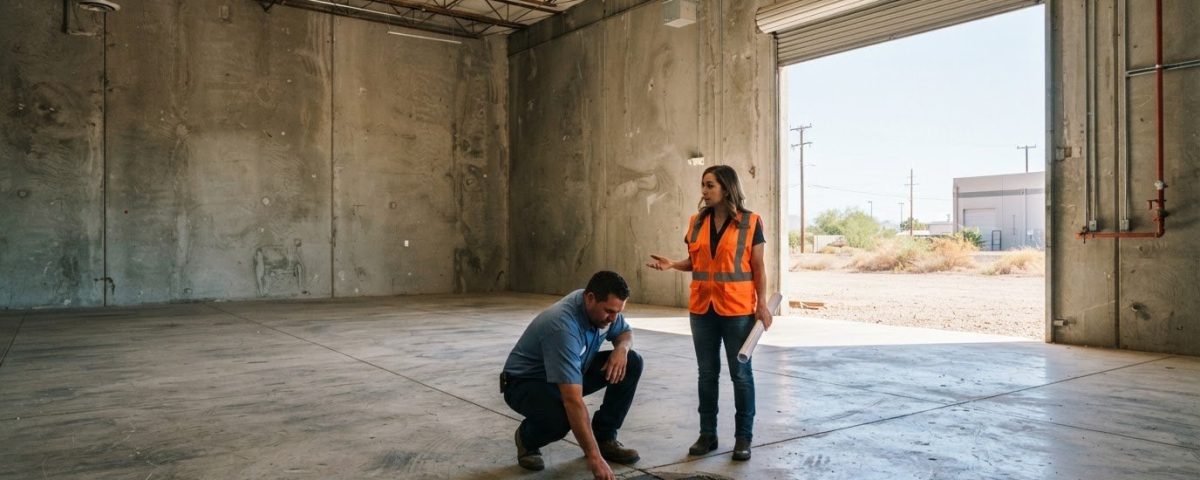
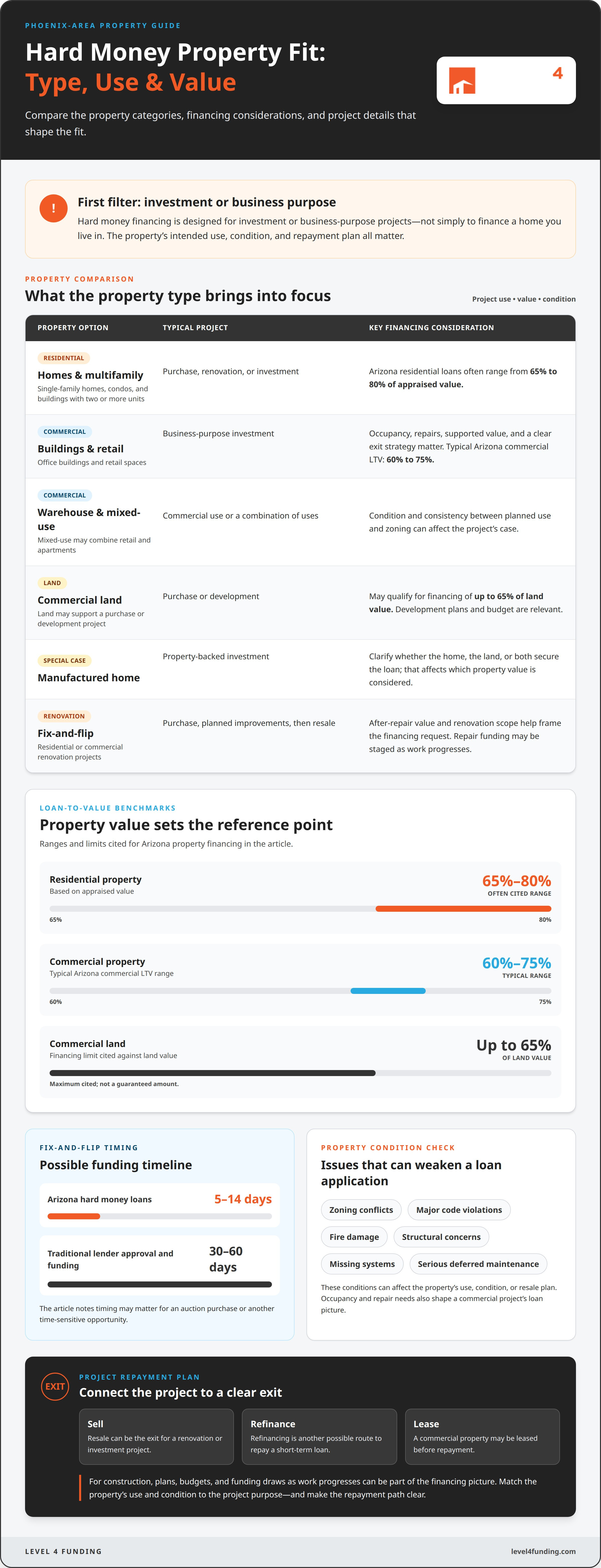
A property’s purpose and condition can matter as much as its type. If you’re asking what kind of properties qualify for hard money in Phoenix, eligible investment projects may include single-family homes, condos, multifamily properties, fix-and-flips, construction, land, and commercial real estate. These loans are designed for investment or business purposes, not simply to finance a home you live in.
That distinction matters when a property needs repairs, is being purchased for resale, or is part of a development plan. The property and the project’s intended outcome need to make sense for the financing.
This guide covers residential, investment, commercial, land, and renovation properties that may fit hard money financing. It also explains how condition, intended use, and your investment plan shape the fit, so you can identify a financing path for a project in Phoenix, Scottsdale, Tucson, Glendale, Sedona, Flagstaff, Tempe, Mesa, or Buckeye.
Key Takeaways
- Separate investment and business-purpose properties from a home you live in before assessing financing fit.
- Compare residential, commercial, land, and development projects by property type and intended use.
- For a fix-and-flip, understand how the property’s after-repair value and renovation plan shape the financing case.
- Distinguish short-term project financing from long-term rental financing, where rental income and debt coverage matter.
- Match your project to a financing path such as Fix and Flip Loans, Construction Loans, Commercial Property Loans, or Cash Out Refinance.
What Are Hard Money Loans in Arizona?
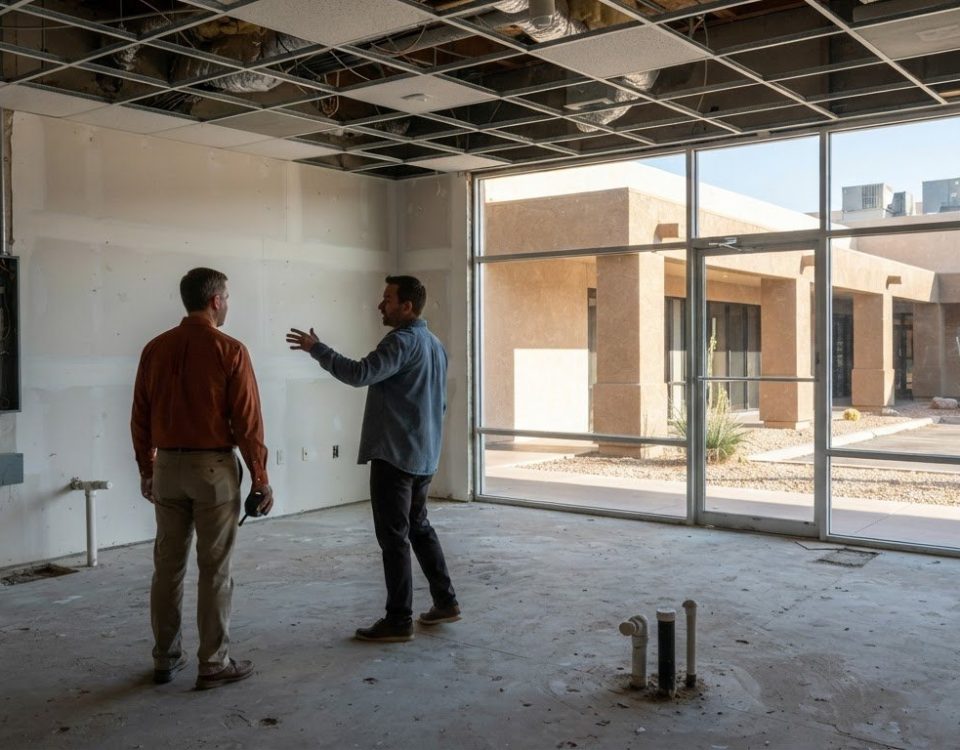
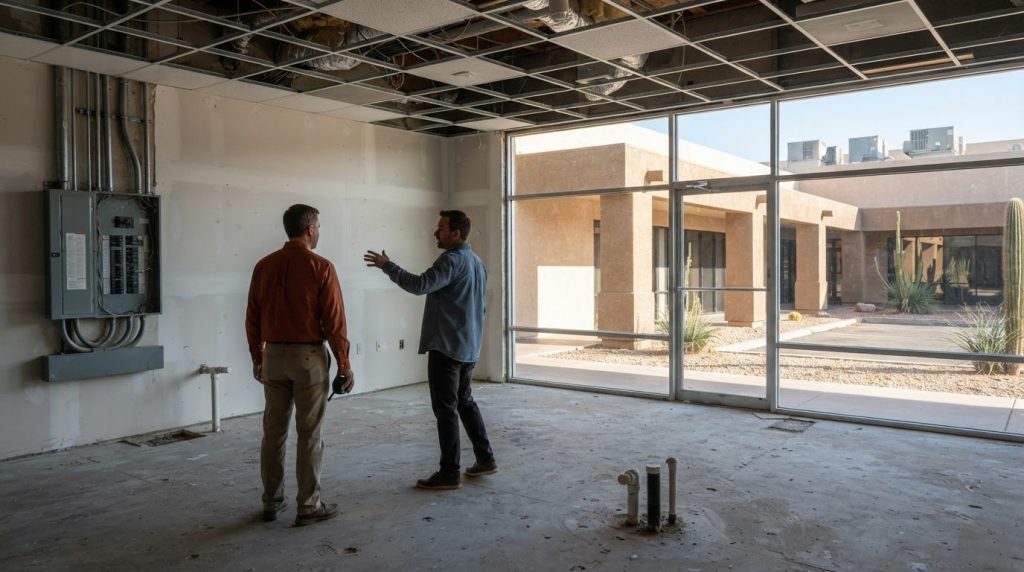
Arizona hard money loans are short-term, real-estate-secured financing, with lenders weighing the property’s value alongside the borrower’s credit. Phoenix-area zoning conflicts, major code violations, fire damage, structural concerns, missing systems, or serious deferred maintenance can weaken a loan application because they affect the property’s use, condition, or resale plan.
Commercial Buildings and Retail Spaces
Office buildings and retail spaces can qualify when the property supports an investment or business-purpose project. A Phoenix retail building, for example, differs from a single-family home because its commercial use, condition, and occupancy shape the lender’s view of its value and exit plan. Arizona commercial loans typically use loan-to-value ratios of 60% to 75%, so the property’s supported value matters.
Warehouses and Mixed-Use Properties
Warehouses and mixed-use buildings can also fit commercial-property financing in Arizona. A warehouse is assessed as a commercial asset, while a mixed-use property combines uses, such as ground-floor retail with apartments above. In either case, the intended use and property condition matter. A mismatch between the planned use and applicable zoning can weaken the project’s case.
Commercial Occupancy, Repairs, and Leverage
Occupancy and repair needs affect the commercial loan picture: a vacant building or one needing substantial work presents a different project from an occupied, maintained property. Lenders may also weigh how repairs affect value and the borrower’s plan to repay. For commercial property in Arizona, 60% to 75% loan-to-value is a typical range; commercial land may qualify for up to 65% of its value.
An exit strategy gives the financing a clear endpoint. Common routes include selling the property, refinancing, or leasing it before repayment. For a Phoenix project, connect the planned repairs or leasing work to a realistic way to repay the short-term loan. Leverage alone is not an investment plan.
Residential properties, land, and commercial buildings have different collateral and project uses. Hard money financing may cover single-family homes, condos, and multifamily properties, meaning buildings with two or more units. Land may support a purchase or development project, while construction financing can involve plans, budgets, and funding draws as work progresses.
For a manufactured home, clarify what secures the loan: the home, the land, or both. That distinction affects which property value is considered. The home’s condition and intended use also shape the project assessment, while a land development proposal depends on its plans and budget.
| Property option | Typical project | Key financing consideration |
|---|---|---|
| Commercial building or retail space | Business-purpose investment | Occupancy, repairs, and exit strategy |
| Warehouse or mixed-use property | Commercial use or combined uses | Condition and consistency with planned use |
| Residential property | Purchase, renovation, or investment | Arizona residential loans often range from 65% to 80% of appraised value |
| Commercial land | Purchase or development | May cover up to 65% of land value |
| Manufactured home | Property-backed investment | Whether the home, land, or both secure the loan |
Match the property’s use and condition to the financing purpose, then set out a realistic repayment exit and assess the loan against the relevant property value.
Fix-and-flip financing
A fix-and-flip hard money loan can finance an investment property bought for renovation and resale. In Arizona, lenders consider the property’s after-repair value and the investor’s renovation plan.
Fix-and-Flip Properties
Eligible projects can include distressed residential properties that need work before resale. Single-family homes, condos, and multifamily properties can serve as investment collateral, while a commercial renovation follows a different property-use path. The key is the project: purchase, planned improvements, and resale, rather than buying a finished property for long-term rental income.
A Phoenix investor might target a house with deferred maintenance that needs repairs before it can attract buyers. Its current condition helps define the renovation scope, while its after-repair value helps frame the financing request. Hard money may also suit an auction purchase when the project has a clear renovation and resale plan.
Repair and Renovation Financing
Repair financing can combine purchase funding with money for planned improvements. Repair financing may be structured to fund renovation work in stages rather than all at once. That structure differs from purchase-only financing: the project’s renovation plan helps organize the funding around upcoming work and the property’s expected after-repair value.
A renovation plan should link each proposed repair stage to the property’s resale objective. When evaluating a fix-and-flip request, the lender considers the after-repair value and scope of work. Substantial repairs call for a plan that accounts for the work, rather than relying only on the purchase price or an estimated future sale.
Loan Speed and Financing Flexibility
Hard money loans in Arizona may close within 5 to 14 days, compared with 30 to 60 days for traditional lender approval and funding. That timing can matter for an auction purchase or another time-sensitive opportunity. Speed doesn’t remove the need for a workable renovation budget, clear property details, and a defined exit through resale or refinance.
Financing flexibility depends on the deal’s numbers and plan, not on speed alone. An Arizona fix-and-flip loan may cover up to 85% of total cost. Lenders may also assess the property’s after-repair value and renovation plan, while borrower creditworthiness remains part of the broader picture. This differs from rental financing, where the investor’s intended long-term hold changes the project’s purpose.
For a Phoenix flip, lay out the financing logic in a clear sequence: identify the property, define repairs, connect the work to after-repair value, then set the resale or refinance exit. That sequence gives the lender a coherent view of purchase, renovation, and repayment. Explore hard money financing options for a project built around that plan.
Residential property eligibility
Arizona hard money financing may cover residential investment property, including homes, condos, and multifamily buildings. Eligibility depends on the property’s value, condition, intended use, and the borrower’s plan for repayment.
Homes, Condos, and Multi-Family Properties
Single-family homes and condos can qualify as residential investment properties, while multifamily financing can cover buildings with two or more units. The property type shapes the investment: a condo is an individual residential unit, while a multifamily building can produce rental income across several units. These loans are for business or investment purposes, not simply to finance the borrower’s own home.
A Phoenix investor considering a property that needs repairs should connect its current condition to the investment plan. Hard money may finance properties that need repairs or do not qualify for traditional loans. Unit count and current value help frame the request, while the planned use informs the repayment strategy.
Eligible Residential Investment Properties
Residential eligibility centers on investment purpose. A purchase for renovation and resale differs from a long-term rental, even when both involve a house or condo. For a rental, income is part of repayment planning: buy-and-hold lenders assess whether rent can cover loan payments through the debt service coverage ratio.
A long-term rental may fit a DSCR loan better than short-term hard money. That distinction matters for a Phoenix borrower deciding whether the capital supports a temporary project or an ongoing rental investment. Property type alone doesn’t settle the fit; purpose, condition, and a credible exit plan all influence the financing case.
Loan-to-value ratios show how the requested loan compares with property value. Arizona residential hard money loans typically range from 65% to 80% of appraised value. Other Arizona hard money loans described in the market may finance up to 75% of a property’s current value. These measures use different valuation bases, so don’t treat them as interchangeable.
The average loan-to-value ratio for Arizona hard money loans was 60% in the first quarter of 2026. That market figure provides context, not a promise for an individual Phoenix property. Appraised value, current condition, repair needs, and the investment plan affect how much leverage fits the deal. Strong collateral supports the request, but it doesn’t replace a workable repayment strategy.
Interest and term also shape residential investment planning. Arizona residential hard money rates generally range from 9% to 12%, with repayment terms often lasting 12 to 24 months. A borrower planning repairs and resale should align that timeline with the project’s exit. For a long-term rental, projected rent and loan payments help show whether the property can support the intended hold.
To assess a residential property, identify its type and investment purpose, establish its value and repair scope, then match the loan structure to a realistic resale, refinance, or rental plan. The same Arizona home may suit different financing paths depending on whether you intend to renovate and sell or hold it as a rental.
Eligible investment and business-purpose property
Hard money financing in Phoenix is intended for investment and business-purpose properties, not simply to finance a home the borrower lives in. That purpose shapes how the real estate, requested funds, and repayment or exit plan are assessed.
Owner-Occupied and Investment Properties
An owner-occupied property is the borrower’s residence; an investment property serves a business or investment plan. Hard money financing for this market primarily focuses on investment properties. A Phoenix investor purchasing a property to renovate, rent, or resell has a different purpose from someone seeking funds for their own home.
Purchase circumstances can vary. Phoenix-area investment transactions may involve listed properties, trustee sales, wholesale deals, or estate properties. The acquisition route does not change the central distinction: the property must support investment or business use rather than personal occupancy. That purpose frames the financing request.
Property Value and Investment Potential
Property value anchors the collateral assessment, while investment potential depends on the project’s use and repayment plan. An investor buying a property to improve and resell should connect the purchase to the planned work and sale. A rental investment instead needs a plan for operating the property and making payments.
Tie the property’s condition and intended use to the financing request. A Phoenix commercial building, residential investment, or development site can involve different risks and sources of value. The asset category alone does not show how the loan will be repaid; the project plan needs to make that connection clear.
Bridge financing can support an investment property during a transition, such as acquiring an asset before a planned refinance or sale. It serves an interim need, unlike financing arranged around a long-term hold. The project’s timeline and property use should align with the intended transition.
For a Phoenix investor, a bridge loan may be relevant when a purchase, renovation, or lease-up comes before longer-term financing. Hard money can provide short-term capital for investment real estate, but the repayment plan and exit remain central. Define how the property will move beyond the short-term loan.
Investment properties can involve different transaction purposes. A wholesale purchase differs from an estate acquisition, and a trustee sale differs from a listed purchase. Each route changes the acquisition context, but property value and business-purpose use still matter. The investor’s plan should explain how the property supports the intended project.
Use a simple sequence to frame the request: identify the property and acquisition type, state its investment use, connect its value to the project, then describe how repayment will occur. That sequence helps distinguish bridge financing from long-term rental financing and keeps the Phoenix real estate plan tied to the property itself.
Property types accepted by Phoenix-area hard money lenders
Phoenix hard money loans may finance residential investment, multifamily, commercial, land, construction, bridge, and fix-and-flip properties. Eligibility turns on the property’s investment use, condition, value, and project plan.
For investors asking what kind of properties qualify for hard money in Phoenix, the property category is only the starting point. A Phoenix home bought for renovation and resale has a different financing purpose from a warehouse held as a commercial investment. Land intended for development also needs a project plan, while a bridge loan addresses a temporary financing need. Match the property type to the work and exit.
Residential possibilities include single-family homes, condos, and multifamily buildings with two or more units. Commercial candidates include office buildings, retail spaces, and warehouses. Hard money financing may also cover land purchases and residential or commercial development. These options serve investment and business purposes, not simply a home the borrower occupies.
A property that is difficult to finance through traditional lending may still fit a hard money project. Significant deferred maintenance, structural concerns, missing systems, fire damage, or major code violations can make properties difficult to finance. A renovation plan should connect the repair scope to the intended resale, rental, or development use.
The acquisition route is another useful distinction. Phoenix investors may purchase listed properties, estate properties, wholesale deals, or properties at trustee sales. Auction purchases can call for quick action, but the property still needs a coherent investment plan. Evaluate a foreclosure-related purchase by its condition, value, and intended exit, not simply by how it is sold.
Use this property-to-project guide to narrow the fit:
- Fix-and-flip: Residential property needing renovation before resale.
- Multifamily: An investment building with two or more units.
- Commercial: Office, retail, warehouse, or mixed-use investment property.
- Land or construction: A purchase or development supported by project plans and budgets.
- Bridge: Investment property needing temporary financing before a planned sale, refinance, or lease-up.
Knowing what kind of properties qualify for hard money in Phoenix helps you connect the asset to its purpose and repayment plan. For a Phoenix project, discuss financing for your investment property and its specific project plan.
Level 4 Funding
Level 4 Funding provides private real estate financing for investors weighing property type, project purpose, and a workable exit. Once you’ve identified whether the Phoenix property is residential, commercial, land, or a renovation project, the next step is matching the financing approach to that plan.
For a resale project, Fix and Flip Loans may fit; development projects may call for Construction Loans. Commercial Property Loans address commercial investment properties, while Cash Out Refinance can help property owners access equity. The right direction depends on the property and investment strategy, not just its address.
Bring the property details and project plan into the conversation. Contact Level 4 Funding to discuss your Phoenix investment property and financing needs.
Turn your property plan into a financing conversation
Knowing what kind of properties qualify for hard money in Phoenix gives you a stronger starting point. The next move is to connect the property to its purpose, the work planned, and a clear repayment path. That focus helps keep the financing conversation grounded in the actual investment, not assumptions about what a lender might accept.
Level 4 Funding offers Fix and Flip Loans, Construction Loans, and Commercial Property Loans for real estate investment projects. These options address different project needs, so the property’s intended use should guide which path you explore. A renovation, a development plan, and a commercial investment call for distinct financing conversations.
Bring your project goals into focus, then take the next step when you’re ready. Contact Level 4 Funding to discuss financing for your Phoenix property. A clear plan can help you move forward with greater purpose.
Frequently Asked Questions
What credit score do I need for a hard money loan?
No minimum credit score is required for Level 4 Funding’s hard money loans. However, credit is not the only borrower detail considered: judgments, tax liens, or bankruptcy are checked, and a lower score may affect the down payment or interest rate. For a Phoenix investment, consider how the property and project plan support the loan alongside your credit profile.
What property types do you finance in Arizona?
Level 4 Funding finances a range of Arizona real estate investments, including fix-and-flip, construction, commercial, multifamily, rental, and Airbnb properties. For example, an investor in Phoenix considering a rental property has a different financing purpose than someone planning construction in Scottsdale. The property’s use and project are key to matching the financing type, so describe both clearly when discussing your investment.
Do Phoenix lenders finance fix-and-flip, renovation, and distressed properties?
Yes, hard money financing can support fix-and-flip and renovation projects involving distressed properties. Level 4 Funding offers Fix and Flip Loans for investment projects. A Phoenix property needing repairs may be considered through its current condition, planned renovation, and expected after-repair value. A clear scope of work helps explain how the improvements connect to the resale or refinance plan.
Are vacant land, lots, or ground-up construction eligible for hard money in Phoenix?
Vacant land and lots may qualify when tied to an investment or development plan, and ground-up projects may use construction financing. Level 4 Funding offers Land Loans and Construction Loans. For a Phoenix-area project, plans and budgets help explain the intended development and how the financing fits the project. Land acquisition and building work are distinct stages, so identify which stage the funding will support.

About the author
Matt has a bachelor's degree in political science from Northern Arizona University and works at Level 4 Funding, a private lending company that offers hard money and rental home loans to real estate investors in 35 states.
With Matt's leadership, the firm has financed almost $300 million in loans for investment properties. He often helps real estate investors with rental property purchases, foreclosures, refinancing, and fix-and-flip projects. Matt has extensive experience in fix-and-flip, buy-and-hold, rental properties, and real estate sales. He has lived in Arizona for 43 years and is married with three children. Matt is licensed as a mortgage broker and loan originator in Arizona, with NMLS 2062278 and NMLS 1118493.
Equal Housing Opportunity. This is not a Good Faith Estimate, and it is not a Guarantee to lend; it should not be considered as such. Costs, rates, estimates, and terms can only be determined after a full application is completed. To the extent this message includes any tax or legal advice, this message is not intended or written by the sender to be used, and cannot be used, for legal or tax purposes or advice. This is an advertisement. Copyright © 2026. All rights reserved.