
Is House Flipping Legal? AZ Rules for Phoenix Investors
November 12, 2026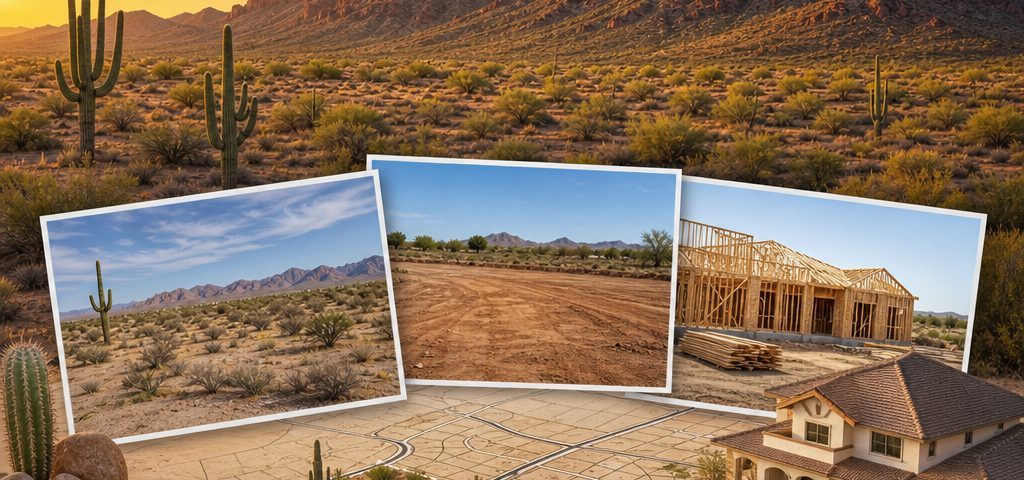
Arizona Land Loans: Best Options for Raw Land, Lot Purchases, and Development Financing
az land loans present a different set of risks and paperwork than a standard home mortgage, and choosing the wrong product can kill a deal or erode returns. This article compares realistic options for raw unimproved parcels, buildable lots, and construction/development financing in Arizona – what lenders will require, typical LTVs and rate bands, and when a fast hard money bridge or USDA/municipal program is the smarter choice. Read on for a practical decision framework and sample numbers to match your project and timeline to the right lender, including balanced context on private lenders such as Level 4 Funding.
Arizona land financing landscape and why it differs from residential mortgage lending
Key point: Lenders treat land as a different asset class than houses. Expect lower loan to value, stricter title and utility conditions, and underwriting that focuses on resale or development value rather than immediate income.
Why risk is higher: Raw and vacant parcels lack cash flow, often have ambiguous access or utilities, and can sit for years while entitlements are resolved. That uncertainty destroys the comparables banks use to underwrite a typical mortgage, so conventional mortgage playbooks do not apply to most az land loans.
Who underwrites land in Arizona and what they look for
- Banks and credit unions: will finance buildable lots with recorded plats, utility commitments, and strong borrower credit; LTVs tend to be conservative.
- Portfolio and regional lenders: will take more local risk but still want proof of access, water, and marketability.
- USDA and municipal programs: may cover rural home sites or subsidized lot programs in eligible areas; check program maps and eligibility.
- Private and hard money lenders: such as Level 4 Funding provide acquisition and bridge capital for parcels that banks decline, trading speed and flexibility for higher cost.
Practical underwriting differences: For land loans Arizona lenders require an ALTA or boundary survey, access and easement documentation, water supply evidence or well feasibility, and often a soils or geotech report if building is planned. Lenders will also flag state trust land adjacency, desert tortoise habitat, and floodplain status because these create long tail costs.
Tradeoff to plan for: Speed versus cost. If you need to close quickly to lock a parcel you often choose private land purchase loans or seller financing and accept interest in the high single digits to mid teens plus points. If you can prove buildability and wait, conventional lot financing will cut rates and improve LTV but adds weeks to months of entitlement work.
Concrete example: A buyer wants a 2 acre desert parcel outside Maricopa County with no recorded well, no road improvements, and incomplete access. A local bank declines. A private lender can fund acquisition at up to 70 percent LTV with a 10 to 14 percent rate and 2 to 3 points as a bridge while the buyer secures a well permit and road access. Once utilities and a recorded plat exist the borrower can refinance into a lower cost conventional lot loan.
Common misjudgment: Many investors assume any vacant land will qualify for a bank mortgage if they have good credit. That fails in practice when water, access, or municipal entitlements are missing. The right move is to match the lender to the parcel condition and exit plan, not force one financing model across every deal.
Next consideration: Before you bid, decide whether your exit is refinance, resale as raw land, or development. That decision determines whether you pursue conventional lot financing, USDA or municipal options, or an accelerated path with private az land loans and hard money.
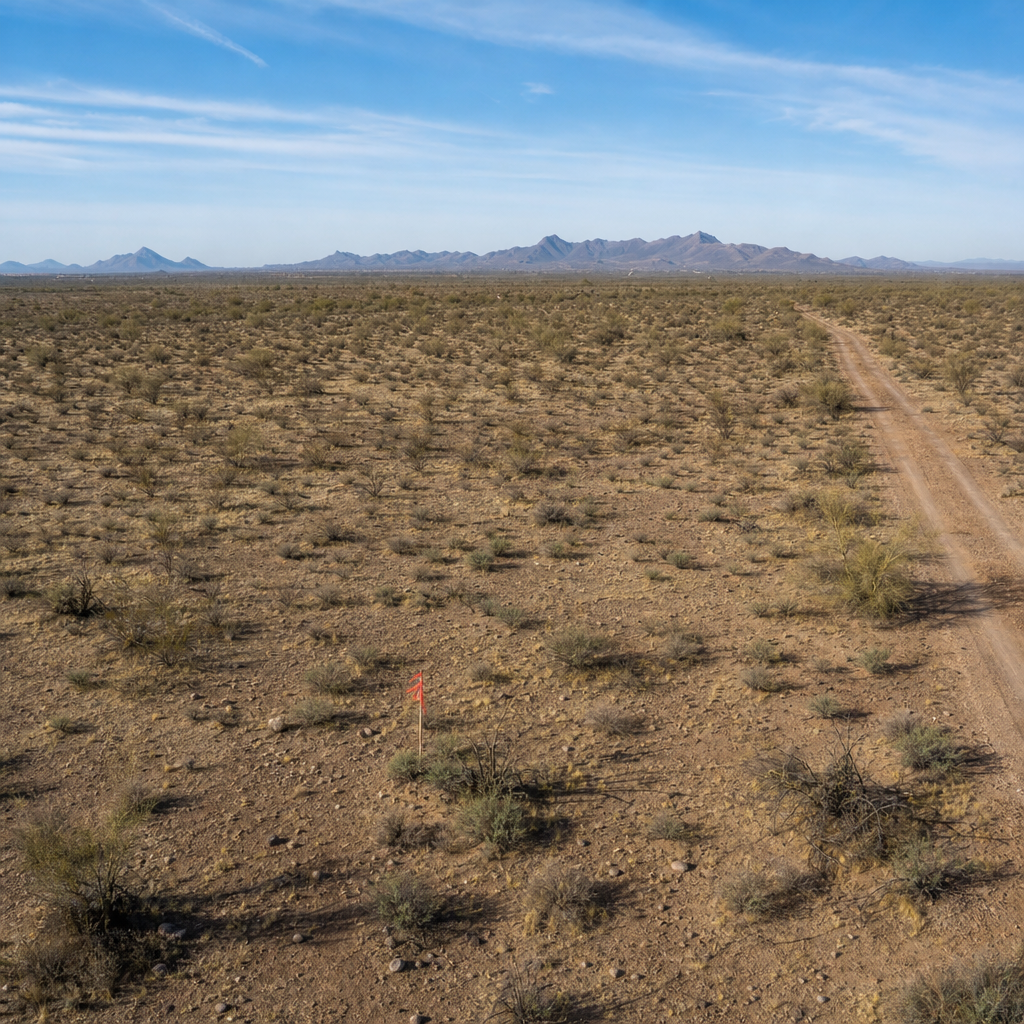
Financing raw, unimproved land in Arizona
Straight to the point: raw, unimproved parcels in Arizona are financed on different terms because lenders are buying the land, not a future house. Expect lower loan to value, shorter permitted amortization, and stricter proof of access and water before any bank will even price the deal.
What underwriters will insist on
- Legal access and easements: documented road access and a recent ALTA survey are non negotiable for most lenders
- Water and sewage plan: municipal service letter, well feasibility, or an engineered septic plan — lack of potable water is the single biggest deal breaker in Arizona
- Title clarity: commitment showing no unresolved liens or claims, plus proof the parcel is not encumbered by unrecorded mining claims or state trust restrictions (see Arizona State Land Department)
- Site constraints: floodplain, environmental issues, or protected species habitat materially reduce LTV or eliminate bank options
Typical deal economics you should model up front: conventional banks commonly price raw land at 40 to 60 percent LTV with interest rates modestly above residential mortgages; private and hard money lenders will push 50 to 70 percent LTV but charge higher rates and points. For practical planning, assume conventional closing windows of 30 to 60 days and private/hard money closings in 3 to 14 days — Level 4 Funding commonly funds within 24 hours when the package is complete.
Tradeoff that matters: if your goal is lowest cost, wait for conventional financing and accept lower leverage. If your priority is securing the land and moving to entitlement, accept a higher cost bridge from a private lender. Many investors use hard money to close and convert to a construction or permanent loan after entitlements raise the parcel value.
Concrete example: A developer finds a 5 acre desert parcel outside Maricopa County listed at $200,000. A bank will underwrite at 40 percent LTV and require a potable water letter, so the maximum loan is $80,000. A private lender will offer 65 percent LTV or $130,000 at 10 percent interest and 2 points, buying the developer three to six months to secure water feasibility and permits. The borrower pays higher carrying cost but avoids losing the site to a competing buyer.
When to consider alternatives to banks
- Seller financing: works when the seller has low carrying needs and is willing to accept a structured note; it often carries flexible terms and can bridge to conventional later
- Local community banks or credit unions: useful for parcels inside or adjacent to municipalities where utilities are accessible; they underwrite local development timelines better than national banks
- USDA and rural programs: can help on eligible rural home sites; verify eligibility early with USDA Rural Development
Next consideration: decide whether you need acquisition speed or lowest cost. If speed, structure financing to pay for entitlement work and a refinance to a cheaper product after upgrades; if cost, accept stricter underwriting and the longer timeline that conventional lenders require.
Lot purchases ready for building: utilities, entitlements, and lender preferences
Immediate point: a lot that has municipal water, sewer, recorded plat, and clear road access behaves more like a residential collateral than raw land for most lenders. That single fact changes the product set available, the achievable loan to value, and the underwriting questions you need to answer before you apply.
What underwriters actually check on a buildable lot
- Recorded plat and legal access: lenders want a recorded subdivision plat or recorded deeded access; no paper roads or unresolved easements.
- Utility evidence: a municipal capacity letter or signed utility hookup agreement for water, sewer, electric and gas is far more persuasive than a seller statement.
- Impact fees and assessments: an estimate or invoice for municipal impact fees matters because these are real cash outlays at build time.
- Title clean of unusual encumbrances: outstanding easements, right of way, or unrecorded agreements kill conventional mortgage approvals.
- Soils and geotech where required: in desert areas, a soils report or engineer letter can be mandatory for lender comfort on foundation risk.
- Municipal entitlements status: a lot may be buildable on paper but still need a permit package or rezoning that affects lender appetite.
Tradeoff to accept: lenders price certainty, not potential. If your lot meets the checklist above you will get lower rates and higher LTVs. If any of those items are missing most conventional lenders retreat and you will be left with portfolio or private financing that costs more but funds faster.
Practical insight: even with utilities present, many banks still prefer the lot to be part of a construction to permanent loan for owner builders or small developers. Standalone lot mortgages are less common and usually have stricter borrower credit and lower LTVs than lot plus build financing.
Concrete example: A developer buying a single improved lot in north Phoenix produced a city capacity letter for water and sewer, a recorded plat, contractor bids, and an impact fee estimate. A local community bank approved a construction to permanent loan with 75 percent of cost basis plus a contingency reserve. The same borrower would have received only a 55 percent LTV if asking for a standalone lot mortgage without the construction package.
How to match lender types to lot readiness
- Conventional mortgage or community bank: best when utilities, plat, and permits are in order; expect lower rates and requirement for documented contractor qualifications.
- Portfolio lenders and local credit unions: useful when standard bank overlays block approval; they can be flexible on unusual plats but will still want utility letters.
- Municipal or land bank programs: sometimes offer favorable terms for infill lots tied to affordable housing or redevelopment aims; check city programs in Phoenix and Tucson.
- Hard money and private lenders: fundable when entitlements are incomplete or speed matters; higher interest and fees but they will underwrite a strong exit or construction plan quickly. See Phoenix Hard Money Lender: Loans with a 500 Credit Score for a regional example.
If you plan to finance both the lot and construction, package them together at application. That single change can increase LTV by 15 to 25 percentage points in practice.
Common misconception: many investors assume municipal utilities guarantee lender approval. They do not. Lenders want signed capacity letters and a clear plan to pay impact fees. Utility availability is necessary but not sufficient.
Next consideration: before you sign a purchase contract, get a utility capacity letter and a preliminary impact fee estimate from the local building department. That single document will eliminate most surprises in underwriting and determine whether you pursue a conventional lender, local portfolio lender, or private bridge funding.
Construction and development financing options and how underwriting differs
Underwriting treats a construction loan as a project, not a mortgage on an existing asset. Lenders focus on build budgets, contractor capacity, permit timelines, draw controls, and the borrower exit – more than credit score alone.
Common construction and development products you'll see in Arizona
- Construction-to-permanent – single-close product that converts to a traditional mortgage at stabilization; lenders require detailed schedules and lower combined leverage.
- Stand-alone construction – short term and paid off or refinanced on completion; common for spec builders who will sell new homes.
- Developer construction loan – larger, phase-based financing for subdivisions; underwritten to absorption schedule and infrastructure costs.
- Bridge or mezzanine financing – used when entitlement or lot tie-in is incomplete; typically private or hard money with faster close and higher cost.
Key underwriting differences versus a standard mortgage: Lenders require a pro forma that ties costs to finished value, an itemized draw schedule tied to inspections, a qualified general contractor with verified license and insurance, contingency reserves (commonly 5 to 15 percent), and municipal proof of permit readiness or entitlements.
| Loan type | Typical LTV or leverage | Interest band (typical) | Primary underwriting focus |
|---|---|---|---|
| Construction-to-perm | 70 to 80% of completed value | 6 to 10% for conventional; 8 to 14% private | Pro forma, GC vetting, permanent qualification on conversion |
| Stand-alone construction | 60 to 75% of completed value | 7 to 12% | Draw schedule, inspections, stronger contingency |
| Developer/subdivision | 50 to 75% depending on phase | 6 to 12% | Absorption model, infrastructure budgets, impact fees |
| Bridge / hard money | 50 to 70% LTV or LTC | 9 to 18% | Speed, exit strategy, asset value; looser document set |
Practical tradeoff: faster capital from private lenders shortens schedule risk but increases carrying cost. If your permit or entitlement timeline is uncertain, paying higher interest to move the project forward can be cheaper than losing months waiting for bank underwriting – but only if you have a reliable exit plan and realistic contingency math.
Concrete example: A small Phoenix builder buying a buildable lot uses a construction-to-perm loan. The lender requires the contractor bid, a 10 percent contingency, a soils report, and a utility capacity letter from the city. Draws are released after municipal inspections; missing a final inspection delays conversion and forces the borrower to carry higher short-term interest until refinance or sale.
- Documents lenders insist on – signed pro forma budget, detailed GC contract and license verification, ALTA survey, geotechnical report, plan set, permit status letter, utility capacity or hookup estimates, and sales comps or market absorption study.
- Cash reserves and interest reserves – expect lenders to require an interest reserve into the loan when timelines are long; under-reserving is the most common underwriting failure I see in practice.
- Inspection and draw regimes – expect retainage (5 to 10 percent) and third-party inspections for each draw; improperly staged draws are a frequent cause of cashflow gaps.
Next consideration: before choosing a product, get a vetted contractor bid and a municipal utility letter – missing either forces lenders to either add expensive reserves or decline the loan. If you need a faster option, review private lenders such as Level 4 Funding for bridge solutions while preserving a path to lower-cost permanent financing; see Hard Money Lender Arizona: Fast Fix and Flip Loans for 2026.
Practical role of hard money for land and development projects with Level 4 Funding as an example
Hard money is a tactical bridge, not a long term financing strategy. For Arizona land deals where speed, flexible underwriting, or imperfect paperwork matters, private lenders move deals that banks will not. Level 4 Funding is a realistic example: Phoenix based, asset focused, often funding within 24 hours and willing to underwrite up to 70 percent LTV on the right plan.
- When to use hard money: fast acquisitions to beat competing offers, short term bridging while entitlements are processed, buy and hold flips where a quick close captures a rare lot, or when borrower credit or documentation would kill a conventional approval.
- When not to use hard money: as permanent capital for long hold strategies, for marginal sites with unresolved water or title issues, or when carrying costs will materially erode project returns.
- Level 4 Funding practical limits: expect higher rates and points, compulsory reserves for interest and draws, and active oversight on draws and contractor invoices rather than lax hands off servicing.
Tradeoff to accept: speed and underwriting flexibility come at explicit cost.** Typical hard money pricing for Arizona land projects sits well above conventional mortgages and may include origination fees, interest reserves, and exit fees. In practice the common mistake is treating hard money as cheap money for multi year holds. That fails when market slowdowns extend entitlement timelines and carrying interest plus fees eliminate your margin.
Concrete example: an investor finds a 2 acre buildable parcel near Pinal County listed at 300000. Level 4 Funding agrees to bridge acquisition at 70 percent LTV funding the purchase within 48 hours, charging an interest rate in the low double digits and 2 points, with a 12 month term to secure entitlements. The borrower must present a short business plan, recent comps, contractor bid, and an exit plan to a construction lender or sale; failure to show a credible exit typically lowers the approved LTV or triggers higher fees.
| Feature | Conventional Bank | Hard Money (Level 4 Funding example) |
|---|---|---|
| Typical LTV on raw or lot | 40 to 60 percent | Up to 70 percent |
| Interest rate | Below market mortgage rates | High single to low double digits |
| Time to fund | 30 to 60 days | 24 to 72 hours |
| Documentation | Extensive income, asset, credit and title | Asset based plan, comps, contractor info |
| Best use case | Permanent financing for buildable lots | Acquisition bridge, entitlement runway, quick flips |
How to present a wining package to a hard money lender. Lead with a credible exit. Provide a signed purchase contract, 3 recent comps, a contractor license and bid, a one page budget showing purchase, hard costs, soft costs, contingency and expected sale or refinance number, plus an ALTA or boundary survey if available. For state trust land or parcels with water questions include a quick note linking to the Arizona State Land Department parcel search or documentation that proves fee simple transferability.
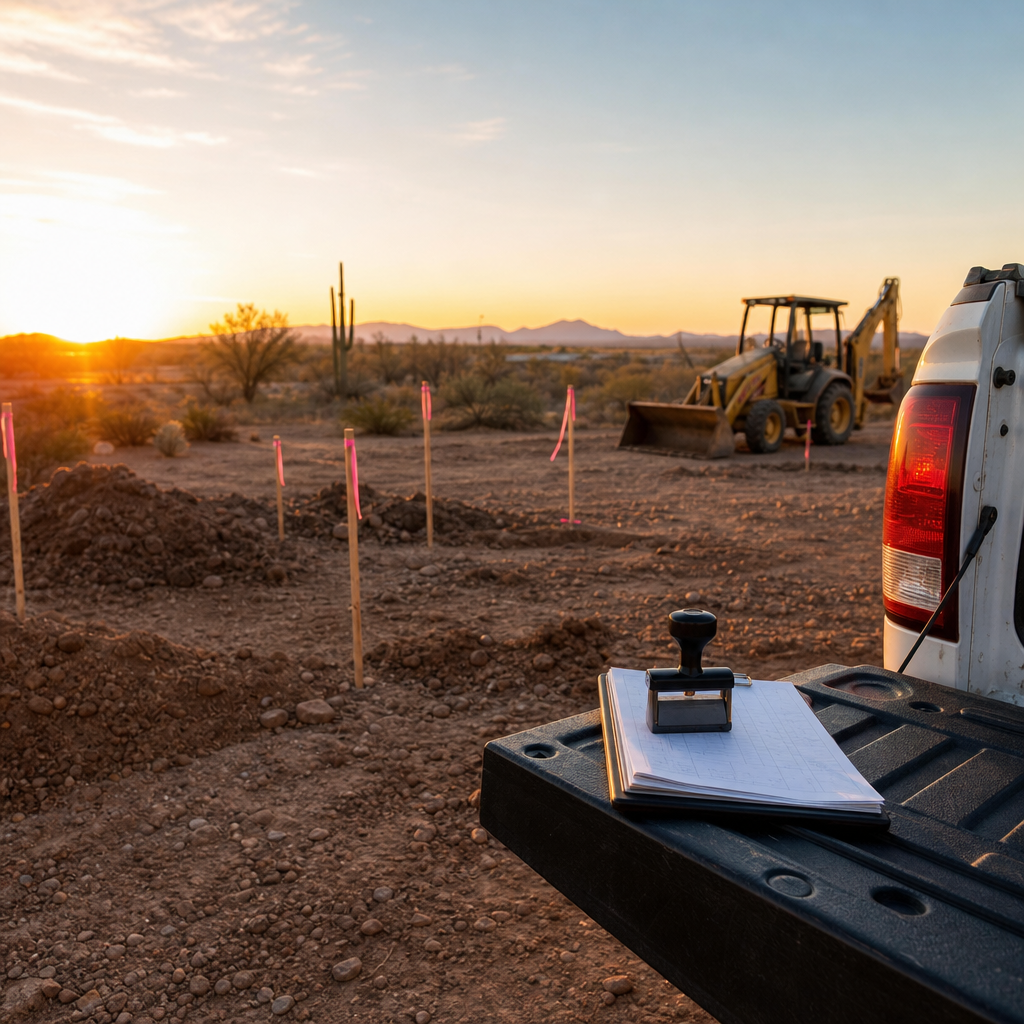
Next consideration: before choosing hard money quantify your worst case hold period and carrying cost and compare that to your return targets and refinancing options. If refinancing into construction debt is part of the plan, verify that the second lender will accept the hard money exit and its lien position before closing.
Decision framework and example financing scenarios
Start with classification. Identify whether the parcel is raw unimproved land, a buildable lot with utilities and plat, or an active development requiring phased construction financing. That single determination drives what lenders will underwrite, how much they will lend, and how fast you must move.
Stepwise decision framework
- Define the objective. Buy and hold, lot flip, or build and sell/hold; attach a realistic timeline to the objective.
- Classify the asset. Raw land, improved lot, or development parcel – check access, water, sewer, and recorded plat.
- Map borrower profile to lender type. Use conventional banks for low leverage, municipal or USDA for eligible rural home sites, and private hard money for speed or weak credit.
- Model carrying costs. Interest carry, taxes, insurance, permitting and impact fees – run worst case for 6 to 12 months beyond plan.
- Select structure. Acquisition-only bridge, acquisition plus entitlement bridge, construction to permanent, or phased developer loan.
- Prepare the package. Purchase contract, ALTA survey, title commitment, contractor bids, exit plan, comps, and permit timeline.
Practical tradeoff: fast funding reduces execution risk but costs more; low-cost bank debt reduces interest carry but increases risk of missing entitlement windows because banks move slower. Choose speed when the deal is time-sensitive or competitive; choose low-cost debt when price and time are both flexible.
Three realistic Arizona scenarios with numbers
| Scenario | Loan type / lender | Typical LTV | Interest / fees | Closing timeline | Key lender requirement |
|---|---|---|---|---|---|
| 2 acre raw desert parcel – speculative buy and hold | Private bridge or seller financing | 50 to 65 percent (private); 40 to 60 percent (bank) | Private: 9 to 14% + 2 to 4 points; Bank: 5.5 to 9% + 1 point | Private: 3 to 10 days; Bank: 30 to 60 days | Access, well feasibility or municipal water letter, ALTA survey |
| Single buildable lot near Phoenix with utilities | Conventional lot loan or construction to permanent | 65 to 80 percent of completed value (construction); 60 to 70 percent for lot alone | Construction: 6 to 10% with interest reserve; Lot loan: 5.5 to 8% + closing costs | 30 to 45 days for lot loan; 45 to 90 days for construction to permanent | Recorded plat, utility capacity letters, contractor bid and GC license |
| Small 8 lot subdivision – phased development | Developer construction loan with phased draws or JV equity + construction lender | 50 to 75 percent of development cost depending on presales and sponsor experience | 8 to 12% on interim debt; lender may require interest reserve and 10 to 20% contingency | 90 to 180 days to fund initial phase, draws per inspection | Entitlement plan, soil reports, civil cost estimates, presale contracts if available |
Concrete Example: A buyer finds a 2 acre desert parcel outside Casa Grande priced at 120,000. They need water feasibility and have 25,000 for closing. A private bridge lender may fund 60 percent LTV at 12% with 3 points, covering purchase and initial entitlement work so the buyer can finish hookups and then refinance to a construction lender after permits are in hand. That route costs more up front but prevents losing the parcel in a cash competitive market.
Stress test checklist. For every financing option run three downside scenarios: 1) entitlement delay of 6 to 12 months, 2) 15 percent construction cost overrun, 3) market slowdown pushing sales 6 months out. Track incremental interest carry and contingency draw needs under each scenario.
Key judgment: If entitlement timing is the primary risk, pay for speed. If market exit and sale price are the primary risks, prioritize capital efficiency and lower interest even if it costs time.
Next consideration. If speed matters, assemble a hard money fallback package before you bid: purchase contract, ALTA, comps, basic site plan, and contractor estimate. Level 4 Funding and similar regional lenders will evaluate that package quickly; see Phoenix Hard Money Lender: Loans with a 500 Credit Score for an example of a fast hard money workflow.
Application checklist, documentation, and typical timeline for Arizona land and development loans
Start with the documents that create the longest delays: an ALTA survey, municipal utility capacity letters, and a clear title commitment. Lenders — conventional, USDA, and private — all stall when those three items are missing or ambiguous. Get them ahead of time and you buy options: faster closings, better pricing, and fewer surprise conditions.
Step-by-step application timeline (what to expect and how to compress it)
- Pre-application (1–14 days): Assemble signed purchase contract, ID, basic financials, and any preliminary site plan. Order an ALTA survey early; expect 7–21 days depending on complexity.
- Underwriting and due diligence (7–45 days): Appraisal, title review, environmental flags, utility letters, and municipal impact fee estimates. Conventional lenders lean on appraisals and recorded plats; this is the phase that stretches most.
- Permitting checks and contractor vetting (7–30 days, concurrent): Lenders want a contractor bid, license checks, and a realistic draw schedule. If entitlements or rezoning are required, add months.
- Closing and funding (1–7 days for hard money, 30–60+ days for conventional, 60–90+ days for USDA depending on eligibility): Hard money can fund in 24–72 hours once docs are in order. Conventional and USDA rely on appraisal and title clearances that commonly add weeks.
| Lender type | Typical timeline to fund | Critical documents that cause delays |
|---|---|---|
| Private hard money (example: Level 4 Funding) | 24 hours to 7 days | Signed contract, proof of identity, title commitment, ALTA survey preferred, contractor bid for development loans |
| Conventional banks / credit unions | 30 to 60+ days | ALTA survey, recorded plat, appraisal, utility capacity letters, evidence of access and covenants |
| USDA / government programs | 60 to 90+ days | Eligibility documentation, site suitability, appraisal, environmental review, utility feasibility |
Document checklist (core items you should have before you apply): Signed purchase contract; ALTA boundary survey; current title commitment with resolved exceptions; recent comparable sales for appraisal prep; preliminary site plan or sketch; contractor agreement and license verification; utilities capacity letters (water, sewer, power); well feasibility report or septic plan if off-grid; soils/geotech when lender requires; HOA or CC&R documents if present.
Practical cost and sequencing insight: Expect to pay $1,000 to $3,000 for a basic ALTA survey in most Arizona suburbs, $2,000 to $6,000 for a soils/geotech report, and $500 to $1,500 to obtain utility capacity letters and impact fee estimates. These are not optional time-savers; they are underwriting currency. Skimping to save a few hundred dollars usually costs weeks in added underwriting or forces a higher-cost bridge loan.
Important: An incomplete title or unresolved recorder exceptions are the single largest cause of delayed closings on land deals in Arizona.
Trade-off to consider: If speed matters — an off-market lot under contract or a time-limited option — accept higher carry and use hard money while you finish municipal entitlements. If you need the lowest long-term rate, plan for the longer conventional timeline and front-load surveys and municipal checks so the lender isn't chasing them later.
Concrete Example: A small builder under contract for a 0.5-acre Phoenix lot ordered an ALTA survey and utility letters before shopping lenders. Using Level 4 Funding they closed in 3 business days with a bridge loan to lock the lot, then converted to a construction-to-perm product once permits and impact fees were confirmed. The quick close cost more in fees and interest but avoided losing the lot and preserved the project timeline.
Costs, fees, and exit strategies investors should plan for
Straight fact: acquisition price is often the smallest line item. Carrying costs, entitlement fees, utility hookups, and exit costs add up fast and change what financing makes sense.
Practical insight: model monthly carrying costs as part of your deal math – not an afterthought. For raw parcels in Arizona expect ongoing interest carry, property taxes, basic insurance, and maintenance or patrol costs. On lot purchases add impact fees and connection charges that can run tens of thousands in municipal areas.
| Cost component | Typical AZ range | Notes and how it affects financing |
|---|---|---|
| Interest carry (acquisition or bridge loans) | 8% to 16% annual for private/hard money; 4% to 7% for construction to permanent | Higher with hard money – budget larger contingency or shorter hold period |
| Points and origination fees | 1 to 4 points conventional; 2 to 6 points private/hard money | Points increase effective purchase price – prefer lender credits only when exit is certain |
| Appraisal, ALTA survey, title | $1,500 to $6,000 depending on parcel size | Required by most lenders – missing survey will kill conventional approvals |
| Permitting and impact fees | $5,000 to $60,000+ depending on municipality and lot size | Phoenix and Scottsdale fees trend high; factor into early cash needs |
| Utility hookups and well/septic | $10,000 to $75,000 | Rural parcels often require well drilling or off-grid systems – lenders treat this as additional risk |
| Holding costs – taxes, insurance, maintenance | $150 to $800 per month | Varies by parcel value and county – budget for seasonal access work in remote areas |
Tradeoff to plan for: speed versus cost. A private bridge loan from a local hard money lender will get you to close in days and protect an option contract, but higher rates and points mean your exit must be executed on time. If entitlements or hook-ups take longer than expected, the higher finance cost will erase margins faster than construction overruns.
- Sell raw parcel: lowest carrying requirement but requires a buyer market – use low-cost marketing or seller financing to move inventory
- Sell improved lot: pays for utility and permitting spend but adds time and entitlement risk – banks prefer lots with recorded plat and hookups
- Build and sell: maximizes value capture but requires construction capital and a sales window; align construction draws with concrete sales comps
- Build and hold: turns development into rental collateral but changes lender expectations – expect different underwriting for long-term mortgages versus short-term construction loans
Concrete example: an investor purchases a half-acre lot near Phoenix for $120,000 using a private bridge loan at 12% with 3 points. Monthly interest carry equals about $1,200. Add $18,000 in impact and hookup fees and $2,000 in survey/title – that creates roughly $21,200 in near-term outlay plus ongoing $1,200 per month. If the exit is sale after six months, total finance cost plus fees approaches $10,000 to $15,000 which must be covered by the sales premium. If the entitlement timeline slips to 12 months the deal often loses profitability unless the exit price improves.
Judgment call most investors miss: lenders will underwrite to your stated exit strategy – not to wishful extensions. If your plan is sell-after-entitlement, use financing that penalizes short holds less – for example structured bridge with lower upfront points or a hybrid where a hard money acquisition loan converts to a lower-rate construction-to-perm jump. Expect conventional banks to refinance only after entitlements, recorded plats, and finished infrastructure exist.
Next consideration: if you need speed to secure a competitive parcel use a local private lender familiar with Arizona zoning and municipal timelines like Level 4 Funding. For rural home sites also check eligibility under USDA site and single family programs – they can change the exit and cost calculus if location qualifies.