


Best Fix and Flip Lenders for Real Estate Investors: What to Look for and How to Compare
November 14, 2026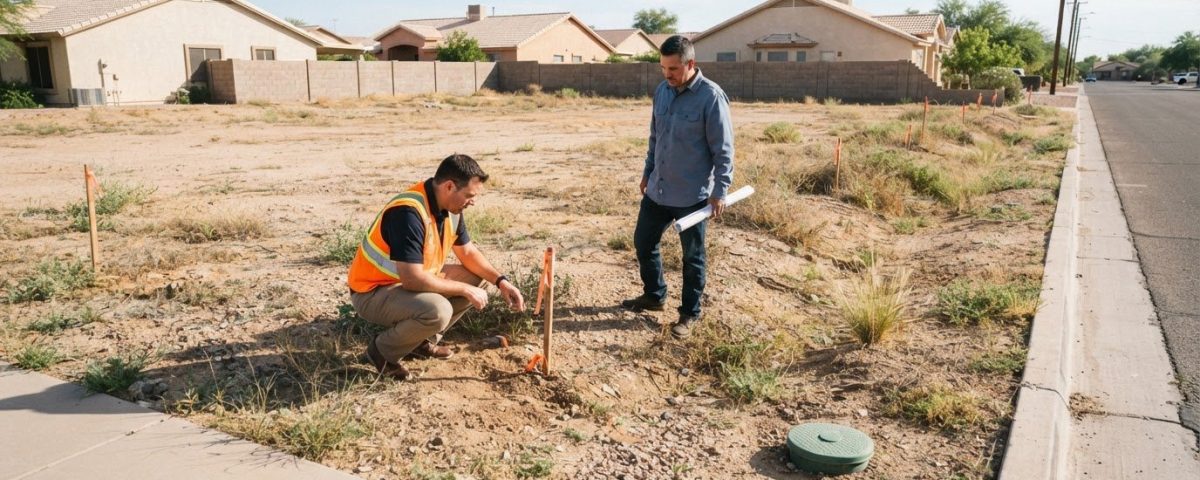
A land purchase can move faster than conventional financing. Hard money for land acquisition in Phoenix is structured around the parcel as collateral and a plan to repay the loan. Rates and terms depend on the property, requested leverage, and exit strategy, rather than a universal schedule.
It’s reasonable to want clear numbers before committing to a deal. Land financing involves different considerations from financing an improved property, so the parcel’s characteristics and proposed use matter. This guide explains how hard money loans work, what shapes rates and terms, and how lenders assess land acquisitions in the Phoenix market.
You’ll also see how hard money, bridge financing, and investment-property loans relate, what information helps evaluate a deal, and when this financing may fit your acquisition. The goal is a clearer path from evaluating a parcel to understanding the financing structure that supports the purchase.
Key Takeaways
- Learn how hard money financing is structured for land, commercial acquisitions, and construction projects.
- Understand how a loan-to-value ratio affects the amount a lender may consider for a parcel.
- See which property and deal details can shape underwriting for Phoenix-area investors.
- Get a clearer picture of how interest rates and origination points factor into loan terms.
- Distinguish private, hard money, bridge, and investment-property loans to identify the financing structure that best fits your plan.
How Do Hard Money Loans Work?
For Phoenix land deals, a private lender evaluates the parcel, collateral, and repayment plan. The loan structure then connects acquisition capital with the project’s next step.
Land Acquisition and Construction Financing
Commercial property acquisition financing can support a purchase where the parcel itself anchors the collateral. Construction financing addresses a different phase: building work after acquisition. For raw land and development, the lender weighs the site’s intended use, development plan, available equity, and expected exit. Phoenix investors should distinguish buying land from funding construction on it. The capital need and repayment plan change with each stage.
Loan Terms and Repayment Schedules
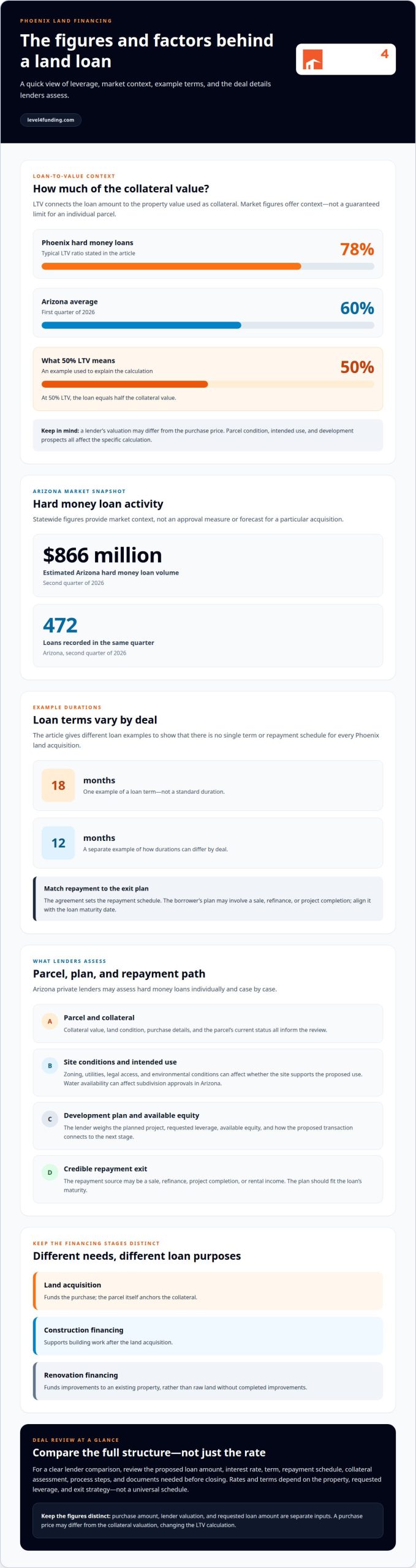
There is no single term or repayment schedule for every Phoenix land acquisition loan. Loan examples include an 18-month term and a separate 12-month term, illustrating how durations can differ by deal. The agreement sets the repayment schedule, while the borrower’s exit plan explains how principal will be repaid. Match the planned sale, refinance, or project completion to the maturity date before closing.
Site Conditions That Shape Approval
Zoning, utilities, legal access, and environmental conditions can affect whether a parcel supports its proposed use. A residential subdivision, for example, depends on whether the site can accommodate the planned homes and infrastructure. A lender may assess these details alongside collateral value and the development plan. In Arizona, water availability can affect subdivision approvals, so include water planning in the site review, not as an afterthought.
Trustee Sales and Foreclosure Auctions
A trustee sale or foreclosure auction can create a compressed acquisition timeline. The financing review still centers on the property, purchase terms, and a credible repayment exit. A lender needs enough information to assess the parcel and transaction before closing. Auction buyers should align funding timing with the sale process and account for title, access, and site issues that could affect the property’s usable value.
Local Lenders and Renovation Financing
Arizona private lenders may underwrite hard money loans individually and case by case. A Phoenix land deal is assessed on its own collateral, project plan, and repayment path, rather than grouped with residential purchases. Renovation financing is distinct: it funds improvements to an existing property, while raw-land financing concerns a parcel without completed improvements. Construction financing supports building work after the land acquisition.
Loan-to-value ratios
Loan-to-value (LTV) connects a hard money loan amount to the property value used as collateral. For investors considering hard money for land acquisition Phoenix options, that calculation helps frame the potential loan size.
Loan-to-Value Limits
An LTV of 50% means the loan equals half the collateral value. Phoenix hard money loans have a typical LTV ratio of 78%, while Arizona’s average was 60% in the first quarter of 2026. These figures offer market context, not a fixed limit for every parcel. The lender’s valuation, the land’s condition, and its planned use shape the specific calculation.
Look at the loan amount and valuation source together. A purchase price may differ from the lender’s collateral valuation, changing the ratio. Development prospects and the parcel’s intended use also inform the assessment. A rental plan, for example, presents a different repayment path from resale after construction. LTV shows leverage, but not whether the full financing structure fits the project.
Down Payments and Loan Calculations
This illustrates how the ratio translates into the buyer’s contribution from another source. The calculation helps with planning, but does not establish terms for a land purchase.
Different collateral values and leverage assumptions produce different financing structures. For hard money for land acquisition Phoenix options, the lender’s collateral valuation matters alongside the purchase figure. Keep the requested loan, purchase amount, and valuation basis distinct when reviewing a proposed structure.
A professional approval process typically reviews the parcel, purchase details, intended use, and repayment source. The lender weighs how the proposed transaction connects to construction, resale, refinance, or rental income. Clear, consistent project information makes the application easier to assess. Site conditions and a mismatch between the land’s current status and intended development can also affect the review.
Arizona’s hard money loan market recorded an estimated $866 million across 472 loans in the second quarter of 2026. That statewide activity provides context, not a forecast or approval measure for a particular acquisition. Parcel characteristics, planned use, and requested leverage remain central to the individual review.
To discuss how a proposed loan structure relates to a property and purchase plan, explore hard money loan options.
Hard money loans for real estate investors in the Phoenix area
For Phoenix real estate investors, hard money financing can connect a property purchase with a defined investment plan. Local land transactions show why parcel type and intended use matter.
Lender Comparisons
Compare hard money lenders by how each evaluates the same Phoenix parcel and exit plan. Review the proposed loan amount, interest rate, term, repayment schedule, and collateral assessment. Then compare process steps and documents needed before closing. A direct comparison shows whether the capital structure fits a land purchase, commercial property, or construction plan, rather than relying on a headline rate alone.
Keep the comparison focused on the deal. A lender may assess raw land differently from a parcel with planned construction, and underwriting can be case by case. Present the purchase details, site information, project use, and repayment source together when discussing terms. Giving lenders the same basis for review makes differences in structure easier to understand.
Private Lender Options
Phoenix-area private lenders offer another route for investors seeking real estate financing. Hard money loans use real estate as collateral and typically come from private parties rather than traditional lenders such as banks. In Arizona, underwriting may be handled individually. The lender’s view of parcel value, intended use, and exit plan shapes the proposed structure, so the loan should match the transaction rather than a generic residential template.
Local market activity gives useful context. Production home builders acquired more than 12,000 acres in Maricopa and Pinal Counties from 2020 to 2025. They also completed more than $4 billion in land-related buyer transactions across those counties during that period. These figures point to active land transactions, but they don’t set terms for an individual investor. A private lender still evaluates the specific parcel and financing plan.
Population and housing activity add context to Phoenix-area investment decisions. The metro area gained nearly 85,000 people from 2023 to 2024, while Maricopa County had more new homes built in the last year than any other U.S. county. Those market signals can inform a project’s strategy, but they don’t replace parcel-level underwriting. Investors should connect the acquisition to a clear use, such as future construction, resale, or another defined investment exit.
Think of a lender as a financing partner for a specific transaction, not a promise of approval. A strong review connects the purchase, collateral, development intent, and repayment plan. For a Phoenix land deal, present the parcel as an investment with a workable path forward, not simply as acreage. This helps real estate investors assess whether a proposed loan fits their strategy.
Arizona hard money interest rates and origination points
For Arizona land financing, the interest rate and origination points are separate parts of the loan’s cost. Compare the complete structure: rate, points, loan amount, term, repayment schedule, and exit plan.
There isn’t one rate that applies to every Phoenix parcel. A lender sets terms based on collateral, requested leverage, intended use, and repayment source. Raw land, a commercial acquisition, and a construction project raise different underwriting questions. The requested loan amount and strength of the exit plan also shape the offer. Compare complete written terms, not an isolated rate.
Origination points are calculated against the loan amount, so they affect the proceeds available at closing. Ask how points are calculated and when they are due. Consider them alongside interest over the loan term and the planned repayment date. A shorter timeline may change total interest expense, while delays can extend carrying costs. Include each element in the project budget before committing to the purchase.
Recent Arizona funding activity offers context, not a quote for a specific parcel. An estimated 166 short-term loans were funded from July 1 through September 30, 2026, in the statewide figures for that quarter. That count reflects funded lending activity across Arizona. It does not establish an individual borrower’s rate, points, or approval terms. A Phoenix land acquisition still requires parcel-specific underwriting.
Arizona lending authorization is a separate consideration from a loan’s rate or collateral value. In the transaction file, identify the lending entity, the party funding the loan, and the entity named in the loan documents. Keep those roles clear through underwriting and closing. This helps investors understand who is making the loan and who handles each documented part of the transaction, without confusing funding with renovation work or construction financing.
The main risks and costs include repayment pressure, project delays, and carrying the loan beyond the planned exit. Interest and origination points affect total borrowing expense; title work and property due diligence also belong in the acquisition budget. If construction, resale, or refinancing takes longer than planned, the repayment strategy may no longer match the loan schedule.
Before accepting terms, map the expected funding date, closing, project milestones, and repayment source. For example, a land purchase intended for later construction needs a clear bridge between acquisition and the next financing stage. Renovation funding addresses improvements to an existing property, not simply vacant-land ownership. A hard money loan structure should be assessed against that transaction plan and its documented exit.
Private, hard money, bridge, and investment property loans
These loan labels describe different aspects of real estate financing. In Phoenix, the key distinction is how the funding connects to the land purchase and repayment plan.
Loan Types and Uses
Private money describes funding from private parties, while hard money loans use real estate as collateral. A bridge loan describes temporary financing, such as funding an acquisition until a planned sale or refinance. Investment property loan is a broader purpose category, not one fixed repayment structure. These terms can overlap, so assess the collateral, intended use, and exit plan together.
For example, a Phoenix investor might use a bridge structure to acquire a parcel before arranging construction financing. The mortgage documents set the actual loan obligations, including repayment timing. A flexible structure can help when a project has distinct acquisition and development stages, but flexibility doesn’t remove the need for a workable exit. Credit may also be considered alongside collateral and the transaction itself.
Financing Option Comparisons
Compared with bank financing, hard money loans are private, collateral-based financing; specific underwriting and terms depend on the lender and transaction. Private money is a broad source category that can include hard money. Seller financing is different because the property seller provides financing under agreed terms. In Phoenix, compare the source of funds, repayment schedule, collateral, and closing requirements rather than assuming the labels guarantee a particular structure.
A bank mortgage may suit a buyer whose financing process and property fit its underwriting. A hard money lender may assess a Phoenix parcel case by case, focusing on its value and proposed use. Seller financing depends on the seller’s willingness and the negotiated agreement. Each route calls for a clear repayment source, but the parties, documents, and process differ.
Use a short comparison before choosing. First, identify whether the funds come from a bank, private lender, or seller. Next, line up the loan amount, term, payment schedule, collateral, and planned exit. Phoenix hard money notes had a median term of 21 months, providing context for that loan type, not a required term for every deal. The median note amount was $322,143.
For an acquisition plan that needs private, collateral-based funding, explore hard money financing and connect the loan structure to the parcel’s intended use and exit strategy.
Level 4 Funding
Level 4 Funding helps real estate investors consider financing in the context of the property and its intended use. For a Phoenix land deal, the purchase plan, collateral, and next project phase all matter. Commercial Property Loans may fit commercial acquisition needs, while Construction Loans address building plans after acquisition. Fix and Flip Loans and Cash Out Refinance may relate to other stages of an investment strategy.
Bring the parcel details, intended use, and repayment plan into the financing discussion. Those details help connect the land purchase to the right type of real estate financing, rather than treating acquisition and development as unrelated decisions. If you’re considering financing for a Phoenix property project, contact Level 4 Funding to discuss your plans.
Put Your Phoenix Land Plan Into Motion
The next move is to connect the land purchase to a workable investment plan. Before committing, bring the parcel, intended use, project milestones, and repayment strategy into one clear picture. That makes it easier to discuss how financing could support the acquisition and what needs to happen after closing.
Choosing hard money for land acquisition in Phoenix means weighing the financing against the project itself, not treating the loan as a standalone decision. A clear plan helps keep the purchase and next phase aligned. If your project direction changes, revisit how that affects the financing strategy before moving ahead.
Level 4 Funding works with real estate investors on financing needs tied to their projects. If you’re ready to discuss your plans, contact Level 4 Funding. Bring your acquisition goals and the next step you have in mind. A focused conversation can help you move forward with greater clarity and confidence.
Frequently Asked Questions
Which hard money lenders finance land acquisition in Phoenix, Arizona?
Private hard money lenders are a financing route for real estate investors purchasing Phoenix land. Level 4 Funding provides private hard money financing for real estate investors, including commercial property and construction projects. For a land transaction, the important questions are how the parcel will be assessed, what use the purchase supports, and how repayment is planned. Those details help frame the financing request around the specific investment.
What are current hard money loan rates and fees for land purchases in Phoenix?
Rates and origination points vary with the parcel, requested loan amount, leverage, and repayment plan. Phoenix market data reports an average hard money loan interest rate of 13.0% and a mean origination fee of 3.4%. These are market figures, not a quote or Level 4 Funding pricing. Compare the written rate and points alongside the term, payment schedule, and other costs that apply to your transaction.
What loan-to-value or loan-to-cost ratios do Phoenix land lenders offer?
Loan-to-value compares the loan amount with the collateral value; loan-to-cost compares financing with eligible project costs. Land lenders set the applicable calculation based on the parcel and transaction. For development, the proposed construction budget and acquisition value may inform separate parts of the review. Clearly present purchase figures and planned project costs to show how much capital the deal needs and how the requested loan supports it.
What down payment is required for a hard money land loan in Phoenix?
The required down payment depends on the lender’s structure and the transaction. Level 4 Funding states that down payments across its loans range from 0% to 50%, depending on experience, credit, relationship, and real estate license. That range is not a land-specific commitment. For your acquisition plan, distinguish the purchase contribution from funds reserved for closing costs or later development expenses.
Can hard money lenders finance raw, vacant, or undeveloped land in Maricopa County?
Raw, vacant, and undeveloped parcels can be assessed as real estate collateral, with the site and intended project central to underwriting. In Maricopa County, a proposed residential or commercial use makes zoning, access, utilities, and water planning relevant to the parcel’s development path. A lender’s review should connect those site conditions to the purchase strategy and repayment plan, rather than treating acreage alone as the full investment case.
What should Phoenix borrowers expect during the application and closing process for a hard money land loan?
Expect the review to connect the purchase contract, parcel details, intended use, loan request, and repayment plan. Level 4 Funding uses a one-page application, and its site says most loans close in about 7 days, with the title report taking the longest. For a land purchase, keep transaction details consistent across the application and title process so the property and proposed financing are clearly presented.
Which Phoenix-area lenders offer hard money loans for land, and what are their minimum loan amounts?
Level 4 Funding provides private hard money financing for real estate investors in Phoenix and other Arizona markets. That range describes the company’s overall lending, not a guaranteed minimum for every land transaction. The parcel, requested financing, and project purpose shape how a specific loan is assessed.

About the author
Matt has a bachelor's degree in political science from Northern Arizona University and works at Level 4 Funding, a private lending company that offers hard money and rental home loans to real estate investors in 35 states.
With Matt's leadership, the firm has financed almost $300 million in loans for investment properties. He often helps real estate investors with rental property purchases, foreclosures, refinancing, and fix-and-flip projects. Matt has extensive experience in fix-and-flip, buy-and-hold, rental properties, and real estate sales. He has lived in Arizona for 43 years and is married with three children. Matt is licensed as a mortgage broker and loan originator in Arizona, with NMLS 2062278 and NMLS 1118493.
Equal Housing Opportunity. This is not a Good Faith Estimate, and it is not a Guarantee to lend; it should not be considered as such. Costs, rates, estimates, and terms can only be determined after a full application is completed. To the extent this message includes any tax or legal advice, this message is not intended or written by the sender to be used, and cannot be used, for legal or tax purposes or advice. This is an advertisement. Copyright © 2026. All rights reserved.