


How to Write a Real Estate Offer Letter That Gets Accepted — and How to Back It With Proof of Funding
October 23, 2026
An unlivable property can still be financed, but the loan must fit the property’s condition and your renovation plan. If you’re researching how to get a loan for an unlivable property in Phoenix, start by comparing rehabilitation financing, such as an FHA 203(k) loan, with fix-and-flip financing for an investment project. The right route depends on whether you’re buying, refinancing, or renovating a property you already own.
The application timeline matters when a deal is on the clock. No single timeline fits every project: the property, repair scope, valuation, and completeness of your documents all affect how an application moves forward. A clear plan can help prevent avoidable delays.
This guide explains how fix-and-flip financing works, what to know about down payments and credit, how lenders assess a loan amount, and what can affect application timing. It also covers how renovation needs influence your financing options, so you can identify the next practical step instead of assuming the property’s condition rules it out.
Key Takeaways
- Match the financing route to the property and project: FHA 203(k) combines purchase or refinancing with rehabilitation, while fix-and-flip financing is geared to investment projects.
- Prepare for different down payment and credit benchmarks across loan types; your financing route and borrower profile both matter.
- Keep the application moving by organizing property details, repair plans, and financial documents early. The project and the completeness of the file shape the process.
- Asset-based underwriting focuses on the property and its projected value after repairs, alongside the renovation scope and the borrower’s plan.
Fix-and-flip loans
Fix-and-flip financing can help investors buy a property that needs substantial work, then fund a defined renovation plan. For Phoenix buyers, the key decision is whether the property and project fit a renovation mortgage, an investment loan, or a separate repair program.
FHA 203(k) financing is one route to explore. This video explains how the program works:
Loan Type and Rate Options
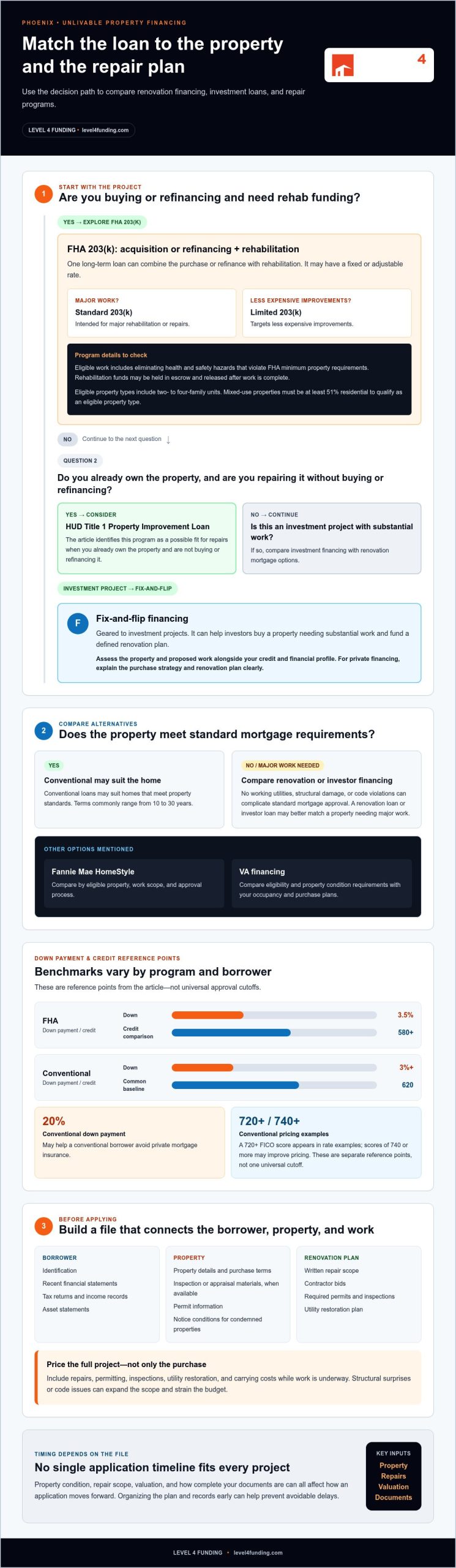
Conventional loans may suit homes that meet property standards; their terms commonly range from 10 to 30 years. FHA loans generally require at least 3.5% down, while conventional loans generally start at 3%. A 620 credit score is a common conventional baseline. VA loans are another category, but compare eligibility and property condition requirements before choosing.
Fixed-rate financing keeps the interest rate steady; adjustable-rate financing can change over time. HUD’s FHA 203(k) combines acquisition or refinancing and rehabilitation in one long-term, fixed- or adjustable-rate loan. Compare payment stability, repair funding, and approval requirements against your investment timeline.
Renovation Loan Programs
According to HUD, Standard 203(k) is intended for major rehabilitation or repairs, while Limited 203(k) targets less expensive improvements. Eligible FHA 203(k) work includes eliminating health and safety hazards that would violate FHA minimum property requirements. Rehabilitation funds may be held in escrow and released after the work is complete.
Fannie Mae HomeStyle is another renovation-loan option to compare by eligible property, work scope, and approval process. HUD’s Title 1 Property Improvement Loan Program may fit repairs when you already own the property and aren’t buying or refinancing it.
Property Conditions and Local Requirements
For a condemned Phoenix property, read the notice’s stated conditions, define the repair scope, and identify required permits and inspections with the relevant city department. Plan utility restoration around those requirements. No working utilities, structural damage, or code violations can complicate standard mortgage approval; renovation financing or an investor loan may better match a property needing major work.
FHA 203(k) eligible property types include two- to four-family units. A mixed-use property must be at least 51% residential to qualify as an eligible property type. Those criteria help buyers assess whether the property’s use and repair plan fit the program before applying.
Purchase Risks and Costs
Price the full project, not just the purchase. Include repairs, permitting, inspections, utility restoration, and carrying costs while work is underway. Structural surprises or code issues can expand the scope and strain the budget. Prepare a written repair plan and compare it with the property’s condition before making an offer.
The grant must be repaid if the property is sold in less than 3 years. This repair assistance is distinct from purchase financing and may not fit an investor acquisition.
Down payment and credit score requirements
Down payment and credit benchmarks depend on the loan program and the property’s intended use. For an unlivable Phoenix home, compare standard mortgage thresholds with the requirements for renovation or private financing.
Credit and Income Documentation
A credit review helps lenders assess repayment history, existing debts, and monthly obligations. Tax returns, income records, and asset statements may help document the financial picture, especially when income varies or the purchase is an investment.
Prepare a consistent application file: identification, recent financial statements, property details, purchase terms, and a repair scope. Include contractor bids, permit information, and inspection or appraisal materials when available. These records help connect the borrower’s finances to the project’s costs and condition.
For private financing, explain the purchase strategy and renovation plan clearly. A lender can assess the property and proposed work alongside the borrower’s credit and financial profile. Keep figures consistent across the application, tax returns, bank statements, and project documents.
Eligibility and Loan Limits
FHA loans generally require a 3.5% down payment, and FHA comparisons commonly use a 580+ credit score. Conventional loans generally require at least 3% down, with 620 commonly used as a baseline credit score. A 20% down payment may help a conventional borrower avoid private mortgage insurance.
That county limit is a conventional benchmark, not a universal cap for every renovation program. Down payment, credit, eligible property, and program rules all shape the actual financing range.
For conventional pricing, a 720+ FICO score appears in rate examples, and scores of 740 or more may improve pricing. These are different reference points, not one universal approval cutoff. VA financing has separate eligibility and property requirements, so buyers should compare those program rules with their occupancy and purchase plans.
Fix-and-flip loan applications connect the property review with the repair plan. Organize contractor bids, inspection findings, permit details, and appraisal information so the lender can evaluate the home’s current condition and planned work. For an unlivable property, structural findings and code issues can affect eligibility and the work required for approval.
Build the file before applying: line up financial documents, a clear repair scope, and available property records. For an investment purchase, compare these benchmarks with private real estate financing suited to a renovation project.
Application timing and process
If you’re wondering how to get a loan for an unlivable property in Phoenix, start by matching the financing to the property and project. Then organize the property, repair, and borrower details so the lender can assess the application using consistent information.
Financing Application Steps
The answer to how to get a loan for an unlivable property in Phoenix starts with a clear purchase plan and a complete project file. Identify whether the property is an investment or a home you’ll occupy, then describe its condition, intended use, and planned repairs. These details help determine whether the financing fits the transaction.
- Choose a financing route. Compare renovation financing, investment financing, and repair assistance according to whether you’re buying, refinancing, or repairing a home you own.
- Document the property. Gather purchase terms, inspection findings, photographs, contractor bids, and available permit information.
- Define the work. Separate essential repairs from optional upgrades, and make sure estimates reflect the condition found during inspection.
- Organize borrower records. Assemble financial statements, asset information, and details about existing monthly obligations.
- Submit a consistent file. Check that the property details, budget, repair plan, and purchase terms agree across the application documents.
For a Phoenix property with structural concerns, utility problems, or code issues, connect each finding to a repair plan. If inspection notes and contractor estimates describe different work, the lender may need clarification or updated documents. Keep current copies together so everyone reviewing the application sees the same project scope.
Application Timing
Application timing depends on the property review, valuation, repair documentation, borrower records, and any follow-up requests. Submit a complete file early in the transaction and respond promptly to questions. A manufactured-home pre-qualification gives an early estimate of a realistic financing range, not final approval.
Arizona homeowners may apply for USDA Section 504 home repair assistance year-round through their local Rural Development office. Application timing may vary, so check current submission details before applying. This assistance is for eligible home repairs, rather than a general purchase loan for investors acquiring an unlivable property.
USDA Section 504 application materials include Form RD 410-4, Uniform Residential Loan Application, and Form RD 3550-4, Employment and Asset Certification. Applicants are directed to provide all items listed in the Attachment 12-E Checklist. Assemble the forms and checklist materials as one application package for submission through the local Rural Development office.
For a Phoenix purchase, track each open item: property review, valuation, repair planning, document submission, and lender questions. A simple status list helps you spot delays and distinguish an early financing estimate from final approval.
Asset-based underwriting
Asset-based underwriting centers on the property securing the loan, not just the borrower’s credit profile. For an unlivable Phoenix home, lenders assess its current condition, repair plan, and potential value after work. The property’s housing use, location, and marketability help shape that review.
Start with two separate value questions: what is the property worth as it stands, and what could it be worth after the planned repairs? An appraisal or valuation supports the estimate, while comparable sales provide context. In Maricopa County, nearby sales are most relevant when location, property type, condition, and use are similar.
The repair scope connects those values to the financing request. A plan listing structural work, utility restoration, and code-related repairs gives the lender a basis for assessing the property’s condition after renovation. Contractor estimates and inspection findings help show how the proposed work addresses visible problems. If the scope changes, the project budget and value assessment may change too.
Asset-based review doesn’t make borrower information irrelevant. Lenders may also examine existing liens, ownership records, available funds, and the repayment plan. A property with unclear title presents a different underwriting issue from one with clear ownership but extensive repair needs. Keep the purchase terms, title information, valuation, and renovation plan aligned.
Use this sequence to make the property’s case easy to follow:
- Document current condition. Collect inspection findings, photographs, and details about utilities, structural damage, and code concerns.
- Define the work. Separate essential repairs from optional upgrades, then match each item to contractor estimates.
- Support the value. Provide relevant comparable sales and explain how completed work changes the property’s condition and use.
- Show the repayment path. Explain whether the strategy involves selling, holding as a rental, or refinancing after repairs.
For example, a Phoenix investor planning to repair a vacant house should separate safety repairs from cosmetic updates. This helps the lender understand which work supports habitability and which improves market appeal. A clear sequence also reveals gaps between inspection findings, contractor bids, and the expected finished condition before the application relies on inconsistent assumptions.
Refinancing belongs in the plan only when the borrower’s strategy and the property’s expected condition support it. The county location alone doesn’t establish value; property characteristics and comparable sales matter. For an unlivable home, underwriting focuses on how the collateral and documented plan fit together, alongside borrower information and title records.
Loan and grant amounts
For an unlivable Phoenix property, the amount of financing depends on the property, purchase plan, repair scope, and loan program. Separate purchase funding from repair assistance: a home loan can support acquisition or refinancing, while USDA Section 504 addresses eligible home repairs.
For a fix-and-flip loan, lenders assess the property and proposed work together. The repair budget, valuation, condition, and intended use help determine how much financing fits the project. A detailed scope connects the requested amount to specific work, such as restoring utilities or addressing structural damage. Separate essential repairs from optional upgrades before setting the budget.
Arizona homeowners must be at least 62 years old to qualify for a grant. The grant must be repaid if the property is sold in less than 3 years, so homeowners should consider that condition when planning repairs or a future sale.
That grant is not a general purchase loan for an unlivable investment property. It serves a different purpose: helping eligible homeowners fund repairs to a home they own. Keep the acquisition amount, renovation financing, and any repair assistance separate when estimating the project’s funding needs.
- Purchase or refinance: Identify the amount tied to acquiring the property or refinancing existing debt.
- Repair scope: Group required work by trade and connect each item to contractor estimates.
- Property value: Compare the current condition with the completed project and relevant valuation evidence.
Income and borrower finances can affect a loan review, but they don’t replace the property assessment. Lenders consider the project budget alongside the collateral and repayment plan. A repair estimate that omits safety work or utility restoration can leave the funding plan short; a clear scope gives each requested amount a defined purpose.
Before applying, prepare a project budget that separates purchase funds, repairs, and a cushion for changing work needs. Match each repair line to a bid or inspection finding, then compare the total with the property valuation and intended exit plan. For a sale, consider how completed work affects marketability. For a hold, account for the planned use and ongoing expenses.
Need financing for a renovation-focused investment? Discuss real estate project financing as you map the property, repair scope, and funding plan.
Level 4 Funding: Fix and Flip Loans
Level 4 Funding offers Fix and Flip Loans for real estate investors financing a purchase and planned renovation. If a Phoenix property needs substantial work, bring the project’s purchase details, repair scope, and exit strategy into the financing conversation. Those details help frame the request around the property and the work ahead.
For projects beyond a standard renovation, Construction Loans may fit ground-up or larger construction plans, while Commercial Property Loans address commercial real estate projects. The right financing path depends on the property type and investment plan, not just the fact that the home is currently unlivable.
Have a Phoenix investment property in mind? Visit Level 4 Funding to discuss financing for your project.
Turn the Property Plan Into a Next Step
Your next move is to turn the property opportunity into a clear financing conversation. Decide what you want the finished property to become, what work must happen first, and how the project fits your investment strategy. That direction helps you focus on how to get a loan for an unlivable property in Phoenix without treating every financing path as interchangeable.
Level 4 Funding offers Fix and Flip Loans, Construction Loans, and Commercial Property Loans. The right starting point depends on the property and the work you’re planning. Bring the purchase details, renovation plan, and intended outcome into the conversation, then discuss which financing option aligns with the project.
Contact Level 4 Funding to discuss your options and take a practical step toward moving your Phoenix property plan forward.
Frequently Asked Questions
How long does an application take?
Most loans through Level 4 Funding take about 7 days to complete, with the title report often taking the longest. That timing covers the loan process, not the full time needed to inspect a damaged Phoenix property or finalize its repair plan. Submit a complete application and respond quickly to document requests so missing information doesn’t slow the file.
How may funds be used?
Renovation financing may cover eligible work included in the approved project, such as repairs that address health and safety hazards. HUD says FHA 203(k) rehabilitation funds are placed in escrow and released when rehabilitation is completed. Before work begins, align the repair plan, contractor bids, and requested funding so each expense fits the project’s approved scope.
How much money can I get?
The amount for a specific Phoenix property depends on the financing request and project details. Share the purchase or refinance plan, repair scope, property information, and intended use to frame the amount under consideration.
What are the terms of the loan or grant?
Loan terms depend on the financing program and its agreement. HUD describes FHA 203(k) as a long-term loan with a fixed or adjustable rate. A grant is repair assistance, not purchase financing.
What loan types can finance an unlivable or condemned property in Phoenix, Arizona?
Options to explore include FHA 203(k), private fix-and-flip financing, and, for eligible repairs to an owned home, HUD’s Title 1 Property Improvement Loan Program. Standard 203(k) addresses major rehabilitation; Limited 203(k) is intended for less expensive improvements. A condemned designation and the repair scope matter, so organize the property condition, work plan, and intended use for review.
Can you get a conventional mortgage for a property that is uninhabitable?
A standard conventional mortgage may not fit a home that fails property-condition requirements at appraisal. The lender’s review considers the home’s condition and whether it meets the program’s property standards. Buyers can compare renovation financing, such as FHA 203(k), which combines a home purchase or refinance with rehabilitation. For a Phoenix fixer-upper, identify major defects before choosing the application route.

About the author
Matt has a bachelor's degree in political science from Northern Arizona University and works at Level 4 Funding, a private lending company that offers hard money and rental home loans to real estate investors in 35 states.
With Matt's leadership, the firm has financed almost $300 million in loans for investment properties. He often helps real estate investors with rental property purchases, foreclosures, refinancing, and fix-and-flip projects. Matt has extensive experience in fix-and-flip, buy-and-hold, rental properties, and real estate sales. He has lived in Arizona for 43 years and is married with three children. Matt is licensed as a mortgage broker and loan originator in Arizona, with NMLS 2062278 and NMLS 1118493.
Equal Housing Opportunity. This is not a Good Faith Estimate, and it is not a Guarantee to lend; it should not be considered as such. Costs, rates, estimates, and terms can only be determined after a full application is completed. To the extent this message includes any tax or legal advice, this message is not intended or written by the sender to be used, and cannot be used, for legal or tax purposes or advice. This is an advertisement. Copyright © 2026. All rights reserved.