


NYC Hard Money Lenders: How to Finance Your New York City Investment Property With Private Capital
October 16, 2026
The lowest advertised rate may be the wrong fit for your flip. The best hard money lender for fix and flip arizona is the one whose financing process fits the property, renovation plan, and exit strategy, not simply the one with the boldest claim.
It’s reasonable to worry that a lender could misread your project, overlook key costs, or move too slowly for your deal. Those risks matter when margins are tight. ATTOM reported 3,440 home flips in Arizona in Q2 2026, an 8.4% flipping rate. A sound financing decision starts with the numbers and the plan, not a sales pitch.
This guide offers a practical framework for comparing Arizona fix-and-flip lenders on deal fit, loan structure, project evaluation, and application readiness. You’ll learn which documents and assumptions to prepare, which financing details could affect your projected margin, and how to match a funding path to your market and exit plan. Level 4 Funding specializes in private real estate financing, with fix-and-flip loans as its primary service. Start with what your deal actually needs.
Key Takeaways
- Match lender fit to the property, renovation scope, and planned exit. A deal in one Arizona market may require different assumptions from a similar project elsewhere.
- Build a clear deal picture in order: verify property details, scope repairs, estimate after-repair value, and define the exit plan.
- Compare the full written financing structure, including rehab funding, draw process, timeline, fees, and payment terms, not just one headline figure.
- Prepare local comparable sales, property information, renovation estimates, and clearly labeled assumptions before reviewing proposals.
- Use a project-first framework to identify the best hard money lender for fix and flip arizona. Level 4 Funding provides private fix-and-flip financing in Arizona.
What Makes a Hard Money Lender a Strong Fit for an Arizona Fix-and-Flip?
The right lender isn’t determined by a statewide coverage map or a polished pitch. Start with the deal: the property you’re buying, the work it needs, and how you plan to repay the loan. A strong fit means the project evaluation reflects those details, the written terms are clear, and the repayment plan works with your intended exit.
If the renovation scope grows or the resale takes longer than planned, financing costs can reduce your margin. Deal fit means alignment among the collateral, renovation, timeline, and exit. If one part doesn’t line up, identify the assumption and understand how it affects the project before proceeding.
For a quick overview of the financing category, explore What is a Hard Money Loan? Then watch this video for another perspective on evaluating lenders for a house flip:
Use the same discipline when comparing financing options. The best hard money lender for fix and flip arizona is the one whose project evaluation and terms make sense for your specific property and exit, not simply the one that serves the broadest area.
How local property assumptions shape lender fit
Phoenix, Scottsdale, Tucson, and Sedona aren’t interchangeable markets. A useful comparable sale reflects the subject property’s location, condition, and likely buyer pool. Start with nearby sales, then note differences in features, size, or repair needs that may affect value. Use current local comps for the specific deal rather than relying on a statewide assumption to support your after-repair value.
What a fix-and-flip lender evaluates beyond the address
The address is only the starting point. Lay out your purchase basis, renovation scope, estimated after-repair value, and exit strategy. Separate documented facts from estimates: a signed purchase agreement is different from a projected resale value, and a contractor bid is different from a preliminary allowance. Clear labels make uncertainty easier to spot.
Lenders may weigh the property’s collateral and your investing experience differently. Show how the rehab plan supports the projected value and how the expected timeline fits the planned sale or other repayment route. If the work expands, permitting or contractor scheduling shifts, or buyer demand differs from your assumptions, revisit the timeline and repayment plan before costs accumulate.
Level 4 Funding specializes in private real estate financing, with fix-and-flip loans as its primary service. Investors can apply this project-first approach while exploring the Arizona fix-and-flip loan guide and organizing the facts behind the property, rehab, and exit.
How to Evaluate an Arizona Fix-and-Flip Deal Before Comparing Lenders
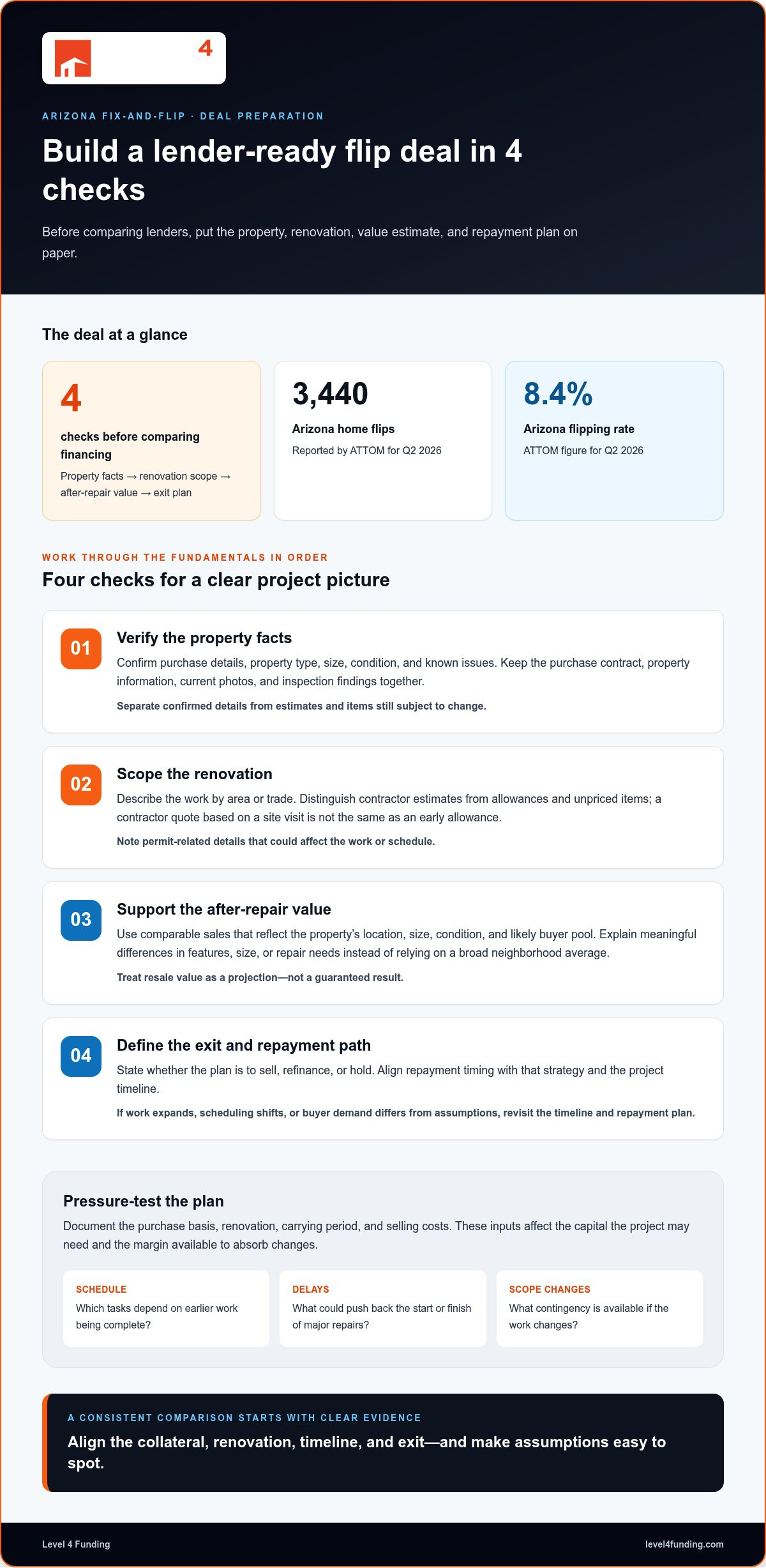
Before comparing financing, put the deal on paper. A lender can assess only the project you present, and loose assumptions make it harder to see where the plan holds up or where it could strain. A useful lender comparison starts with a documented, internally consistent deal, not a headline claim.
Work through the fundamentals in order:
- Verify the property facts. Confirm the purchase details, property type, size, condition, and known issues.
- Scope the renovation. Describe the work by area or trade, separating contractor estimates from allowances or unpriced items.
- Estimate the after-repair value. Use comparable sales that support the expected finished condition and likely buyer pool.
- Define the exit. State whether the plan is to sell, refinance, or hold, and align the repayment path with that strategy.
Then document the assumptions behind the project plan: purchase basis, renovation, carrying period, and selling costs. These inputs affect the capital the project may need and the margin available to absorb changes. Don’t present an estimate as a confirmed cost. A contractor quote based on a site visit may differ from an early allowance, especially if demolition reveals more work. Resale value is also a projection, not a guaranteed result.
Build a defensible property and renovation file
Keep the purchase contract, property details, renovation scope, contractor estimates, and working timeline together. Add current photos and inspection findings to show what needs attention. Note permit-related details that could affect the work or schedule, and label unverified assumptions clearly. Mark each item as confirmed, estimated, or subject to change so gaps are visible before they become surprises.
Pressure-test the schedule, too. Which tasks depend on earlier work being completed? What could delay the start or finish of a major repair? What contingency is available if the scope changes? These questions help you assess whether the expected repayment timing has room for real-world uncertainty.
Make the ARV and exit plan understandable
Support your after-repair value with comparable properties that reflect the subject’s location, size, condition, and relevant sale timing. Explain meaningful differences rather than relying on a broad neighborhood average. The ARV hard-money loan guide can help clarify how ARV fits into an investor’s financing analysis. For broader context, review REsimpli’s House Flipping Market Statistics, while keeping market-wide information separate from property-specific evidence.
A resale exit depends on selling the renovated property and using the proceeds to repay the project financing. A refinance or hold strategy has a different repayment plan and should be presented separately, not blended into a resale forecast. This distinction helps you identify the best hard money lender for fix and flip arizona by comparing proposals against one coherent project plan. Investors preparing an Arizona flip can explore Level 4 Funding’s private fix-and-flip financing.
How to Compare Arizona Hard Money Lenders Without Chasing One Headline
A low advertised rate or bold speed claim can grab attention, but it can’t tell you whether a lender’s structure fits your project. Compare proposals using the same deal facts, then read the complete written terms. A headline is only one part of the financing picture.
Use this scorecard to compare options side by side. Record what each written proposal says, and flag details that need clarification before you decide.
- Project fit: Does the proposal address your property, renovation scope, and planned exit?
- Eligible property: Does the stated property type and condition align with the deal being evaluated?
- Purchase funding: How does the proposal describe funding toward the acquisition?
- Rehab funding and draws: What does it say about renovation funds, draw requests, and the process for accessing them?
- Timeline: What timing is stated for the proposed financing and project milestones?
- Repayment and exit: How do the repayment structure and timing fit your sale, refinance, or hold plan?
Keep the comparison grounded in written details. Directory LTV ranges are general reference points, not guaranteed offers, and may not apply to your property, experience, or project structure. Don’t assume a broad range describes the amount available for your deal.
Which financing details deserve a side-by-side review?
Look beyond the loan amount. Compare how each proposal handles purchase funding, renovation funds, draw procedures, and repayment timing. Include the stated payment structure, fees, and any extension provisions or conditions described in the written materials. Don’t fill gaps with assumptions. If a term isn’t explained, flag it and resolve the question before comparing the total financing picture.
A proposal with a compelling rate may still be a poor match if its rehab funding structure or repayment timing conflicts with your construction schedule and exit. Another proposal may have a different headline but terms that align better with the project. Compare the full structure, not a single number.
How to weigh lender claims and proof points
Reviews, rankings, and funded-deal examples can add context, but they don’t establish fit for your property. Separate specific, verifiable examples or borrower accounts from broad claims such as “best” or “fastest.” Then consider whether an example resembles your project in property type, market, renovation needs, and financing structure. A deal completed elsewhere may not answer the questions your project raises.
For a clearer view of how fix-and-flip financing is framed, explore this fix-and-flip loans overview. Investors comparing project-specific terms can consider Level 4 Funding’s fix-and-flip financing. The best hard money lender for fix and flip arizona is the one whose documented terms fit your deal, not the one with the loudest headline.
Arizona Fix-and-Flip Lender Checklist: Prepare for a Better Comparison
A clear project file makes proposals easier to compare and gaps harder to miss. Before reviewing terms, organize the deal documents, local valuation support, schedule, and exit plan. Keep confirmed facts separate from estimates. That gives each proposal the same project picture to respond to, rather than leaving you to compare different assumptions.
Documents and assumptions to organize
Build one folder for the acquisition, property condition, renovation, value estimate, and planned exit. Make it easy to see what’s documented, what’s estimated, and what could still change. Include enough local detail to explain why your projected resale value makes sense for this property.
- Acquisition: Purchase contract and available property records, including location, type, size, and known condition issues.
- Renovation: A room-by-room or trade-by-trade scope, contractor estimates, relevant inspection findings, and current property photos.
- Schedule: A working timeline that identifies major work stages and dependencies, plus unresolved timing assumptions.
- ARV support: Comparable-sale details for the target market. For a Phoenix, Mesa, or Tempe property, use comps that reflect its location, size, condition, and relevant sale timing, then explain important adjustments.
- Exit: A clear summary of whether you plan to sell, refinance, or hold, and the assumptions behind that repayment path.
- Open items: Uncertain scope, pricing, schedule, or resale assumptions that could change the project plan.
Don’t bury uncertainty. If a repair allowance is preliminary or a resale assumption depends on specific work being completed, label it. Identify where scope or schedule changes could affect carrying time and repayment, then consider how the plan would respond. This won’t prevent delays or cost changes, but it can make the effect of changing assumptions easier to assess.
Questions that reveal practical project fit
Use your project file to make each financing discussion specific. Keep questions focused on the proposed transaction and record the answers alongside the written terms. The goal is to understand how the financing structure connects to your property, rehab work, and intended exit.
- How is this property type and its current condition evaluated?
- How does the proposed structure address the renovation plan and access to rehab funds?
- What draw procedures and payment timing are stated for this transaction?
- Which fees, conditions, repayment terms, or extension provisions appear in the written materials?
- How does the proposed repayment timing align with the project schedule and planned exit?
For additional renovation-financing context, review this hard-money rehab loan guide. Bring your organized project details to explore private fix-and-flip financing with Level 4 Funding, and compare the proposed fit against your documented plan.
Why Consider Level 4 Funding for an Arizona Fix-and-Flip Loan?
Level 4 Funding is a private real estate lender whose primary service is fix-and-flip loans. For investors comparing financing options, that focus makes the company a direct option for an Arizona investment property project.
The fit still comes down to your deal. A Phoenix renovation with one scope and resale plan isn’t the same as a project in Sedona or Tucson. Bring the property facts, renovation details, value support, schedule, and exit strategy into the discussion. Then compare the proposed financing structure with those documented needs. A project-level review is more useful than a broad claim.
Match Level 4 Funding’s offering to the project
Level 4 Funding serves investors in Phoenix, Scottsdale, Tucson, Glendale, Sedona, Flagstaff, Tempe, Mesa, and Buckeye. Investors in these markets can explore the company’s private fix-and-flip financing. Evaluate how the proposed structure aligns with your property, rehab plan, and repayment strategy, rather than relying on a city name alone.
Keep the comparison grounded in the transaction. Present the purchase details and property condition alongside the scope of work and supporting value assumptions. Explain how you expect to repay the financing, whether through a sale or another planned exit. Review the terms and structure for your specific project. Another investor’s experience, a general range, or a promotional claim cannot predict the terms for your deal.
Assess whether Level 4 Funding belongs on your shortlist for the best hard money lender for fix and flip arizona using the same criteria you apply to any proposal: does the project evaluation reflect the property, is the written financing structure clear, and does the repayment plan fit the intended exit?
Take the next step with a prepared deal
Before starting a financing conversation, assemble the core details that make your project understandable:
- Property: Location, purchase information, condition, and relevant photos or inspection findings.
- Renovation: A clear work scope, contractor estimates, and any items that remain uncertain.
- Value: Local comparable sales and the reasoning behind your projected after-repair value.
- Timeline and exit: A working project schedule and a specific repayment plan.
A prepared file gives the discussion a solid starting point. It also helps surface questions about scope, timing, and repayment before they get lost in a headline rate or broad promise. You don’t need to present every estimate as final. Label what’s confirmed and what could change, then use the project facts to guide the financing discussion.
Explore fix-and-flip financing with Level 4 Funding and bring your property, renovation, value, and exit details into the conversation.
Turn Your Deal Analysis Into a Clear Next Move
A financing decision shouldn’t rest on a single promise or a rushed comparison. Start by deciding which terms matter most to your project, identifying the assumptions you’re least certain about, and using those questions to guide the next conversation. That way, you’re not just looking for the best hard money lender for fix and flip arizona. You’re choosing financing with a clearer view of how it fits your investment plan.
You don’t need every detail to be perfect before taking action. You do need a grounded picture of the deal and a willingness to compare written terms against it. Keep your priorities in view, be direct about what the project requires, and base the next step on the information you gather.
Ready to explore financing for your Arizona flip? Explore fix-and-flip financing with Level 4 Funding and move forward with a clearer plan for your project.
Frequently Asked Questions
Can a first-time investor use hard money for an Arizona fix-and-flip?
Yes, a first-time investor may pursue hard-money financing, but lender criteria and experience expectations vary by transaction. To help a lender assess the request, accurately explain your role and any relevant real estate or renovation experience. Show how you’ll manage the project, including who is handling the work and how you’ll track costs. The best hard money lender for fix and flip arizona will evaluate the specific deal under its own criteria, so preparation does not guarantee approval.
Does credit score matter for a hard-money fix-and-flip loan in Arizona?
It can matter, but it’s only one possible part of a lender’s review. Hard-money financing often considers the property and transaction alongside borrower information, and the weight assigned to each factor can differ. Don’t assume asset-based means credit is irrelevant, or that a particular score guarantees a loan. Present accurate financial information and a consistent project plan so the lender can consider the request as a whole.
Can a fix-and-flip loan cover both the purchase and renovation?
Some fix-and-flip financing can address both acquisition and renovation, but the structure depends on the lender and project. Break out purchase funds and planned repair costs rather than presenting one combined figure. For the renovation portion, clarify which work the estimates cover, what remains provisional, and how funds are accessed under the written proposal. This helps you identify a mismatch between the planned work and financing structure before committing to a project.
What happens if an Arizona renovation takes longer than planned?
A longer renovation may affect carrying costs, repayment timing, and your expected sale or refinance. Before accepting a proposal, understand its stated loan term, payment obligations, extension provisions, and any related fees. Consider what could happen if a key repair takes longer or the resale plan shifts. Don’t build your budget around an assumed extension. If delays arise, reassess the timeline and project economics using the written terms.
Is a hard-money loan the same as a private-money loan for house flipping?
The labels can describe overlapping forms of non-bank real estate financing, but lenders may use them differently. Neither name tells you how a particular transaction is structured. Review the proposal’s collateral, borrower requirements, repayment schedule, fees, and renovation-funding process. Two loans described with similar labels may handle rehab draws or repayment timing differently, so compare the terms directly instead of relying on the category name.
Can I use an Arizona fix-and-flip loan for a property outside Phoenix?
Yes, an Arizona flip can be outside Phoenix if the lender serves that market and the deal fits its criteria. Level 4 Funding serves investors in Scottsdale, Tucson, Glendale, Sedona, Flagstaff, Tempe, Mesa, and Buckeye as well as Phoenix. For a property in one of these areas, build your resale estimate around relevant local sales, not Phoenix comparisons by default. The property’s location, condition, renovation plan, and exit still shape the project review.

About the author
Matt has a bachelor's degree in political science from Northern Arizona University and works at Level 4 Funding, a private lending company that offers hard money and rental home loans to real estate investors in 35 states.
With Matt's leadership, the firm has financed almost $300 million in loans for investment properties. He often helps real estate investors with rental property purchases, foreclosures, refinancing, and fix-and-flip projects. Matt has extensive experience in fix-and-flip, buy-and-hold, rental properties, and real estate sales. He has lived in Arizona for 43 years and is married with three children. Matt is licensed as a mortgage broker and loan originator in Arizona, with NMLS 2062278 and NMLS 1118493.
Equal Housing Opportunity. This is not a Good Faith Estimate, and it is not a Guarantee to lend; it should not be considered as such. Costs, rates, estimates, and terms can only be determined after a full application is completed. To the extent this message includes any tax or legal advice, this message is not intended or written by the sender to be used, and cannot be used, for legal or tax purposes or advice. This is an advertisement. Copyright © 2026. All rights reserved.