


How to Calculate the True Cost of a Hard Money Loan: Points, Rates, and Hidden Fees
September 25, 2026
Short-Term vs. Long-Term Hard Money Loans: Which Structure Fits Your Investment Strategy?
September 26, 2026
What if a real estate loan hinged less on a standard borrower checklist and more on the property, your project plan, and how you’ll repay? If you’re asking what is hard money lending, the unfamiliar terms can make the process feel like a black box. For Phoenix investors, understanding what a lender may evaluate can help you assess financing for a purchase or renovation before you count on it.
Hard money lending can offer another route for investment deals, but it isn’t automatically the right fit. Loan costs, timelines, and repayment risk matter, especially if renovations or a sale take longer than planned. This guide explains how the lending model works, which property and project details may influence a lender’s review, and what to check before discussing your deal. You’ll also find ways to test your repayment plan and decide whether exploring hard money financing makes sense for a Phoenix real estate project.
Key Takeaways
- Learn what is hard money lending and why the term describes a lending approach, not one universal loan product or approval standard.
- Understand the typical deal-review process, from sharing project details to closing and repayment, while allowing for lender-specific steps and timing.
- Compare hard money, bank financing, and private lending by their focus and diligence, then review the actual written terms for each option.
- Assess repayment risk before signing by considering what could happen if renovation, sale, or refinancing takes longer than planned.
- Prepare to discuss an Arizona deal by clarifying the project, organizing documents, and comparing written terms.
What Is Hard Money Lending in Real Estate?
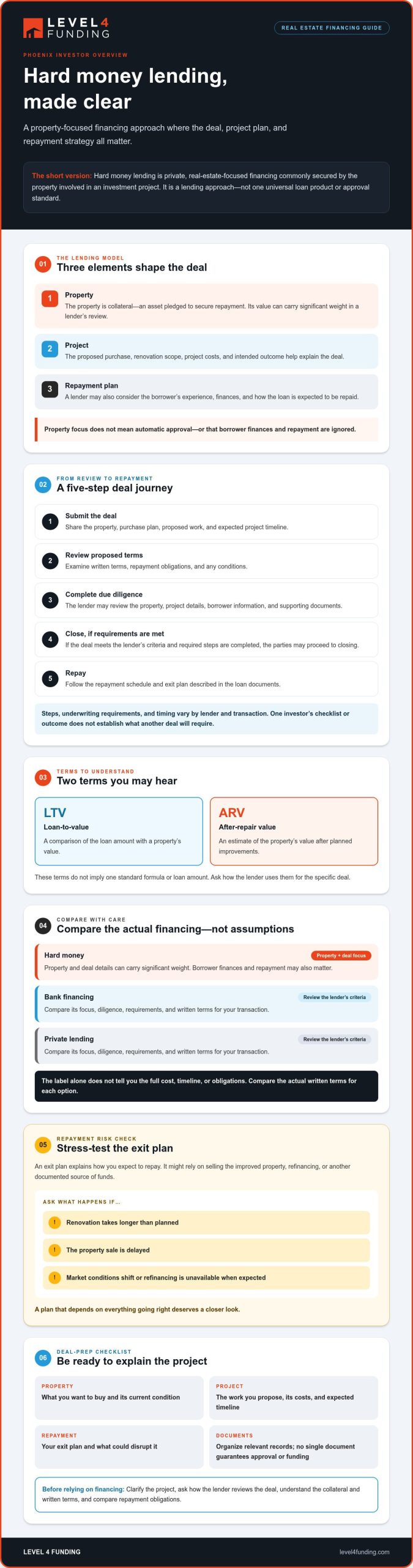
Hard money lending is private, real estate focused financing commonly secured by the property being purchased, renovated, or used in an investment project. The phrase describes a lending approach, not one standard loan product or universal set of approval rules. Terms and review criteria vary by lender.
Hard money lending emphasizes the property and deal as security for a loan, but that focus doesn’t guarantee approval or mean the borrower’s finances and repayment plan are ignored. The property is collateral, an asset pledged to secure repayment. If the borrower doesn’t repay as agreed, the lender may have rights involving that property under the loan documents and applicable law. For a neutral overview of the term, see Hard money loan.
What does hard money lending mean for an investor?
Think of it as a relationship among three elements: you bring a property and project, a lender reviews the proposed deal, and, if approved, the loan is secured by the property. For example, a Phoenix investor might seek financing to buy a home that needs work and plan to renovate it. The lender would assess the deal under its own process. This example doesn’t imply approval or particular terms.
What does “asset-based” mean in a hard money loan?
“Asset-based” means the property and its value can carry significant weight in underwriting, the lender’s review of whether and how to make the loan. The project matters too: its scope, costs, and intended outcome help explain the deal. But the property isn’t the whole picture. A lender may also consider the investor’s experience, finances, and repayment plan.
That distinction matters. A property that appears valuable doesn’t erase repayment risk, and a promising renovation plan doesn’t establish that a lender will approve financing. Each lender sets its own criteria, so don’t assume every hard money lender weighs the same factors or requests the same documents.
Before discussing a specific Phoenix deal, be ready to explain what you want to buy, what work you plan to do, and how you expect to repay. These details make the conversation more concrete and help you ask about the lender’s review, collateral, and written terms.
How Hard Money Lending Works: From Deal Review to Repayment
Once you understand what is hard money lending, the next question is how a deal moves from an idea to repayment. The process often follows a practical sequence, but there’s no universal timeline. The lender, property, and transaction can all affect the steps. For a detailed walkthrough of how does hard money lending work from property review through closing and repayment, see this Phoenix-focused guide.
- Submit the deal: Share the property, purchase plan, proposed work, and expected project timeline.
- Review proposed terms: If the lender is interested, examine the written terms, including repayment obligations and any conditions.
- Complete due diligence: The lender may review the property, project details, borrower information, and supporting documents.
- Close: If the deal meets the lender’s criteria and all required steps are completed, the parties may proceed to closing.
- Repay: Follow the repayment schedule and exit plan described in the loan documents.
Underwriting requirements vary by lender and transaction, so one investor’s checklist or outcome doesn’t establish what another deal will require.
What information might a hard money lender review?
Be ready to explain the property’s condition, how you plan to acquire it, what renovations you propose, and how long you expect the work to take. A lender may also ask about your investment experience, finances, and repayment strategy. Organize relevant records, but don’t assume any single document guarantees approval or funding.
A lender may discuss loan-to-value (LTV), a comparison of the loan amount with a property’s value. Some may also consider after-repair value (ARV), an estimate of the property’s value after planned improvements. Neither term implies one standard formula or loan amount. For a general explanation of how hard money loans are structured, see the Corporate Finance Institute’s overview.
How do repayment and exit plans fit together?
Your exit plan explains how you expect to repay. It might involve selling the improved property, refinancing, or using another documented source of funds. Match that plan to the project schedule, then consider what happens if work takes longer, market conditions shift, or refinancing isn’t available when expected. A plan that depends on everything going right deserves a closer look.
For a document-preparation checklist, review this hard money loan requirements guide. If you’re assessing a Phoenix investment, you can also explore whether Level 4 Funding’s hard money loans may fit your project. Confirm current criteria and terms directly before relying on them.
Hard Money Lending Compared With Other Real Estate Financing
What is hard money lending compared with other financing? The useful distinction isn’t a blanket claim that one option is faster, cheaper, or easier. Consider how a lender evaluates your specific property and project, what diligence it requires, and whether the written repayment terms fit your plan.
| Financing type | Typical focus | Diligence to compare |
|---|---|---|
| Hard money | Often emphasizes the property, its value, and the investment plan. | Property review, project details, borrower information, and exit plan may be considered. |
| Bank financing | May follow established underwriting processes that assess borrower and property factors. | Ask about eligibility, required financial records, review steps, and repayment terms. |
| Private lending | A broad category describing financing from a private source; the lender’s approach can vary. | Confirm how the lender evaluates the deal, what documentation is needed, and all written terms. |
Hard money lending versus traditional bank financing
Hard money underwriting may give substantial attention to the asset and proposed project, while conventional bank financing may apply a more standardized review of borrower finances and property details. These are broad tendencies, not guarantees. A hard money loan doesn’t always close faster or have looser requirements. Compare eligibility, expected process, repayment schedule, and total loan terms across the actual offers you’re considering. See this hard money loan versus bank loan comparison for another perspective.
Hard money lending versus private lending
“Private lender” identifies a source of financing, not one fixed underwriting method. A hard money lender may be a private lender, but private lenders don’t all evaluate or structure loans the same way. Ask how the lender weighs the property, project, borrower qualifications, and repayment plan. Don’t assume two offers described as private financing are interchangeable. This private lender versus hard money lender comparison explores the distinction.
Speed, flexibility, cost, and risk depend on the deal and the specific written terms, not the label alone. Compare the full obligations and timeline with your project, including the repayment plan if renovations stall or your intended exit takes longer than expected. The best fit is the option whose requirements and risks you understand before signing, not simply the one that sounds fastest.
Hard Money Lending Risks: What Investors Should Check Before Signing
Property-backed financing still carries real risk. The collateral focus doesn’t make a loan risk-free or automatically right for your deal. If renovations run over schedule, a sale takes longer than expected, or refinancing falls through, repayment may still be due under the loan documents. Before committing, test your plan against delays and read the written terms closely.
Which loan terms deserve close review?
Don’t rely on a verbal summary or headline rate. Review the complete agreement and clarify how each obligation works. Pay particular attention to:
- Interest and fees: How interest is calculated, when it accrues, and what fees apply.
- Payments and maturity: The payment schedule, the date the balance is due, and any written extension options and conditions.
- Collateral and default: Which property secures the loan, what counts as default, and what remedies the documents describe.
- Personal obligations: Whether you’re asked to provide a personal guarantee or accept obligations beyond the collateral.
Ask for unclear terms to be explained in writing. For background on cost components investors may encounter, see this hard money loan rates guide. Your actual costs and obligations depend on the specific offer and documents.
How can investors pressure-test an exit plan?
Build a downside case before you sign. What if contractors uncover additional work? What if the project exceeds its budget or timeline? What if the resale market shifts, or a refinance lender doesn’t approve the deal when you expect? Consider how each delay affects carrying costs and your ability to repay by the maturity date.
Identify a realistic backup repayment source, not just a hoped-for sale or refinance. Then check whether the plan still works under less favorable conditions. If it doesn’t, reconsider the project, financing structure, or timing before taking on the obligation.
For an Arizona transaction, don’t assume licensing, disclosure, or other legal requirements apply identically to every loan. Ask qualified Arizona counsel or consult relevant official sources about the specific lender, borrower, property, and transaction. Independent legal, tax, and financial advice can help you understand consequences before signing.
Want to discuss a real estate deal and its financing needs? Explore hard money lending with Level 4 Funding, and confirm current criteria and written terms for your specific project.
How to Explore Hard Money Lending for an Arizona Real Estate Deal
Understanding what is hard money lending is only the starting point. Before you approach a lender about a Phoenix purchase or a project elsewhere in Arizona, turn the idea into a clear deal summary. A defined project, realistic budget, and credible repayment plan give you a better basis for asking questions and comparing potential financing.
What should an investor prepare before contacting a lender?
Gather the essentials before starting the conversation. You don’t need to guess what every lender will require, but organizing the deal basics makes it easier to identify what’s missing.
- Property and purchase: Address, current condition, and purchase details.
- Project scope: Planned work, estimated budget, and proposed timeline.
- Repayment plan: Your expected exit, such as a sale, refinance, or another documented source.
- Investor background: Relevant experience and financial information a lender may request.
Ask each lender what criteria, documents, and contingencies apply to your transaction. Don’t assume a checklist for one property or loan type will fit another.
How does the project type shape the financing conversation?
A fix-and-flip project centers on acquiring and improving a property, so expect to explain the purchase, renovation scope, and intended exit. A construction project involves building work, while commercial property financing concerns an investment property used for business purposes. These are different deal profiles, and the documents, underwriting, and available terms can vary. Whether your project is in Phoenix, Scottsdale, Tucson, Glendale, Sedona, Flagstaff, Tempe, Mesa, or Buckeye, describe the actual property and plan rather than relying on a broad loan label.
Compare written offers on their complete terms and timing, then consider whether your budget and repayment plan still hold up if the project changes. For Arizona-specific legal or licensing questions, verify details with qualified counsel or relevant official sources. Don’t treat general information as a determination of what applies to your loan.
When should an investor explore Level 4 Funding?
If your project is defined and you’re ready to compare options, Level 4 Funding is one potential source of private real estate financing to explore. Its stated offerings include fix-and-flip, construction, and commercial property loans. That doesn’t mean every product or term will fit every deal. Confirm current availability, criteria, and terms for your specific property and plan. If you’re also curious about the other side of these transactions, this guide on how to become a hard money lender in Arizona explains what capital planning, deal screening, and risk controls look like from the lender’s perspective.
Explore real estate financing options and decide whether a conversation about your Arizona project makes sense.
Put Your Real Estate Deal in Motion
Now you have a clearer answer to what is hard money lending: private real estate financing where the property and project can shape the review, but approval and terms depend on the specific lender and transaction. The next move is to match your financing choice to the work ahead and the way you expect to repay. A promising property is only part of the equation.
Before you commit, make sure the written terms, project timeline, and backup repayment plan work together. If your Phoenix or Arizona investment needs private financing, Level 4 Funding works with real estate investors and offers fix-and-flip, construction, and commercial property loans. Availability and fit depend on the deal, so review the current details.
Explore real estate financing options with Level 4 Funding and take the next step with a clearer view of your project, obligations, and options. A well-prepared deal starts with informed questions.
Frequently Asked Questions
What is hard money lending?
Hard money lending is private financing for real estate, commonly secured by the property involved. If you’re asking what is hard money lending in practice, think of a deal review that may weigh the asset, project plan, borrower information, and repayment strategy. Property collateral doesn’t guarantee approval or mean the lender will ignore your qualifications. Underwriting, eligibility, and terms vary, so read the written agreement carefully before proceeding.
How does hard money lending work?
An investor shares information about a property and proposed project, then the lender reviews the deal and may request supporting documents. If the lender approves, both parties agree to written terms, complete the required diligence, and proceed to closing according to those terms. The borrower then makes required payments and repays as agreed. Steps and timing depend on the lender and transaction, so confirm the process directly. For a step-by-step breakdown of how does hard money lending work for Phoenix real estate investors, including what to prepare and what to examine before signing, see this detailed guide.
Is hard money lending only based on collateral?
No. Collateral can be an important part of underwriting, but it may not be the only factor. A lender may also review the project scope, your experience, finances, and repayment or exit plan. Criteria vary by lender and deal. Don’t assume that property security guarantees approval, removes personal obligations, or shields you from losses. Check what the lender evaluates and what you’re agreeing to in the actual loan documents.
Who uses hard money loans?
Real estate investors may consider hard money loans for acquisitions, renovations, construction, or other investment projects. Whether the financing fits depends on the property, project plan, repayment strategy, written terms, and your ability to manage risk. It isn’t automatically suitable for every buyer or transaction. Compare available options and consider qualified advice before committing. For instance, a Phoenix investor should assess whether the project timeline supports the proposed repayment plan.
What happens if a hard money loan is not repaid on time?
Consequences depend on the signed loan documents and applicable law. A late payment or default may lead to fees, other contractual remedies, or action involving the collateral. Some agreements may also create additional borrower obligations. Before signing, review the maturity date, default terms, extension provisions, and any foreclosure language. If you’re considering an Arizona deal, ask a qualified Arizona attorney to explain how the specific documents may apply to your situation.
How do I choose a hard money lender in Arizona?
Compare written terms, underwriting criteria, payment schedule, fees, maturity date, collateral requirements, and the process for your specific property and project. Ask how delays or project changes could affect your obligations, and check relevant licensing and disclosures through authoritative sources. Understanding what lenders evaluate from their own perspective — including capital planning, deal screening, and default risk — can also sharpen your questions; see this overview of how to become a hard money lender in Phoenix and Arizona for that lender-side context. Level 4 Funding lists Phoenix, Scottsdale, Tucson, Glendale, Sedona, Flagstaff, Tempe, Mesa, and Buckeye among its Arizona markets. Verify current coverage, requirements, and product availability directly before relying on them.

About the author
Matt has a bachelor's degree in political science from Northern Arizona University and works at Level 4 Funding, a private lending company that offers hard money and rental home loans to real estate investors in 35 states.
With Matt's leadership, the firm has financed almost $300 million in loans for investment properties. He often helps real estate investors with rental property purchases, foreclosures, refinancing, and fix-and-flip projects. Matt has extensive experience in fix-and-flip, buy-and-hold, rental properties, and real estate sales. He has lived in Arizona for 43 years and is married with three children. Matt is licensed as a mortgage broker and loan originator in Arizona, with NMLS 2062278 and NMLS 1118493.
Equal Housing Opportunity. This is not a Good Faith Estimate, and it is not a Guarantee to lend; it should not be considered as such. Costs, rates, estimates, and terms can only be determined after a full application is completed. To the extent this message includes any tax or legal advice, this message is not intended or written by the sender to be used, and cannot be used, for legal or tax purposes or advice. This is an advertisement. Copyright © 2026. All rights reserved.