

Wholesale Real Estate Financing in Phoenix: Investor Guide
October 17, 2026
Michigan Hard Money Lenders: How to Find and Qualify for Private Real Estate Financing in the Great Lakes State
When time and rehab budgets matter, finding reliable michigan hard money lenders is the difference between closing a deal and watching it slip away. This guide shows where active private lenders fund in Michigan, what underwriters require for fix-and-flip, bridge, construction, and rental loans, and how to prepare comps, rehab budgets, title paperwork, and an exit plan that wins approval. Expect concrete LTV, rate, fee benchmarks and a short checklist you can use to speed funding in Detroit, Grand Rapids, and other Michigan markets.
1. Michigan housing context and why hard money fits now
Direct point: Michigan currently produces a steady stream of short-term investor opportunities where speed and guaranteed rehab capital beat bank timelines. Markets with deep distress or active rehab demand — think Detroit neighborhoods, Grand Rapids infill, parts of Flint, and college-town rental corridors — move faster than traditional underwriters can handle.
Where hard money closes gaps
- Speed-first acquisitions: Time-sensitive bank-owned auctions and off-market buys require funding in days, not weeks.
- Large or unconventional rehabs: Properties with significant structural work or nonstandard layouts that trip automated mortgage overlays.
- Short bridge or construction needs: Quick cash to start demolition, secure permits, or bridge to a longer-term refinance.
- Small multifamily and duplex flips: Lenders who underwrite on ARV and comps rather than borrower income open deals banks will decline.
Practical trade-off: Hard money costs more — higher rates, points, and holdbacks — but it buys two things you often cannot buy otherwise: certainty of close and control over rehab timing. That matters for deals where missed close equals lost deposit or where contractor schedules demand immediate pay. Treat higher cost as a tactical tool, not a default capital structure.
Michigan-specific constraint: Title and tax calendars are a recurring snag. County tax liens, unpaid water bills, or municipal code enforcement actions are common on vacant inventory and will stall funding unless disclosed and addressed before application. Lenders often require a clear cure plan or resolution timeline — not an open-ended promise — before they fund.
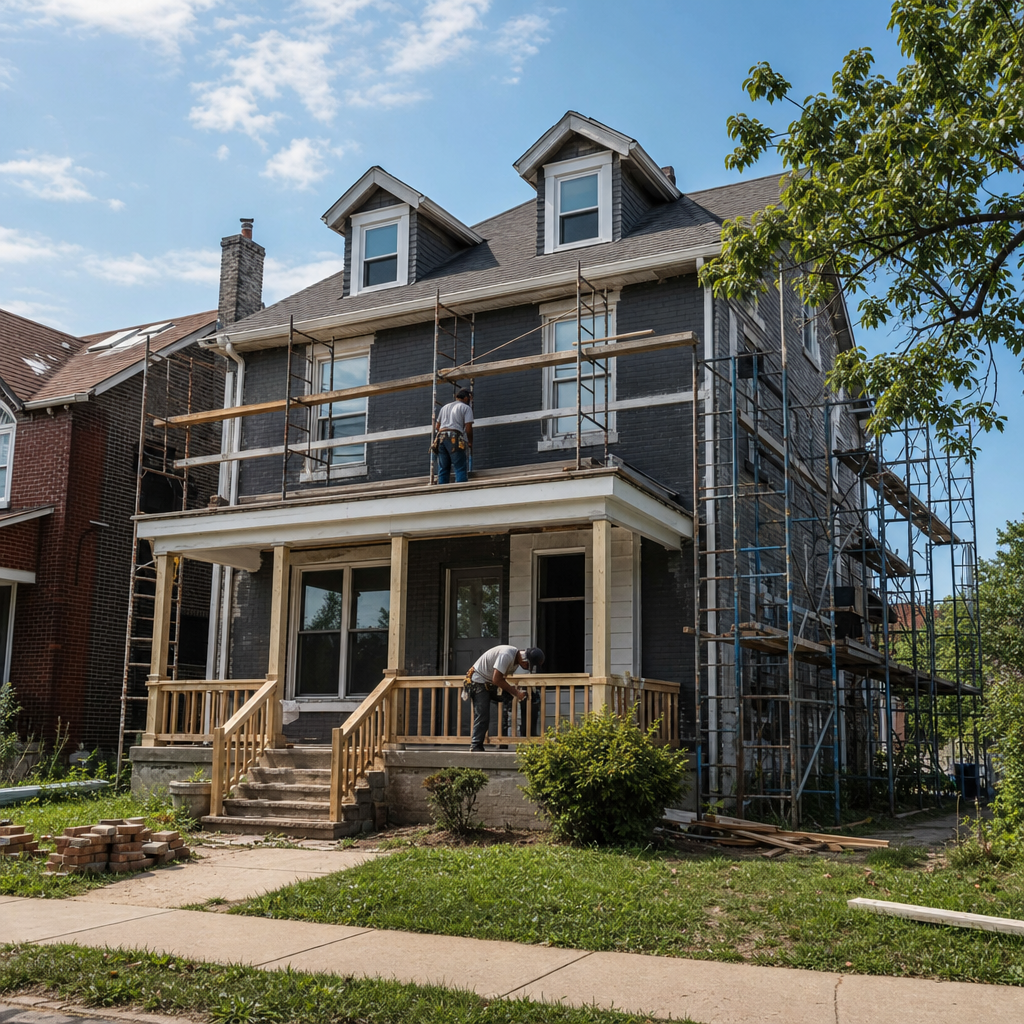
Concrete example: In Detroit you might find a boarded single-family listed at $35,000 with a realistic ARV of $95,000 after a heavy rehab. A private lender willing to underwrite to 65 percent of ARV can deliver a bridge that covers purchase and part of the rehab so you can close an auction purchase immediately and start work while arranging a 6-12 month exit. That speed prevents losing the asset and gives time to prove the scope to a permanent lender.
Common misread: Investors assume hard money is only for flippers. In practice, private lenders also sponsor short-term bridge-to-rental and construction financings in Michigan when the exit is credible and the property metrics check out. The difference is documentation — lenders want cashflow evidence for rentals and staged draws for construction, not just a handshake.
Where investors often go wrong: They try to use hard money as a long-term capital plan without confirming the lender offers rental or construction products suitable for longer holds. That mismatch creates expensive re-finance or sale pressure mid-project. Always verify product fit up front and align your exit before you incur hard-money pricing.
Next consideration: Before contacting lenders, verify clear title and pull three conservative comps for your submarket; if you need guidance on lender pricing and effective cost, read Interest on Hard Money Loans: Rates, Terms & Negotiation and check county records via Michigan LARA for licensing and registration context.
2. Where to find hard money lenders that will fund Michigan deals
Direct routes matter more than discovery. In practice you get funded fastest by choosing one of three paths and working it aggressively: national private lenders that list Michigan on their coverage map, regional or local private lenders and funds, or investor marketplaces and networks that aggregate private lenders. Each path exists because it solves a different problem — speed, price, or dealing with imperfect title — and you should pick the path that matches the constraint that matters on your deal.
Where to look — and what you’ll actually get
- National private lenders. Lenders such as Level 4 Funding and other institutional hard money shops typically offer the fastest closes (24–72 hours on clean files) and standardized products across counties — expect predictable LTVs and quicker funding but not the cheapest points.
- Regional/local private lenders. Smaller Michigan shops or local funds will price more competitively on cleaner deals and can be flexible on title quirks, probate, or municipal liens, but they usually take longer to underwrite and may require local introductions.
- Online marketplaces and broker networks. Platforms and forums like BiggerPockets are good for rate discovery and finding multiple term sheets quickly, but they add another hand in the process and often slow underwriting when county-specific issues appear.
- Deal channels that source inventory. Auction sites, bank REO lists, and county tax foreclosure sales produce the time-sensitive deals that trigger hard money use. These channels are where speed beats cheapest cost — you need a lender ready to move the moment the gavel drops.
- Local partners who accelerate funding. Title companies, closing attorneys, and contractors with lender experience are worth finding first. A lender will move faster if you present a known local closer and verified contractor bids.
Trade-off to accept: faster funding usually costs more. If your timeline is the constraining factor, pay the premium for a national quick-fund lender. If the deal has title or code complications, a local lender who knows county practice will often save you money and headaches even if they take longer.
Practical vetting checklist (60–90 second calls): confirm the lender funds in your county, ask for a sample term sheet and typical LTV for the property type, verify required title company or attorney, and ask stated turn time for clean files. If you skip these checks you’ll waste time with lenders who look national but don’t actually close in your county.
Concrete example: A Grand Rapids investor needed a two-week bridge on a small duplex. A national lender committed and wired in 48 hours but charged higher points and required an out-of-network closer. A local private fund required an extra five business days but accepted the local title company, waived one point for the existing relationship, and handled a minor municipal lien without delaying close. The right choice depended on whether the investor could absorb the extra fee or needed the property under contract immediately.
Local expertise often beats headline rate when properties have title, tax, or municipal issues. Cheap rates are useless if a lender refuses to close because of a county-specific problem.
One working judgment investors miss: marketplaces give you more term sheets but rarely beat a direct relationship for speed and flexibility. Use marketplaces for comparison, not as your primary channel when the clock is short.
Next practical step: pick one lender from each path (national, local, marketplace), run the 90-second vetting script, and prioritize the lender whose coverage and title experience match the single biggest risk on your deal.
3. Exactly what lenders look for on Michigan deals
Property economics first. Hard money underwriters place the property and exit plan ahead of personal credit scores. If the numbers and comps do not support a clean exit at a conservative ARV, most Michigan hard money lenders will either reduce LTV, add large holdbacks, or decline the file.
Property-first underwriting: what matters and how strict they are
- ARV and comps: Lenders expect three credible comps within six months and a sensible adjustment rationale. Weak or out-of-area comps are a fast deal-killer.
- Loan-to-value limits: Expect underwriters to cap loans at roughly 60–70 percent of ARV for most residential rehab deals; commercial or high-risk property types will be lower.
- Rehab reserves and line-item budgets: Lenders want either a detailed line-item budget with contractor bids or a reserve equal to 10–20 percent of ARV. Vague spreadsheets get reduced proceeds and larger inspection holdbacks.
- Title and tax status: Clear title, no unresolved tax liens, and no active municipal code enforcement are nearly mandatory for funding in Michigan. Lenders will request preliminary title reports or commitments early.
- Marketability and neighborhood: Lenders underwrite to how fast the property will sell in that submarket. Stable neighborhoods get better LTV and pricing than high-turnover or distressed corridors.
Practical trade-off: pushing for a higher LTV is tempting when your cash is tight, but expect higher rates, bigger points, and stricter holdbacks. In practice, a slightly lower LTV with a clean inspection-draw schedule closes faster and reduces net cost.
Borrower, exit, and deal-mechanics tests lenders run
Experience and exit clarity matter more than a perfect FICO. Lenders prefer borrowers who can show three recent flips or a contractor relationship with verifiable scope-of-work and timelines. If your personal credit is weak, a strong track record, conservative budget, and a clear exit (sale, refinance, or staged cash-out) will carry the file.
- Proof of funds and cash-in: Lenders routinely require evidence you can cover down payment, closing costs, and unforeseen overruns—expect to show bank statements or investor commitments.
- Recourse & guarantees: Many Michigan hard money loans are recourse or require personal guarantees; be prepared to negotiate this but do not assume nonrecourse is standard.
- Holdbacks, draw schedules, and inspections: Expect staged draws tied to inspections or appraiser verification. This impacts cash flow and timing—factor inspection days into your timeline.
Judgment call many investors miss: lenders do not underwrite hypothetical upside. They underwrite a conservative sell or refinance. Overstating ARV or relying on optimistic neighborhood turnaround without documented comps is the #1 reason approvals stall.
Concrete example: Suppose ARV is $150,000 and the lender caps at 65 percent of ARV — maximum loan size is $97,500. If your purchase is $85,000 and rehab is $35,000, the lender will require a rehab holdback and likely ask you to bring cash at close (often $12,500–$20,000 depending on holdback rules). Even with approved terms, inspection-based draws mean you only access a portion of rehab funds until milestones are met.
Red flag: inconsistent comps, missing contractor bids, or unresolved tax liens kill approval faster than a low credit score.
If you want friction-free approvals in Michigan, do three things before you submit: lock down three local comps with adjustments, get at least one detailed contractor bid and permit plan, and pull a preliminary title to spot taxes or probate early. If you skip these, expect higher fees or a no on funding — and slower closings.
For Michigan-specific regulatory checks, start with Michigan LARA to confirm any licensing questions, and use investor forums like BiggerPockets to vet lender practices. These steps save time and prevent surprises at underwriting.
4. A step-by-step qualification checklist and sample application for Michigan deals
Start with a lender-ready package, not a half-finished file. Lenders decide within minutes whether a Michigan deal is worth underwritable — the paperwork you hand them must show clear value, a realistic rehab plan, and an exit that actually works in the Michigan market you are buying in.
Qualification checklist — what to assemble before you call a lender
- Purchase agreement: fully executed, with earnest money receipt and closing date.
- Preliminary title search or recent title commitment: if you do not have one, tell the lender what county and whether there are tax liens or probate flags.
- Three comps with links or screenshots: comparable sales within 6 months, same neighborhood, adjusted explanations for condition differences.
- Detailed rehab estimate: line-item budget and timeline, plus at least one contractor bid that matches the budget.
- Property photos and neighborhood photos: exterior, interior, roof, mechanicals — lenders will not underwrite blind.
- Borrower profile: one-page resume with previous projects, social proof (photos of completed flips), and proof of funds for down payment.
- Projected exit strategy: sale price or refinance assumptions, timeline, and backup exit if market shifts.
- Entity documentation: if applying as an LLC include operating agreement and EIN; if personal, provide ID and recent bank statements.
- Municipal and tax checks: printouts showing current tax status and any code violations in county or city portals.
Practical trade-off: applying through an LLC can limit personal exposure but usually triggers more paperwork and slower underwriting. If speed matters, apply personally and accept a personal guarantee; that will often get you funded faster and at only slightly worse pricing.
Sample application package and exact fields lenders want
| Field | Sample content (what to include) |
|---|---|
| Property address | 1234 Saginaw St, Grand Rapids, Kent County, MI |
| Purchase price | $150,000 |
| After Repair Value (ARV) | $240,000 — include 3 comps with URLs and short adjustments |
| Rehab budget | $50,000 — attach line-item estimate + 2 contractor bids |
| Requested loan | $168,000 (70% of ARV) |
| Loan purpose | Fix-and-flip short-term loan, 12 months |
| Borrower experience | 4 flips in Michigan last 24 months; attach brief portfolio |
| Exit strategy | List at ARV within 6 months; backup cash-out refinance with local mortgage partner |
| Title / tax notes | No tax liens; probate flagged on adjacent lot (explain mitigation) |
Concrete example: For the sample above a lender underwriting to 70 percent of ARV will offer a maximum loan of $168,000. With a $50,000 rehab budget and a $150,000 purchase, borrower equity required at close is roughly $32,000. If the lender charges 3 points ($5,040) and 11 percent interest for a 12-month term (≈$18,480), the upfront and carrying cost is about $23,520 — a real figure to plug into your deal returns before you list the property.
What lenders check quickly and kill deals for: sloppy comps and rehab budgets that lack contractor backing. Overstated ARV is the single fastest way to lose credibility. Lenders accept conservative math; they do not accept optimism without proof.
Sample cover email to a Michigan hard money lender: use a crisp, one-paragraph pitch followed by attachments. Example: We are requesting $168,000 (70% ARV) on 1234 Saginaw St, Grand Rapids. Purchase price $150,000; ARV $240,000; rehab $50,000 (attached detailed budget and contractor bid). No tax liens, preliminary title attached. Exit: list at ARV within 6 months. Borrower: LLC with 4 completed flips in Michigan (attached portfolio). Please advise required next steps and typical timeline.
Judgment call investors miss: price and speed are negotiable, but transparency is not. If your package hides issues the lender will widen spreads, add holdbacks, or refuse. You get better pricing by showing the problem and your cure plan upfront — that converts skepticism into a conditional yes.

Next consideration: once your package is accepted, confirm draw schedule, inspection requirements, and any holdback percentages before closing — those change cashflow and can delay rehab start if not negotiated up front. See Interest on Hard Money Loans: Rates, Terms & Negotiation for how fees factor into effective cost and leverage that when you compare offers.
5. How to evaluate and compare hard money offers
Lowest headline rate is not the cheapest loan. Hard money deals are package offers: rate, points, holdbacks, recourse, draws, and timelines all change the real cost and your ability to execute the rehab on schedule.
A simple framework to compare offers
Use the following four lenses for every term sheet. Treat any lender that refuses to put these items in writing as a red flag.
- Effective cost. Convert points and upfront fees into a single annualized percentage on the capital you actually receive – include inspection fees and interest reserve costs.
- Liquidity and timing. Compare how much cash you close with after deposits, and how quickly draws release rehab funds – a low-rate loan with a large holdback can kill a rehab schedule.
- Risk allocation. Note recourse, personal guarantees, cross-collateral clauses, and default cure timelines – these materially affect downside risk.
- Operational fit. Draw schedule, inspection frequency, required contractors or permit conditions, and the lender's local closing process.
What to quantify — not just look at
Do the math on three numbers: cash at close, monthly carrying cost, and cash at project completion. Those reveal whether a cheaper rate actually improves your return or simply shifts cost into delayed capital and inspection headaches.
| Feature | Offer A – Fast Nationwide Lender | Offer B – Local Regional Lender |
|---|---|---|
| Rate | 10.5% | 9.0% |
| Points / Origination | 3 points | 5 points |
| Max LTV | 65% of ARV | 70% of ARV |
| Holdback | 20% of rehab until 50% complete (inspections) | 10% retainer released monthly |
| Recourse | Limited recourse – personal guarantee on defaults | Full recourse – guarantor required |
| Effective 12-month cost (approx) | 15.8% (includes points + interest + fees) | 16.2% (lower rate offset by higher points) |
Concrete Example: You need $80,000 to close and execute a 6-month rehab. Offer A charges 3 points and 10.5 percent interest with a 20 percent holdback; you walk away from closing with roughly $62,400 in usable funds once the holdback is reserved. Offer B looks cheaper on rate but charges 5 points and releases holdbacks monthly, so you only net $60,000 at start. Offer A funds faster and is preferable if a delayed draw will extend your timeline and eat profit.
Tradeoff to accept: lower rate often comes with tighter operational controls. If you are a repeat borrower with clean draws and local contractor references you can push back on aggressive holdbacks; if not, prioritize predictable draw mechanics over small basis-point savings.
If a lender will not give a sample term sheet or name the title company and draw inspection process, treat pricing as unreliable.
If you want a practical model, run a sensitivity on holdback levels and timing – a 10 percent extra holdback can add weeks to your rehab and hundreds to thousands in soft costs. For more on negotiating rate versus terms see Interest on Hard Money Loans: Rates, Terms & Negotiation. For market context use the BiggerPockets primer on hard money at BiggerPockets.
Next consideration: before you sign, get the lender to model your worst-case timeline – longer rehab or longer sale – and show the cash flows under that scenario. If their math breaks under modest slippage, the cheap headline rate is a liability.
6. Michigan-specific pitfalls and red flags to avoid
Direct point: Michigan deals fail or get repriced not because the lender is picky but because title, tax, and local code problems are common and treatable only if caught early. Prepare to stop a deal for a few days to fix an unexpected lien or permit issue; it is cheaper than paying higher rates or losing the deal.
Common Michigan title and property pitfalls
- Unpaid property taxes and tax liens: Michigan counties often place liens and assessments that must be cleared before funding; a $5,000 county tax lien on a $60,000 purchase will wipe out your cushion and trigger lender holdbacks.
- Probate and estate complications: Properties transferred via informal means or with pending probate create chain of title problems that delay or stop funding.
- Municipal code enforcement and blight violations: Cities like Detroit and some college towns aggressively ticket code violations; lenders will not fund into unresolved enforcement cases.
- Non permitted work and open permits: Lenders will insist on verified permits or a documented cure plan; undocumented work raises insurance and resale risk.
- Septic, well, and environmental red flags in rural or industrial parcels: Older industrial lots and rural properties can have contamination or failed septic systems that reduce ARV or require expensive remediation.
Danger signs in lender behavior
- Opaque fee schedules or verbal-only terms: If the lender will not provide a sample term sheet with all fees, walk away. Hidden fees show up as expensive points or surprise closing costs.
- Refusal to use a local closing agent or title company: Lenders that force out of state closings or unknown vendors increase wire fraud and title risk; insist on a Michigan licensed title agent.
- No preliminary title review before funding commitment: A lender promising instant funding without reviewing title is a red flag; they are either too small or will reprice after discovery.
- Unwillingness to give a clear holdback schedule: Vague holdbacks become leverage against borrowers mid project. Get milestones, inspector names, and payment timing in writing.
Tradeoff to accept: Faster funding costs money and usually increases recourse. If you need speed choose a credible national private lender but expect higher rates and stricter recourse terms. If you prefer cleaner terms and lower points, accept a slightly slower process and prioritize lenders willing to use local title services.
Concrete Example: A flipper in Grand Rapids found a 90 day redemption period after a prior owner tax foreclosure. The lender required taxes and three months of penalties cleared before funding, which pushed the closing two weeks and required the borrower to inject an extra 10,000 at close. The borrower avoided a higher-rate bailout by insisting on a preliminary title report before signing the purchase contract.
Top red flag: any lender that asks you to wire funds before providing a full term sheet and named Michigan closing agent is not worth the risk.
Where to check: Verify licensing and complaints at Michigan LARA and read lender practical guidance on underwriting at BiggerPockets. For pricing context and negotiation tactics see our piece on hard money interest and terms at Interest on Hard Money Loans.
Next consideration: Before you submit an application, secure the title report and a contractor written plan for any work flagged by code or permits. If you cannot cure a material defect quickly, price it into your offer or step away.