

Phoenix Real Estate Investment Clubs: Beginner’s Guide
October 18, 2026
Hard Money Loans in New Jersey: Rates, Requirements, and the Best Lenders for Garden State Investors
If you invest in New Jersey real estate and need fast, asset-based financing, hard money loans new jersey offer short-term capital — but only if you understand the true costs and lender differences. This guide gives current rate and fee ranges, exact borrower and property requirements, lender-by-lender profiles with best-fit use cases, and a ready-to-use application checklist to speed funding. You will also get practical math for all-in costs and the local underwriting quirks that matter from Jersey City to the shore.
How hard money loans are structured for New Jersey deals
Direct point: Hard money loans in New Jersey are built around three levers that determine whether a deal gets funded: pricing (rate and points), collateral limits (LTV versus ARV), and term and reserve structure (interest reserve, draw schedule, contingencies). Lenders will trade one for another depending on risk: faster closing often costs more, and higher LTV often requires stricter covenants or additional reserves.
Primary loan components
- Interest rate and payment structure: interest-only monthly payments are common; some loans accrue interest to maturity. Expect variable vs fixed options depending on lender.
- Origination points and fees: upfront points reduce investor cash on hand and should be included when calculating minimum sale price.
- Term length and roll options: most fix and flip loans are 6 to 12 months; bridge loans and rehab-to-rent can be 12 to 36 months with extension fees.
- LTV versus ARV: lenders underwrite to either purchase LTV or ARV; NJ lenders commonly cap at 65 to 70 percent of ARV on higher risk deals.
- Interest reserves and draws: lenders require an interest reserve and staged draws based on inspections; municipal permitting delays in NJ increase reserve needs.
Practical tradeoff: In New Jersey towns with slow permitting or strict municipal inspections a lender will prefer lower LTV and a larger contingency reserve rather than increase the rate. That reduces your leverage but prevents mid-project funding gaps that kill returns.
Typical term ranges by product
| Product | Rate range | Typical LTV or ARV | Term |
|---|---|---|---|
| Fix and flip | 8% to 14% | 60% to 70% of ARV | 6 to 12 months |
| Rehab to rent | 8% to 12% | 60% to 75% of ARV or purchase LTV | 12 to 36 months |
| Construction/ground-up | 9% to 14% | Partial funding by cost plus draws | 12 to 24 months |
| Bridge loans New Jersey | 8% to 12% | 50% to 70% LTV depending on collateral | 3 to 24 months |
How lenders evaluate risk on NJ properties: underwriting centers on a conservative ARV, verified contractor bids, clear title, and a credible exit plan. Local market quirks matter more in New Jersey than in many states – high property taxes, frequent municipal hold ups, and coastal flood exposure all reduce appetite or increase price.
Concrete example: An investor buys a property for 300000 with a 75000 rehab and projects ARV at 460000. A lender offers 65 percent of ARV which equals 299000. After accounting for 2 origination points (5980) and a 9 percent interest reserve for 6 months (about 13455), the usable loan proceeds for purchase plus draws are materially lower than face amount. That math changes whether the investor needs additional partner equity or a higher down payment.
Judgment on common misunderstandings: Investors often assume a single rate or LTV applies to all NJ deals. That is false. Underwriting varies by borrower experience, property type, and township. Institutional lenders bring predictable pricing but rigid rules. Private lenders like Level 4 Funding will underwrite unusual deals faster but will price or limit LTV to control local risk. See the Level 4 Funding playbook for practical application details at Hard Money Loan to Flip Houses: Complete Playbook & Guide.

Next consideration: Before you run numbers request an ARV memo and a lender draw schedule. Those two items determine cash flow timing and whether your deal survives typical New Jersey delays.
Typical rates and fees New Jersey investors should expect
Short answer: expect roughly 8 percent to 14 percent interest and 1 to 4 origination points on a standard residential fix and flip in New Jersey, with lots of variation depending on property type, lender appetite, and exit certainty. Those headline numbers understate the true all in cost once you add interest reserves, inspection and title fees, extension fees, and lender contingency reserves.
Interest, points, and what moves pricing
Rates move for three reasons. First, asset quality – clean comps, solid ARV, and a conservative rehab budget lower rates and increase LTV. Second, borrower track record – experienced operators get better pricing. Third, deal complexity and local risk – coastal flood zones, long permitting towns, mixed use or commercial risk attract higher pricing and lower LTV. See our deeper discussion on negotiation and negotiation levers in Interest on Hard Money Loans: Rates, Terms & Negotiation.
- Typical ranges for New Jersey fix and flip loans: Interest 8% to 14% annually
- Origination points: 1 to 4 points paid at closing
- Typical LTV / ARV: 65% to 75% of ARV or up to 70% loan to cost for conservative private lenders
- Term: 6 to 18 months for flips, 12 to 36 months for rehab to rent or bridge loans
- Institutional vs private: institutional lenders often offer lower points but stricter documentation and slower funding
| Fee type | Typical New Jersey range | Comment |
|---|---|---|
| Interest rate | 8% – 14% | Higher for commercial, flood zone, or high risk deals |
| Origination points | 1 – 4 points | Often negotiable for repeat borrowers or larger relationships |
| Underwriting / lender fee | $500 – $2,500 | Flat or percentage based; watch for admin padding |
| Appraisal / inspection / environmental | $300 – $3,000 | Drive by to full appraisal to Phase 1 environmental depending on property |
| Extension / exit fee | 0.5% – 2% of loan | Common when project timeline slips |
| Interest reserve / contingency | 3% – 6% of loan | Lenders often require; reduces usable proceeds |
Concrete example: purchase price $300,000, rehab $75,000, projected ARV $500,000. Lender offers 70% of ARV = $350,000 loan. At 2 points and 12% interest for a 6 month hold the borrower pays points = $7,000 and interest = $350,000 12% 0.5 = $21,000. Add appraisal, title, and small reserves of roughly $3,000 to $5,000 and the all in financing cost before sale is about $31,000 to $33,000. That changes your break even and sale target materially even though quoted rate looked reasonable.
Practical tradeoff: you can buy speed with price. Private lenders that close inside 7 days often charge the upper end of rate and points or reduce LTV. Institutional players give tighter pricing but will slow you down and stick to stricter underwriting. In New Jersey that tradeoff is amplified because permitting delays, tax assessments, and coastal exposures increase the chance you need an extension fee or extra contingency.
What investors commonly misunderstand: lenders quote either LTV or loan to cost, not both, and those rules change by product. Assume lenders will look at ARV conservatively and may cap advances on soft costs until invoices hit. Do not assume quoted points are the only fee; always ask for a good faith estimate that includes interest reserve, extension fee, and servicing.
If you want New Jersey compliance context for private lending rules reference the New Jersey Department of Banking and Insurance and prepare to disclose township permit timelines to prospective lenders up front. The quicker you surface local permit and flood issues, the fewer surprises in pricing and reserve demands.
Underwriting requirements and documentation lenders want in New Jersey
Direct point: New Jersey hard money underwriters will underwrite the file as a construction project first and a borrower second. Lenders want a clean paper trail that proves the asset can be fixed, permitted, insured, and exited on the timeline you promise. Missing or vague documents are the single largest cause of delayed closings and funding holdbacks.
Borrower documents that speed approval
- Proof of funds: recent bank statements or escrow commitments showing the down payment and contingency reserve.
- Entity paperwork: LLC operating agreement, EIN letter, and signed resolution if the entity is borrowing — New Jersey municipal contracts often require proof of authority.
- Experience summary: 1-page portfolio or P&L showing recent flips or rentals; lenders prefer contractors or sponsors with track records on similar-sized projects.
- Credit and ID: basic credit pull and government ID — not decisive but used for final risk grading.
- References: past lender contact, contractor references, and subcontractor invoices for credibility.
Property, rehab and exit documentation lenders demand
Key fact: Lenders underwrite on the asset and exit plan. That means they want line-item bids, municipal permit plans or a permitting roadmap, title or preliminary title report, and a conservative ARV backed by comps.
- Signed contractor bid and scope of work: line-item budget with timelines and contractor license/insurance — verbal quotes do not pass.
- Rehab draw schedule: milestones tied to inspections or lien waivers; lenders will hold back until draws are verified.
- Appraisal or broker price opinion: many lenders accept a drive-by BPO plus comps, but expect full appraisal if the deal is borderline.
- Title report and tax search: proof of clear title, mortgage payoff statements, and tax lien search — New Jersey tax quirks can trigger escrows.
- Permits and CO history: existing certificates of occupancy, previous permit pulls, or a documented plan and timeline to get permits.
- Environmental or flood disclosures: lead-based paint for pre-1978 properties, Phase I/engineer reports for commercial or coastal properties.
Trade-off to plan for: If permits are unpulled or the township enforces historic or coastal rules, expect either a lower allowed LTV or a required contingency reserve. You can get higher leverage only by accepting higher fees, a personal guarantee, or a longer term; lenders price uncertainty, not optimism.
Concrete example: A two-family purchase in Newark with a $60,000 rehab will need a signed contractor bid, proof the contractor holds a New Jersey license and insurance, and a permitting timeline showing inspections can be completed within 60 days. Without those, underwriters typically add a 10 to 20 percent contingency to the budget or reduce advance rates until permits are demonstrably in progress.
Practical judgment: Investors waste time by treating underwriting like a negotiation to be solved after approval. In practice, arranging contractor documentation, pulling a local appraisal, and clearing simple title defects before you apply wins faster funding and better pricing. Order those pieces in parallel while you shop lenders — it separates serious deals from speculative ones.
Next consideration: Before you call lenders, confirm which municipalities affect your timeline and add documentation for those local quirks; see the New Jersey Department of Banking and Insurance for regulatory context at NJ DOBI.
How to choose the right hard money lender for your New Jersey deal
Start with the deal constraint that matters most. If your schedule is 7 days to close, pricing becomes secondary; if your project needs a 12-month rehab-to-rent hold, term flexibility and exit options matter far more than the cheapest point. Pick the lender whose capabilities map to the single biggest risk in your project.
Decision checklist — what actually changes outcomes
- Speed to close: Can the lender commit a clear calendar and hit it? Fast private lenders will often fund in 24 to 72 hours on clean files. Institutional lenders are predictable but slower.
- Transparency on all-in cost: Ask for an itemized Good Faith estimate. Origination points, inspection fees, interest reserves, extension fees, and payoff penalties are where deals get eaten alive.
- LTV versus ARV policy: Does the lender underwrite to purchase price LTV, ARV, or a blended metric? Know which and how they apply haircut factors.
- Draw schedule and field inspections: Will they require third-party draws and weekly inspections? Those logistics affect cashflow and contractor scheduling.
- Recourse, guarantees, and entity rules: Some lenders insist on personal guarantees or disallow certain LLCs. That changes who can sign and how your risk is allocated.
- Local underwriting chops: Does the lender understand New Jersey permitting and township quirks? Local knowledge reduces surprises on C of O, inspections, and tax flags.
- Servicing and communication: Who answers day-to-day questions after funding? Poor servicing creates delays during draws and extensions.
Trade-off to own: speed costs money, flexibility costs margin. Lenders that move fastest typically charge higher rates or points and require tighter reserves. Institutional lenders give lower pricing for standardized deals but will say no to anything that deviates from their box.
Concrete example: You need a 7-day close on a Jersey City flip because the seller is cashing out. A private lender like Level 4 Funding can underwrite from contractor bids and close quickly, but will likely charge a premium on points and require a conservative ARV haircut. A tech-driven institutional lender may offer lower points but cannot meet the timeline. Choosing the faster lender preserves the deal even if it reduces net profit by a point or two.
| Lender type | Typical strength | Typical weakness | When to use |
|---|---|---|---|
| Private, local lenders (e.g., Level 4 Funding) | Speed, flexible underwriting, nonstandard deals | Higher pricing, lower max LTV on marginal assets | Short timelines, messy titles, unique rehab scopes |
| National institutional lenders (e.g., Kiavi, CoreVest) | Lower pricing, standardized product, scale | Slower closings, rigid product rules | Repeat, predictable deals and scale investors |
| Specialty lenders (commercial or flood specialists) | Can handle tricky property types or coastal risks | Narrow product set, variable speed | Mixed-use, commercial, or high-flood-exposure properties |
Regulatory and title check: Always confirm the lender follows New Jersey licensing and disclosure expectations. Use the New Jersey Department of Banking and Insurance for verification before signing: NJ DOBI.
Red flag: a lender that refuses to itemize fees, dodges questions about extension fees, or cannot cite a clear draw timetable.
Next consideration: Before you sign, run one last check: compare the lender's published fee sheet to the numbers in your closing statement and confirm their field inspection and draw cadence in writing. That single step cuts 80 percent of post-funding disputes.
The best hard money lenders for Garden State investors and when to use each
Direct point: Not all hard money lenders are interchangeable — pick by deal constraint, not brand familiarity. Some lenders win on speed and flexible underwriting; others win on standardized pricing, higher max loans, or specialized products for rentals and small commercial.
| Lender | Best use case for New Jersey | Typical edge | Common limitation |
|---|---|---|---|
| Level 4 Funding LLC | Fast fix-and-flip, bridge, nonstandard rehab deals | Speed, flexible asset-based underwriting, local deal experience | Slightly higher pricing than institutional options on clean, vanilla deals |
| Kiavi | Repeat fix-and-flip volume borrowers who need predictable terms | Tech-driven underwriting and consistent turn times | Less flexible on nonstandard exits or unusual property types |
| Lima One Capital | Rehab-to-rent and SFR rental acquisitions | Competitive rehab-to-rent products and rental expertise | May require stronger documentation for coastal or flood-exposed properties |
| Civic Financial Services | Larger rehab projects and experienced investors expanding portfolios | Flexible terms for sizable projects and portfolio growth | Longer documentation cycles; higher thresholds for approval |
| RCN Capital | Mixed-use, multi-family up to small commercial projects | Willingness to underwrite mixed-use and nonstandard collateral | Pricing and timelines vary by product; some state restrictions apply |
| CoreVest | Buy-and-hold investors needing longer-term bridge or rental financing | Longer terms and transition to permanent financing | Not optimized for very quick flip closings |
Level 4 Funding judgment: Use Level 4 when timing or deal complexity matters more than shaving basis points. They underwrite on collateral and exit plan, so they fund cleanly when municipal permitting or unconventional exits would stall an institutional file. Trade-off: expect to pay for that speed and flexibility.
Kiavi and Lima One nuance: Kiavi is reliable when you run many similar fix-and-flip deals and want predictable turn times; it reduces execution risk for scaled operators. Lima One is the better option when your plan is rehab-to-rent and you need a lender with product features tailored to converting SFRs into rentals.
RCN, Civic, CoreVest reality check: These lenders work when the collateral deviates from single-family flips — think mixed-use, five-plus unit small commercial, or portfolio rental financing. They can offer higher absolute loan sizes or longer terms, but underwriting is more checklist-driven and slower than private shops.
Concrete example: A Jersey City investor needs a quick close on a three-unit rowhouse with a tight purchase window and a municipal inspection backlog. Calling Level 4 Funding produced a term sheet in 24 hours and a conditional close in 5 business days; an institutional lender quoted lower rate but required a week-long underwriting queue that would have lost the contract.
- When to call a private lender first: You have a conditional purchase contract, an aggressive closing window, or a property with permitting uncertainty that might scare institutional underwriters.
- When to prioritize institutional lenders: Your rehab is standard, you want lower interest over the hold, and you can wait for a predictable approval timeline.
- When to call specialty lenders (RCN, CoreVest, Civic): The property is mixed-use, you need longer-term debt, or you are scaling a rental portfolio and want a transition path to permanent financing.
Speed costs money. Choose the lender that solves your biggest near-term risk — loss of contract, rehab overruns, or exit uncertainty — not the one with the prettiest rate quote.
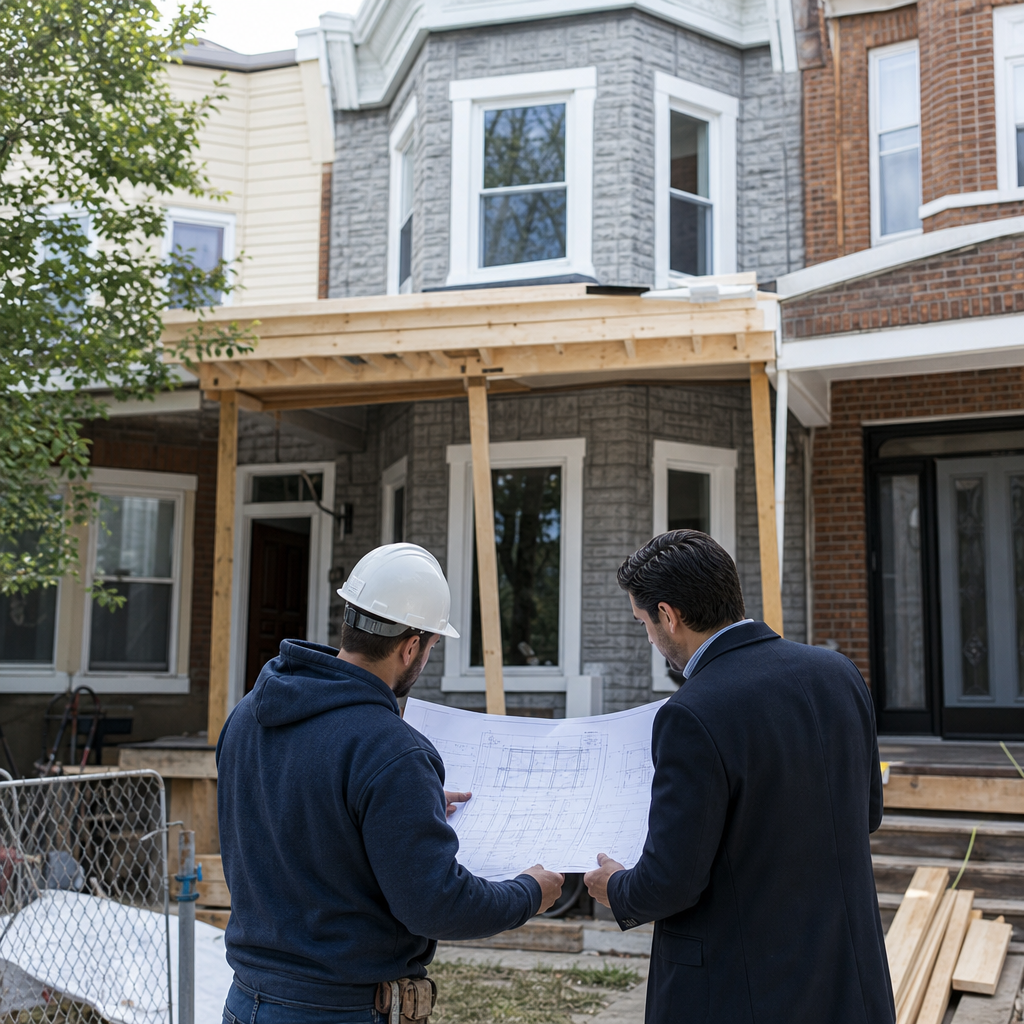
Final consideration: match lender choice to the single biggest execution risk on the deal. For many Garden State investors that is timing and municipal friction — in which case a responsive private lender will usually be the right first call.
Step-by-step application checklist and expected timeline in New Jersey
Start here: a clean, lender-ready file is the single biggest determinant of closing speed. If you have the purchase contract, contractor bids, proof of funds, and a pre-ordered appraisal or drive-by valuation before you submit, a private lender can move from application to funding in under a week on a straightforward NJ deal. Without those items expect the process to stretch into multiple weeks.
Application checklist (documents and actions)
- Signed purchase contract with clear closing date and contingency deadlines
- Proof of funds for down payment and closing costs (bank statements or investor wire confirmations)
- Entity paperwork if buying in an LLC: operating agreement, EIN, and signing authority
- Contractor bids: two to three line-item bids with timelines and payment schedule; lender will treat vague budgets as a red flag
- Rehab scope and line-item budget tied to the bids and matching your ARV assumptions
- Preliminary comps or HUD-style ARV memo — lenders want conservative comps, not optimistic listings
- Title commitment or preliminary title search if available; if not, authorize lender to order immediately
- Appraisal or drive-by valuation pre-ordered where possible (see tradeoff note below)
- Signed loan application and credit authorization — have the principal ready to sign quickly
- Insurance estimate and proof of hazard/flood insurance intent for properties in flood-prone towns
- Exit plan written and quantified: retail sale timeline, refinance thresholds, or rental stabilization assumptions
Practical tradeoff: pre-ordering an appraisal or title search speeds underwriting but costs money up front and may be nonrefundable if the deal falls apart. For high-probability deals — executed contract, verified comps, experienced contractor — pay the small upfront cost. For speculative offers, wait until the lender issues an LOI or conditional approval.
Expected timeline and who does what
| Step | Best-case (days) | Typical (days) |
|---|---|---|
| Pre-application prep (docs, bids, comps) | 0-3 | 3-10 |
| Application submission and LOI/term sheet | 1 | 1-4 |
| Valuation (drive-by vs full appraisal) | 1-3 (drive-by) | 7-14 (full appraisal) |
| Underwriting decision (conditional to clear-to-close) | 1-3 | 3-7 |
| Title work and clear-to-close items | 1-3 | 3-14 |
| Closing and funding | 1 | 1-3 |
Reality check: best-case funding cycles for private lenders are 3 to 7 days from a clean submission; typical cycles are 10 to 21 days. Complex title issues, required municipal permits, or properties in coastal/flood zones commonly push deals to 30-60 days.
Speed levers: pre-ordered appraisal or drive-by, clean title, signed contractor bids, wire-ready proof of funds, and a concise written exit plan.
Concrete example: an investor in Hoboken submitted a signed purchase contract for a rowhouse, uploaded two contractor bids and bank statements, and pre-ordered a drive-by valuation. The private lender issued a conditional approval in 24 hours, title cleared on day 3, and funds wired on day 5. Paying for the drive-by and title upfront cut two weeks off the usual institutional timeline.
Judgment you need: large, institutional lenders offer predictability but rarely beat private lenders on speed for nonstandard or borderline deals. If timing is the priority — bridge on a short close, auction purchase, or contract with tight contingency — accept modestly higher costs to buy the days you need. If you can wait for a lower-cost institutional product, take the longer route and avoid rush fees.
Next consideration: if your project requires municipal permits before draws, build an interest reserve and calendar 2-6 extra weeks into your exit plan. Fund fast when you can, but never let speed force you into an under-budgeted rehab.
New Jersey-specific underwriting and closing considerations that change deals
Permitting and municipal inspection variability is the single biggest deal shaper in New Jersey. Towns operate on different timetables, interpretations of code, and inspection strictness, and lenders price, restrict, or add conditions accordingly. Expect lenders to require longer interest reserves and larger contingency buffers when a property sits in a municipality known for slow permitting or repeated re-inspections.
Permitting, COs, and local enforcement
Key point: Municipal timelines, not lender policies, more often force extensions.** Lenders will push for a realistic conditional close if a Certificate of Occupancy or multiple trade permits are needed. That shows up as: lower ARV-based LTV, a demand for contractor licensing on file, and a multi-month interest reserve rather than a single interest carry assumption.
Practical mitigation: Before you sign the purchase contract, call the municipal construction office, get the expected permit timeline in writing by email, and attach that timeline to your loan package.** Lenders move faster when you can prove expected municipal turnaround and show inspections already scheduled.
Concrete example: A two-unit row house in Jersey City with a full gut rehab sat for six weeks because the permit office required additional structural plans. The lender required a 20 percent contingency and an extra 60 days of interest reserve. That pushed the all-in cost high enough that the investor either reduced rehab scope or walked the deal. Investors who pre-check permit status avoided that binary choice.
Taxes, title timing, and municipal liens
What lenders watch: New Jersey has higher property taxes and an active tax lien process. Underwriters will run tax lien searches early and frequently, and they often require payoff or escrow for outstanding municipal charges.** Delays in title clearing are common and lenders will lower LTV or require personal guarantees when title issues look messy.
Trade-off: You can accept a lower LTV from a lender that insists on clean title and full lien payoffs, or you can seek a private lender willing to price and structure around known liens. Expect higher pricing for the latter and plan exits that justify the premium.
Coastal, flood, and environmental flags
Important nuance: Shore towns trigger special reviews such as CAFRA and stricter flood insurance requirements. Lenders require engineering reports, coastal permits, or mandatory flood insurance endorsements that add time and cost.** Institutional lenders will often decline or cap LTV on these deals; private lenders may fund but with higher rates and required reserves.
Real-world use case: A rehab in Monmouth County required a CAFRA review and an elevation study. The lender conditioned funding on receiving the study and proof of quoted flood insurance. The added pre-close steps extended the timeline by three weeks and increased upfront soft costs by several thousand dollars.
Judgment: In New Jersey you must model the local friction cost before you underwrite the spread. Lenders will not treat every zipcode the same. Use a conservative ARV haircut of 5 to 10 percent and add 10 percent to your rehab contingency in municipalities with known permitting or coastal hurdles.
- Do this before you bid: Call the municipal construction and tax offices; document permit and lien timelines and include that in your lender package
- Expect from lenders: interest reserves for permit delays, stricter title searches, conditional releases tied to CO, and reduced LTV on coastal or high-tax properties
- When to choose flexibility over price: If a deal needs nonstandard clearance or has environmental flags, work with a private lender who will structure around issues but price the risk
Next consideration: If you want a faster path to close in New Jersey, prioritize lenders who have recent experience in your target township and ask for examples of closed deals there; those lenders already know the local checkpoints and will price more predictably. See Interest on Hard Money Loans: Rates, Terms & Negotiation for negotiating tactics and New Jersey Department of Banking and Insurance for regulatory context.
Sample deal walkthrough: a fix and flip in Jersey City
Quick assertion: a Jersey City fix-and-flip that looks profitable on paper can collapse on small timing or rehab overruns — you need the numbers up front and a lender that will fund draws cleanly. This walkthrough shows the real cash needed at close, monthly carrying cost, and how a 10 to 15 percent swing in sale price or rehab can wipe out your margin.
Deal assumptions and lender terms
Deal summary: Purchase $500,000; Rehab budget $150,000; Projected ARV $850,000. Use a hard-money loan structured on ARV with a ceiling of 70 percent LTV, interest-only at 11 percent, and 2 origination points — terms representative of hard money loans new jersey and a typical Level 4 Funding profile.
| Item | Value |
|---|---|
| Purchase price | $500,000 |
| Planned rehab | $150,000 |
| ARV (conservative comps) | $850,000 |
| Max loan (70% of ARV) | $595,000 |
| Loan covers | Part of purchase + rehab (borrower gap = $55,000) |
| Interest rate | 11% interest-only |
| Origination points | 2% ($11,900) |
| Monthly interest payment | $5,454 |
| Upfront other fees (appraisal/title/escrow/etc.) | $4,700 |
| Interest reserve (2 months) | $10,908 |
| Estimated cash at close (down + points + fees + reserve) | $82,508 |
Concrete outcome if sale hits ARV: Sale at $850,000, selling costs ~7.5% ($63,750). Repay principal $595,000. Net to investor before taxes = $191,250. Subtract initial cash at close $82,508 = projected pre-tax profit $108,742 (roughly 132% return on cash invested over the project). That looks attractive, but it depends entirely on timeline and rehab coming in on-budget.
- Sensitivity – rehab overrun: a 20 percent rehab overrun adds $30,000 to required funding. Lenders will not advance overruns beyond contingency unless you have cash or a change order accepted — that eats your liquidity and forces either additional equity or an extension fee.
- Sensitivity – slower sale: each extra month costs ~ $5,454 in interest. A three-month delay plus a 1% extension fee reduces profit by roughly $21,000 to $23,000 and can turn a good return into a marginal one.
- ARV stress test: if ARV is 10% lower ($765,000), profit drops to about $30,000. In Jersey City, comps can move quickly; assume a -10% ARV stress when underwriting.
Real-world tradeoff: taking a higher-LTV offer that reduces your upfront cash may sound good, but it increases monthly interest and reduces your buffer for overruns. In high-tax, complex-permit New Jersey towns, prioritize contingency and a reliable draw schedule over squeezing an extra percent of leverage.
Concrete use case: an active investor in Journal Square used this exact structure and elected a 3-month interest reserve and a 10% rehab contingency before closing. When the township required an unexpected permit modification, the reserve covered carrying cost and avoided a draw hold — the deal still closed at target ARV. Without the reserve, they would have needed a costly bridge to finish the job.
If you want a checklist for accelerating this process and avoiding common closing delays, see the Hard Money Loan to Flip Houses: Complete Playbook & Guide for practical steps and documentation lenders expect.