


Hard Money Bridge Loans Phoenix: The Investor’s Guide to Rapid Financing in 2026
September 21, 2026
Phoenix BRRRR Financing: Ultimate 2026 Investor Guide
September 22, 2026
Top Hard Money Lenders by Region: How to Find a Reputable Local Private Lender Anywhere
Speed matters in real estate, and the right private lender can make or break a deal. This guide shows how to find and vet hard money lenders atlanta and other U.S. markets using a repeatable checklist, regional examples, and sample deal numbers you can use to compare offers. Expect clear steps to verify licensing, compare rates and fees, and choose the fastest reliable lender for flips, construction, rentals, and bridge loans.
How to Use This Guide and a Repeatable Vetting Checklist
Start here: treat this section as an executable checklist you can run in 60 minutes to decide whether a lender is worth pursuing. The goal is not paperwork theater — it is to eliminate unknowns that cost time or money later: funding speed, clear fees, local competence, and contractual transparency.
60-minute vetting checklist
- Verify business registration and standing: check the state business search for the lender and look for DBAs or multiple trade names. If they claim NMLS registration, confirm on NMLS Consumer Access. Many private lenders are not on NMLS; absence is not proof of fraud, but it increases the need for other checks.
- Ask for three recent, local references: one rehab borrower, one title company, and one contractor or investor. Contact those references and ask for specifics: did funding hit the wire on the promised day; were draw disbursements accurate; were there surprise fees?
- Request paper up front: term sheet, Good Faith Estimate of fees, sample loan agreement, and recent HUD/closing statement from a similar deal in your county. Refuse to proceed with vague fee language or sample docs that are redacted to the point of uselessness.
- Confirm funding timeline and wiring procedure: get exact wire instructions on corporate letterhead and a named contact. Independently verify the corporate banking phone number before sending funds.
- Check product fit and numbers: confirm maximum LTV/ARV, allowable rehab draws, allowable soft costs, and interest reserve handling. If your deal needs 70 percent LTV or 65 percent ARV, get that in writing on the term sheet.
- Run a quick scorecard: assign weights for Speed, Transparency, Product Fit, and Local Reputation (sample table below). Use the score to prioritize 2–3 lenders for full underwriting.
- Local verification: ask for a recent closing in the county your property sits in (for Atlanta, demand examples in Fulton, DeKalb, or Cobb) and call the title company on record to confirm that closing.
- Escrow and post-close controls: confirm how rehab draws are approved, who holds retained funds, and whether title company escrow is required for the disbursements you need.
| Criterion | Weight | Pass threshold |
|---|---|---|
| Speed (funding after docs signed) | 30% | <= 72 hours |
| Transparency (itemized fees) | 30% | Detailed GFE and sample loan agreement |
| Product fit (LTV/ARV/draws) | 20% | Matches your deal assumptions |
| Local reputation (references) | 20% | 2 verified local references |
Concrete Example: you have an Atlanta rehab: purchase 150000, rehab 60000, projected ARV 300000. Use the checklist to ask lenders whether they will fund to 70 percent of purchase or 65 percent of ARV, how they handle holdbacks for draws, and whether they will wire initial funds within 48–72 hours after title clears. Call the title company on any provided HUD to confirm the lender actually funded previous Atlanta deals.
Trade-off to accept: faster funding almost always costs more. If a lender promises 24-hour funding for a nonstandard deal, expect higher points or stricter covenants. Boutique local lenders buy speed and flexibility with tighter documentation and sometimes higher rates; national lenders usually offer cleaner fee schedules but less discretion on unusual issues.
Practical judgment: do not treat NMLS or a slick website as a substitute for reference checks and title confirmations. Real risk in hard money deals is operational — wiring, draws, and unclear escrows — not a missing license. Protect yourself by insisting on title company escrow for draws and always verify wiring instructions by calling the corporate number on state filings.

Next consideration: after you shortlist lenders with this checklist, prepare your deal packet (purchase contract, contractor estimate, ARV comps) so the fastest lender can complete underwriting without delay.
Southeast Spotlight: Hard Money Lenders Serving Atlanta
Clear reality: Atlanta moves like several markets at once, so a lender that is reliable in Buckhead may fail on a West End or South Fulton rehab. For investors searching for hard money lenders atlanta, the deciding factor is not national brand recognition but whether the lender understands county-level comps, permit cadence, and rehab cost differences between intown neighborhoods and suburban pockets.
What makes Atlanta underwriting different
Local drivers matter more than national labels. Fulton, DeKalb, Cobb and Clayton counties each carry different market signals: average days on market, common repair costs, and the ARV comps pool. Lenders who underwrite to city-level microcomps and who can quote rehab holdbacks tied to Atlanta permit timelines will price more competitively and close predictable loans.
- Ask for county-specific closings: Request recent Atlanta closings in the same county and neighborhood rather than a blanket list of statewide deals.
- Test permit familiarity: Ask how the lender schedules rehab draws when city permits often take 2 to 4 weeks in certain jurisdictions.
- Rehab holdback nuance: Confirm whether the lender uses percentage draw schedules or milestone draws tied to local contractor inspections.
- Exit comfort: See whether the lender accepts sale contracts with local agent contingencies common in intown flips.
- Portfolio vs product fit: Determine whether the lender treats the deal as a one-off commercial loan or as a standard fix-and-flip product; pricing will differ substantially.
Tradeoff to accept: A boutique Atlanta private lender will usually be more flexible on nonstandard comps and faster on discretionary approval, but will charge higher points or stricter covenants. A national lender will underwrite to standardized metrics and may give a slightly lower base rate, but will pull back LTV on emerging neighborhoods where their comps model shows higher risk.
Concrete example: An investor buys a 1960s bungalow in East Atlanta for $230,000 with a $70,000 rehab and a realistic ARV of $420,000. A national lender quotes 65 percent ARV funding with 10 percent interest and 2 points for a 6 month hold – loan proceeds about $273,000. A local Atlanta private lender evaluates contractor timelines and neighborhood comps and offers the same loan but will advance rehab draws faster at the cost of 1 additional point. Choosing the local lender avoids draw delays that would otherwise extend hold costs on this particular neighborhood flip.
Common misjudgment: Investors assume all hard money rates in Atlanta are uniform. They are not. Lenders price on collateral clarity and predictability of sale. If comps are thin or the property requires nonstandard permits, expect rates and fees to rise or LTV to drop.
Primary action: get one local lender quote and one national quote on the same deal and compare net proceeds after interest, points, and realistic draw timing.
Next consideration: When contacting lenders say explicitly which Atlanta county the property sits in and request examples in that county. That single data point separates thoughtful lenders from ones that underwrite every Atlanta deal from a generic statewide template.
Northeast and Mid-Atlantic Essentials
Direct point: Northeast and Mid-Atlantic hard-money deals are less about low headline rates and more about local complexity—co-op and condo rules, municipal violations, historic-preservation constraints, and older-title gaps. Lenders who understand those local choke points will save you time and money; lenders who do not create surprise exceptions, lower LTVs mid-underwrite, or slow closings into costly hold periods.
Tradeoff to expect: Higher closing certainty costs more. In New York, New Jersey, Pennsylvania and nearby states you will often see lower max LTVs and slightly higher fees than in Sun Belt flip markets because lenders must price in title risk, certificate-of-occupancy issues, and condo/co-op board approvals. Accepting a 5 to 8 percentage-point higher all-in cost can be the rational choice when it avoids a 30- to 60-day title snag.
Practical checks unique to this region
- Co-op and condo vetting: confirm lender experience with board approvals and master policy requirements; many national underwriters decline or add heavy exceptions.
- Municipal and code liens: require a recent municipal lien search and experience resolving violations; older cities commonly attach fines that block closings.
- Certificate of occupancy and use: for multi-family conversions, ensure the lender will underwrite based on the local certificate rather than assumed use.
- Historic or preservation overlays: lenders should know local preservation boards and realistic rehab allowances to estimate true hold time.
- Environmental and UCC risks: expect more frequent title exceptions on brownfields and commercial conversions—ask whether the lender accepts environmental indemnities or requires remediation reserves.
- Title partners: pick lenders who regularly use county-specific title companies; that experience shortens clear-to-close time materially.
Concrete example: A small operator buying a four-unit rowhouse in Philadelphia found a national marketplace lender offering 70 percent LTV but flagged environmental and tax-exception carve-outs that delayed funding. A regional private lender agreed to 60 percent LTV, provided a title partner who cleared the municipal violations within two weeks, and closed in 10 days — the slightly lower loan amount cost less in carry than the month-long delay from the national lender.
Judgment that matters: Investors commonly assume national scale equals better pricing and speed. In practice, for Northeast deals with title quirks or co-op/condo structures, boutique regional lenders deliver more predictable closes even if their nominal rates are higher. That predictability beats a cheaper rate that becomes unusable because of underwriting carve-outs.
Practical negotiation lever: if a local lender raises interest or fees because of perceived risk, push for stronger documentation or escrowed reserves instead of an across-the-board rate hike. You will often get a better outcome by trading holdback structure or a short environmental reserve for lower ongoing interest than by chasing small reductions in lender margin.
Next consideration: When you evaluate offers, compare clear-to-close timelines and title exceptions side-by-side. A slightly higher cost with clean closing mechanics is usually the better economic decision for Northeast and Mid-Atlantic deals—particularly when comparing against national players or even hard money lenders atlanta that lack regional experience.
Midwest and Rust Belt: What Investors Should Prioritize
Key point: In the Midwest and Rust Belt you should prioritize cashflow reliability and realistic comps over headline LTVs. These markets have lower ARVs and slower resale velocities than Atlanta, so a lender that underwrites on rent roll and conservative ARV comps will save you money and time.
Priority checklist for Midwest deals
- True comps over list-price optimism: Demand lenders who use recent closed sales within the same micro-neighborhood and can show their comp sheets. Don't accept ARV built on distant zip-code lifts.
- Cashflow underwriting for rentals: For buy-and-hold or BRRRR deals, insist the lender stress-tests debt service with a conservative vacancy and cap-ex assumption rather than a pure ARV offer.
- Realistic LTVs and hold windows: Expect allowable LTVs to be 60–65 percent on ARV for flips in secondary markets and longer permitted hold periods. Lower LTVs reduce lender risk but require more equity from you.
- Contractor and draw verification: Choose lenders who will vet local contractors and tie draws to verifiable milestones. In the Rust Belt, slower contractor supply chains and weather delays are common—plan draws accordingly.
- Title and foreclosure history checks: Use county recorder searches to confirm property history and to see how the lender behaves in defaults. Local title company references matter more here than a national testimonial.
- Environmental and code risk review: Older housing stock can carry lead paint, asbestos, or municipal code violations that stall closings and draws; get a lender who budgets for remediation or requires clear escrow holdbacks.
Trade-off to accept: You will usually trade slightly higher effective cost for predictability. In practice that means accepting a 0.5–1.5 point higher rate or fee in exchange for longer hold flexibility and draw control. Trying to push Atlanta-style 70 percent LTVs in secondary Rust Belt neighborhoods is how deals blow up.
Concrete Example: A rehabber in Cleveland buys a three-flat for $80,000, budgets $60,000 rehab, and projects ARV $200,000. A conservative regional lender offers 65 percent of ARV (max loan $130,000) and requires a 6–9 month hold with staged draws tied to inspections. The borrower supplies $10,000 equity at close and staggers draws—this protects against slow comps and forces a realistic exit plan, unlike a higher-LTV national quote that assumed a 30-day sale.
What many people get wrong: Investors assume rates quoted by larger coastal or Southern lenders, including offers they see from hard money lenders atlanta, transfer directly to Midwest deals. They do not. Local market risk, contractor reliability, and title quirks drive different pricing and terms—ignore that at your peril.
Local title company references and a lender's recent county closings are the best predictors of how a lender will perform when the deal goes sideways.
Practical next step: Before you pick a lender for a Midwest deal, ask for three recent local closings, call the title company on at least one, and run a quick county recorder search. If the lender hesitates, move on. For licensing checks see NMLS Consumer Access and for a refresher on hard-money basics consult Investopedia.
Southwest and Mountain West: Phoenix Example and Level 4 Funding
Direct point: Phoenix-area private lenders push for speed and pragmatic underwriting because the market moves fast and rehab timelines are compressed by seasonal constraints.
Market nuance: In Phoenix and much of the Mountain West, permit timing, contractor availability, and seasonal construction windows change the economics more than small differences in headline interest rates. That means a lender who understands local permitting cycles and has established title and contractor relationships saves you real hold cost — not just a few basis points.
Level 4 Funding as a practical benchmark
Profile: Level 4 Funding is Phoenix-based, funds fix-and-flip, bridge, construction, rental and private commercial deals, and advertises funding within 24 hours and up to 70 percent LTV. Use them as a benchmark for what a regional, experienced private lender can deliver in speed and local underwriting.
Trade-off to watch: Fast funding and local discretion come at a cost. Expect higher interest rates and origination fees than prime mortgage products, and more frequent use of personal guarantees or recourse clauses. Fast cash reduces holding risk, but you pay for that privilege in structured fees and tighter exit requirements.
Concrete example: An investor buys a Phoenix bungalow for $180,000, budgets $40,000 for rehab, and projects an ARV of $300,000. At 70 percent ARV, a lender like Level 4 could underwrite up to $210,000 — enough to cover purchase and most rehab if the borrower brings a modest additional cash contribution. That 24-hour funding window can be the difference between winning the contract and losing the deal in a hot market.
How this compares to other regions (useful for Atlanta readers): If you are comparing offers from hard money lenders atlanta to a Phoenix lender, expect the Phoenix offer to emphasize closing speed and discretionary draws. Atlanta deals often see more competition on pricing from national lenders; Phoenix deals tilt toward underwriting speed and local contractor oversight.
- When to pick a local Phoenix lender: You need an approval within 48 hours, the property has nonstandard permitting issues, or your exit relies on a quick flip in a rapidly appreciating neighborhood.
- When to consider a national lender instead: Your deal is a high-quality rental or commercial asset that benefits from slightly lower rates and standardized servicing across states.
- Key local checks: Confirm the lender has recent closings in the same Phoenix ZIP code, verify wiring instructions with the title company, and get the lender to commit to draw holdbacks tied to contractor invoices.
Judgment: In practice, a regional lender with proven local comps and a documented 24-hour funding process like Level 4 is worth a higher headline cost when speed wins the deal or permit complexity is present. For cleaner, longer-term rental or commercial loans, national lenders may beat them on price but will be slower and less flexible on unconventional exits.
West Coast and Pacific Northwest Considerations
Key point: West Coast and Pacific Northwest deals demand lenders who understand local entitlements, specialized insurance, and environmental constraints. High ARVs and rapid appreciation make comps look attractive on paper, but permitting delays, seismic rules, wildfire and coastal protections, and rent control can turn a fast flip into a long, expensive hold.
Tradeoff to accept: Lenders that will underwrite complex West Coast work tend to be more conservative on LTV and more aggressive on draw controls. That increases carrying cost and reduces leverage, but it prevents midproject stoppages that destroy returns. For that reason investors should expect higher hold costs than in secondary markets and price that into project feasibility.
Concrete example: An investor buys a 3 unit in Oakland planning a seismic retrofit and cosmetic rehab. A national lender offered 70 percent LTV for acquisition only, but local boutique lenders required a split structure: 60 percent acquisition LTV and a separate retrofit draw schedule with a contractor holdback. The result was slower access to some rehab dollars but fewer surprises at final inspection and a cleaner title endorsement for the work.
What West Coast and PNW lenders must show you
- Seismic and structural experience: Evidence of recent closings where the lender funded seismic bolting, foundation work, or historic facade requirements.
- Insurance and exclusions knowledge: Familiarity with wildfire, coastal, or flood exclusions and how those affect borrower obligations and escrow holdbacks.
- Permit timeline workflows: A clear draw schedule tied to permit milestones and a documented process for handling extended inspections.
- Licensed contractor requirements: Proof that the lender accepts licensed general contractors in your county and will fund through contractor invoices, not owner draws.
- Local appraisal panels: Use of appraisers who update comps frequently in volatile neighborhoods rather than year old citywide averages.
Practical insight: In practice national lenders like Kiavi will fund a lot of West Coast fix and flip work quickly when the deal fits a standard product. But when projects touch coastal zones, seismic retrofits, historic overlays, or rent control, boutique local lenders who have closed those exact scenarios are less likely to pause the project midstream. That local knowledge costs more, but it buys certainty.
Warning about common misunderstandings: Investors often assume quick funding equals good fit. Quick funding on the West Coast without a lender who understands county permits and insurance often produces cost overruns or title exceptions. Speed is valuable only if the lender actually funds the rehab draws that finish the job.
How to act on this: Before you commit, ask for two recent local closing references and a sample draw schedule tied to permits. Confirm the lender has handled environmental items that matter in your market – for example coastal zone permits, seismic retrofits, or wildfire insurance endorsements. If your deal is straightforward and you are comparing offers across regions, remember searches for hard money lenders atlanta will not translate one to one to West Coast risks and pricing.
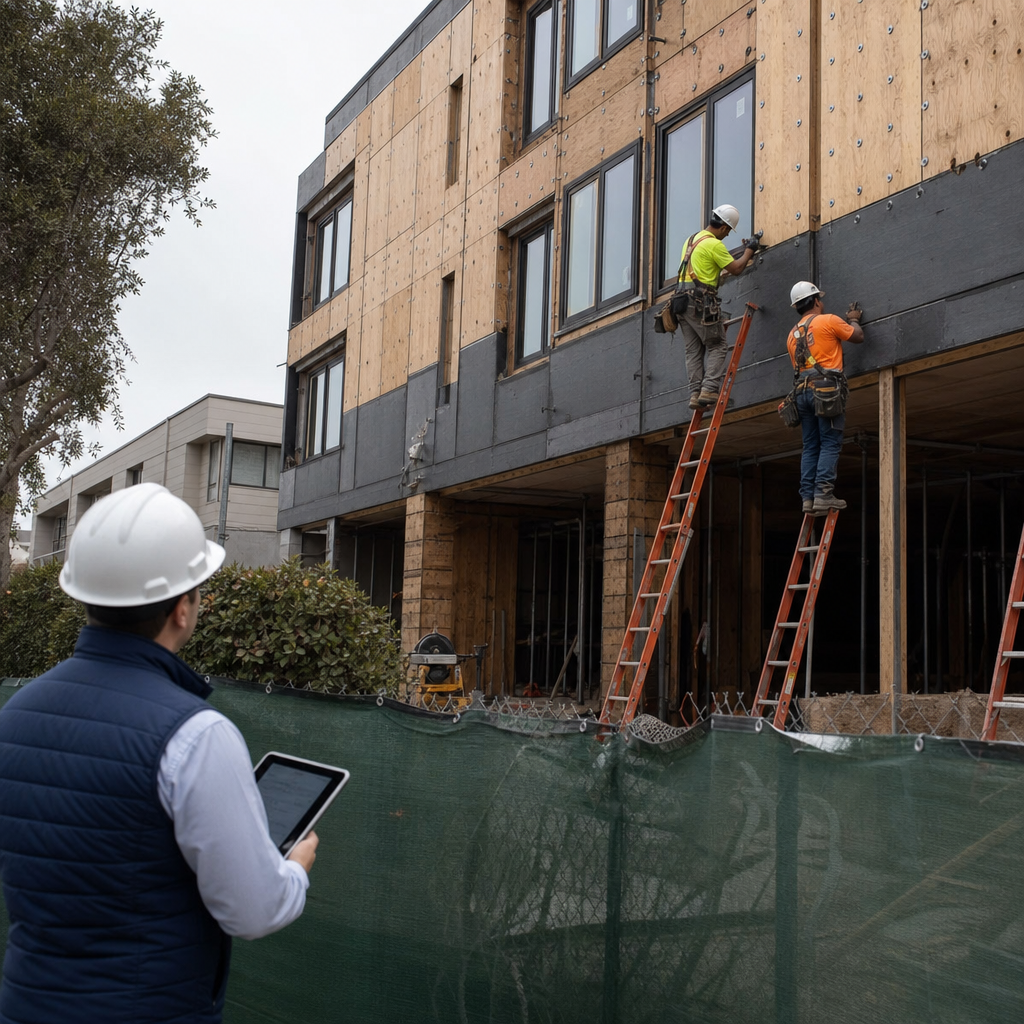
How to Compare Loan Products and Run a Quick Deal Underwriting
Key point: compare offers by total cost of hold and enforceable loan size, not by headline interest rate alone. Hard money lenders compete on speed and flexibility; that means one lender may quote a lower rate but higher points or stricter ARV math that reduces your usable proceeds on close. When you run a quick underwriting you must convert each term sheet into the same currency: usable loan amount, cost to carry per month, and documented exit assumptions.
Quick underwriting worksheet — fields you need first
- Deal basics: Purchase price, agreed closing date, and expected close window.
- Rehab budget: Line-item total and realistic contingency (10%+ where permits are unsure).
- ARV comps: Three local comps within 6 months and same condition; lenders will re-run comps.
- Exit strategy and timeline: wholesale flip, retail sale, refinance to rental, or rehab then refinance.
- Lender formula fields: quoted LTV or ARV cap (example: 70 percent LTV or 65 percent ARV), origination points, flat fees, monthly interest rate, draw schedule and inspection fees, prepayment penalties.
- What you compute: usable loan amount = min(LTV ARV, LTC (purchase + rehab)). Monthly interest = loan balance quoted rate / 12. Total cost of hold = monthly interest hold months + points and flat fees.
Practical insight: lenders often advertise 70 percent LTV but apply a 65 percent ARV cap or reduce LTC on soft-cost heavy projects. Always ask which formula governs funding and get it written on the term sheet. If you need every dollar of rehab spent before draws start, a lender that uses strict ARV math will bite into your proceeds even if their nominal LTV looks generous.
| Product | Typical max LTV/ARV | Rate range | Fee structure / common tradeoffs |
|---|---|---|---|
| Fix-and-flip | 65–75% ARV or 70% LTC | 8–14% | Points 1–4; monthly interest carry; draw inspection fees |
| Bridge / short-term acquisition | 60–70% ARV | 7.5–12% | Lower points but higher underwriting scrutiny; faster funding |
| Construction | 65–70% of completed value or cost-to-complete formulas | 8–13% | Larger hold costs; staged draws; stronger contractor vetting |
| Rental / buy-and-hold | 65–75% of stabilized value | 6.5–10% | Longer terms, lower rates, may require reserves for cashflow |
| Private commercial | 50–70% of appraised value | 8–14%+ | Deal-specific underwriting; environmental and NOI checks |
Two concrete underwriting examples
Concrete example — Atlanta rehab (national lender): Purchase $180,000, rehab $60,000, ARV $325,000. Lender quotes 65% ARV cap and 70% LTC. ARV cap = $211,250; LTC cap = 70%*(180,000+60,000)= $168,000. Usable loan = $168,000. At 10% interest and 2 points, monthly interest = $1,400; points = $3,360 paid at closing. For a 6-month flip your interest carry = $8,400; total cost (interest + points) ≈ $11,760 plus closing costs. If your projected net profit before financing was $30,000, the financing cost cuts that to roughly $18,000 — not just a line on a spreadsheet but a real-world arbitrage you must verify against comps in Fulton and DeKalb counties.
Concrete example — Phoenix construction bridge (Level 4 Funding): Projected completed value $1,200,000. Borrower needs a 9-month bridge to finish construction and lease stabilization. Level 4 Funding offers up to 70% LTV on completed value with funding within 24 hours and staged draws; rate quoted 11%, 1.5 points, inspection fee per draw. For quick-turn projects where permit or contractor schedules risk delays, the premium for a local lender that moves in 24 hours can be cheaper than the extended carry from a slower national funder even if the headline rate is lower.
What investors get wrong: most focus on nominal interest rate and ignore effective financing cost: points, draw fees, minimum interest charges, and how the lender counts ARV. In practice, a lender with slightly higher rate but cleaner draw mechanics and local title relationships will reduce delays and hold costs — often the decisive factor on tight-margin flips.
Always convert offers into three numbers you can compare: usable loan proceeds on close, monthly cost of carry, and documented triggers for additional draws or cure events.
Next consideration: after you run the numbers, shortlist lenders that deliver the usable loan you need and then re-check operational details: draw cadence, inspector turnaround, and documented wiring and closing procedures before you sign. These operational frictions are where deals actually lose money.
Red Flags, Legal Checks, and How to Protect Yourself
Straight fact: most real losses in private lending come from wiring mistakes, unclear security, and sloppy documentation, not from a slightly higher interest rate. Do the legal checks that stop fraud before price shopping.
Practical legal checks every investor must run
- Verify registration: check the lender on NMLS Consumer Access and the state lending regulator for Georgia when dealing with hard money lenders atlanta.
- Confirm corporate identity: match the company name, EIN, and bank wiring details to the state business registry and the lender website. If wiring goes to a different name, do not wire.
- Search county records: run the county recorder and tax assessor for UCC filings, prior liens, and recent foreclosures on properties the lender claims to have financed.
- Demand sample closing documents: require a recent HUD or closing statement and the actual mortgage or deed of trust form used in your state before signing.
- Check assignment language: read how the note and mortgage can be assigned or sold, and whether servicing changes create new fees for the borrower.
Tradeoff to accept: speed versus structural safety. If you need funding in 24 to 72 hours, you will give up some time for documentation review. Accept that and compress verification into parallel tasks: title order, quick NMLS and county checks, and a call to the title company to confirm wiring instructions.
Wiring, escrow, and holdback practices that protect cash
- Wire to title trust only: insist funds be wired to the title company trust account stated on the closing statement, not to an operating account.
- Two factor wiring verification: require a verbal confirmation with the title agent on a phone number from the title company website before sending funds.
- Escrow holdbacks for rehab draws: structure draws with retainage and independent inspections and avoid full disbursement on day one.
- Written escrow instructions: get all draw schedules, late fees, and cure periods in writing in the loan agreement and title instructions.
Concrete example: An Atlanta rehab investor was offered a quick 24 hour close but the lender wanted funds wired to a different corporate name than listed on the term sheet. The title company confirmed the lender had a separate servicing entity. The investor insisted on wiring to the title trust and required the servicing assignment be recorded at closing; that single step stopped a likely wire fraud path.
Common misjudgment: many investors focus on headline rate and ignore structural exposure. A lower rate with weak documentation, vague cure periods, or an unrecorded second lien will cost far more if the deal goes sideways. Prioritize enforceable security and clear assignment rules over a marginal rate reduction.
Final practical step: hire a local real estate attorney or use a reputable title company for contract review when anything in the documents is unclear. This is not optional for larger deals or when a lender resists providing sample closing paperwork. Spend a few hundred dollars now to avoid an order of magnitude loss later.
Key takeaway: treat wiring protocols, recorded security, and assignment language as the core protections. If a lender resists transparency on any of those, move on even if they promise fast cash.
Finding Local Private Lenders: Networks, Brokers, and Title Company Paths
Direct referral channels close deals fastest. Local title companies, active contractors, and investor meetups are the three referral sources that routinely convert an introduction into funding within 48 to 72 hours when the deal is clean.
Where to find lenders and what each channel actually delivers
Title companies. They see closings every day. Use them for lenders who actually fund in your county and to validate a lender on paper by asking for recent HUD or settlement statements. Title staff will tell you which lenders wire reliably and how they handle lender escrow and draw disbursements. Limitation: title company referrals are pragmatic not regulatory; they will point to reliable closers but will not vouch for underwriting quality or fee reasonableness.
Mortgage brokers and marketplace platforms. Brokers expand access to multiple product types fast and they can package nonstandard deals to niche lenders. Tradeoff: brokers add middleman cost and sometimes slow the timeline if they have to shop the file. Use a broker when your deal is complex or needs marketplace leverage; go direct when speed and fee negotiation matter most.
Local networks and operators. REIAs, contractor networks, and investor Facebook groups surface boutique lenders and private equity contacts that do discretionary approvals. Consideration: these channels reveal lenders who are flexible on structure but who may lack formal processes, which can increase documentation or title surprises at closing.
| Channel | Typical speed | Cost impact | Best use case |
|---|---|---|---|
| Title company referrals | Very fast – often 24 to 72 hours | Low – no extra fee for referral | Confirm lender reliability and wiring procedures |
| Mortgage brokers / marketplaces | Fast to moderate – 48 to 96 hours | Moderate – broker fee or yield spread | Complex deals or borrower needs that span products |
| Local REIA / contractor referrals | Variable – can be immediate or weeks | Low to moderate | Creative structures or hard-to-place properties |
| Online lender directories | Fast to moderate | Low | Initial sourcing and rate benchmarking |
Concrete Example: An Atlanta investor brought a 30 day bridge deal to a local title company with a one page deal memo and contractor estimate. The title officer introduced a private lender who had closed similar deals in Fulton county. The lender provided a sample HUD, a 48 hour funding timeline, and a draw schedule; the loan closed in three days. This worked because the title company had previously cleared that lender for wiring and escrow procedures.
- What to send on first outreach: one page deal memo, purchase contract or LOI, contractor scope and budget, proposed exit strategy, and proof of funds or prior deal closes.
- What to ask a title company: which lenders have closed in the last 60 days for this county, can you provide redacted settlement statements, and what is your internal process for verifying lender wiring instructions.
- What to ask a broker: how many lenders will you present, do you take lender fees, and can you show two recent deals you placed that are similar to mine.
Title company referrals get you to the table fastest. Brokers widen your options. Local networks find the flexible, off market capital. Use all three in sequence rather than simultaneously.
Practical Next Steps Checklist and Deal-ready Document Pack
Start prepared, close faster. Lenders will move on deals that are packaged cleanly. You will not win speed simply by asking for a fast close; you win it by removing every predictable question they will ask during underwriting.
Core deal pack you must have ready
- One-page deal summary: purchase price, proposed loan amount, rehab budget, ARV with three comps, exit strategy, and expected hold days.
- Purchase contract: fully executed and with earnest money receipt if available.
- Contractor scope and line-item estimate: not a ballpark. Lenders reject vague scopes; include start date, draw schedule, and contractor license number where applicable.
- Proof of funds or lender-ready POF letter: bank statement redactions are acceptable but provide a dated bank letter or escrow deposit receipt for speed.
- Property photos and roof/structural notes: two sets: current condition and a one-line plan for required structural fixes.
- Borrower ID and formation docs: driver license, operating agreement or articles of organization, and recent business bank statement if using an entity.
- Title/closing history pull or recent title commitment: if available, saves 48 hours of legwork for the lender and title company.
- Insurance contact and HOA info when applicable: binder or agent contact shortens conditional approval.
Practical insight: Lenders fund faster when documents are named and ordered predictably. Deliver a single PDF named DealName_DealPack.pdf and include a one-page cover sheet with bullet answers to the top six lender questions.
30 / 60 / 90 day funding playbook
- Day 0 7 (Application and docs): Submit one-page deal summary plus deal pack. Ask the lender for a specific conditional approval checklist and estimated clear-to-close timeline.
- Day 8 21 (Underwriting and title): Lender orders valuation and title. Provide missing items within 48 hours. If appraisal issues appear, provide comparable sales and contractor notes immediately.
- Day 22 45 (Clear to close and funding): Finalize insurance, escrow instructions, and wiring verification. Confirm funding window and any initial interest reserve or holdback.
- Day 46 90 (Construction draws and reporting): Submit draw requests with invoices and photos per agreed schedule. Expect lender audits on larger draws and allow 2 to 5 business days for draw release.
Tradeoff to accept: A tighter document pack speeds funding but increases early disclosure of personal or business bank data. Use redacted statements and a formal POF letter when privacy is a concern, but be prepared to produce full statements to close.
How to present documents so lenders act
- Single file, clear order: Cover sheet, deal summary, contract, contractor estimate, ARV comps, proof of funds, IDs, title docs.
- Use file names lenders can scan: DealNamePurchaseContract.pdf, DealNameContractorEstimate.pdf, DealName_BankPOF.pdf.
- Call out exceptions on the cover sheet: zoning quirks, tenant issues, and any open code violations so there are no surprises.
- Provide contactable references: title closer, contractor, and the last borrower the lender worked with in the same county.
Concrete example: An investor in Atlanta preparing a 45 day flip assembles the pack as a single PDF. The contractor estimate lists three draw stages tied to specific line items and license numbers. The lender approves conditionally within 48 hours because the draw schedule lets the lender calculate a precise interest reserve and release triggers.
| Decision Criteria | Weight | Lender A Score (1 5) | Lender B Score (1 5) | Notes |
|---|---|---|---|---|
| Speed (ability to fund within 7 21 days) | 30% | 5 | 3 | Local lender has out of hours closers |
| Transparency (clear fee schedule and sample docs) | 25% | 4 | 5 | National lender provided full sample closing statement |
| Product fit (match to fix and flip or bridge) | 25% | 5 | 4 | Lender A specializes in 45 day flips |
| Local knowledge and references | 20% | 4 | 2 | Lender B has no local title references |
Key takeaway: A lender sees a deal as lower risk when you provide a verifiable draw schedule and three ARV comps up front. That is the single fastest friction reducer.